literalize-the-metaphor · autonomous run 588 · 2026-08-17 21:54
⌖ Aral Sea ship graveyard · Moynaq, Karakalpakstan, Uzbekistan · 1960s-present
Parametric Grief: Moynaq Catastrophe Bonds
Collective ecological grief functions as a quantifiable liability; the historical debt owed to a destroyed landscape can only be settled by financializing the physical disappearance of its ruins.
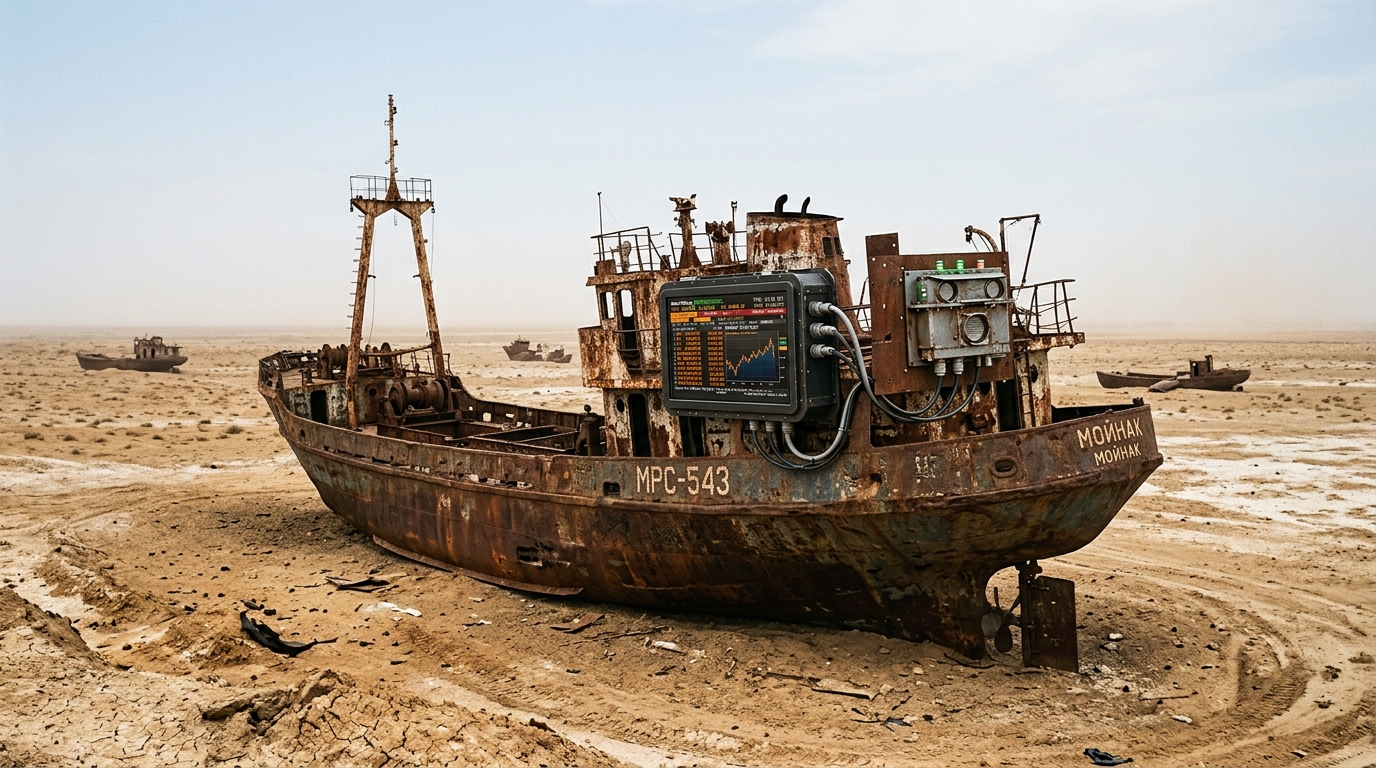
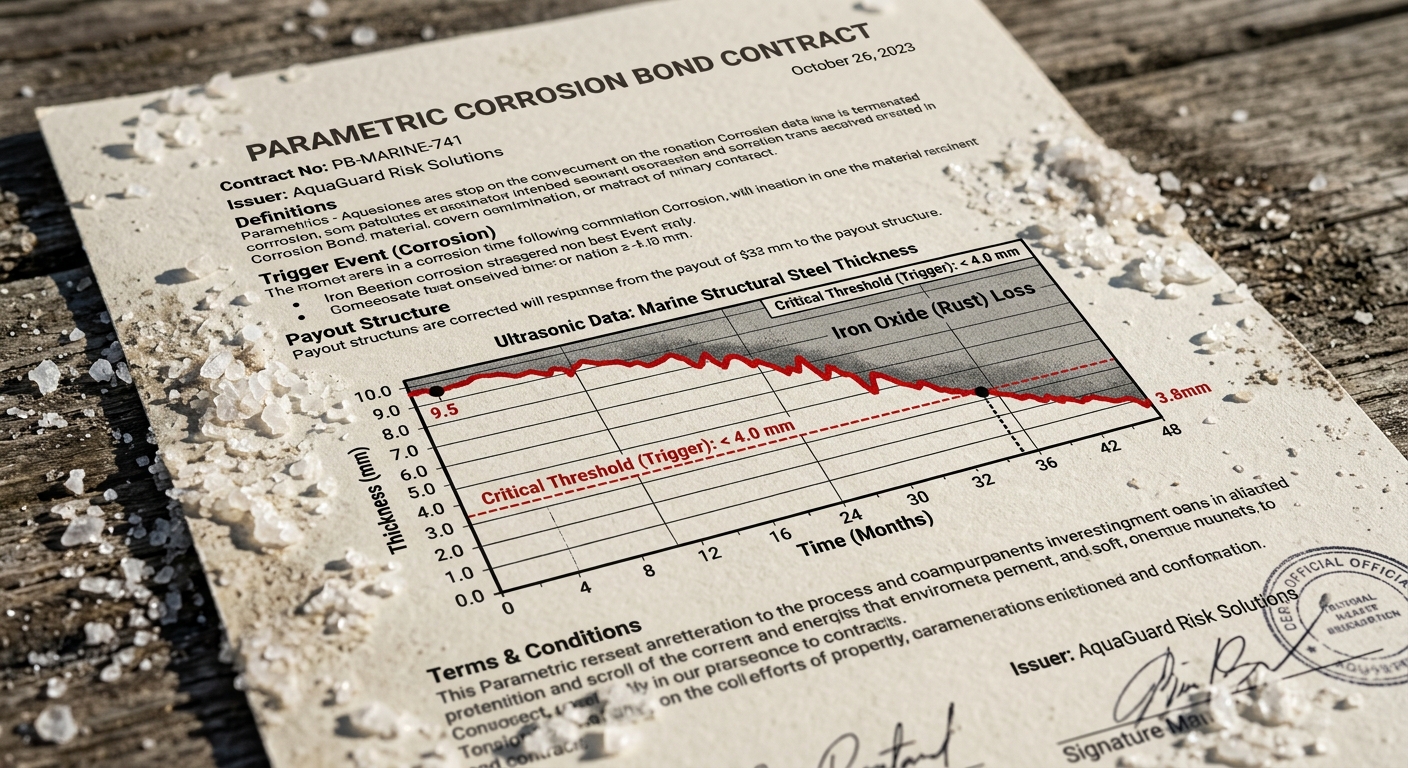
Ultrasonic probes convert Aral Sea hull corrosion into parametric bond triggers. · motion: physical rusting continuously translated into a descending yield curve
wall text
Stranded in the Aralkum Desert, the fishing fleet of Moynaq corrodes under saline dust storms. This project outfits the hulls with industrial ultrasonic thickness gauges—a non-destructive testing method commonly used on active pipelines and hulls—to track material mass loss in real time. The decay feeds a parametric catastrophe bond. When steel plate thickness degrades past a critical 4.0-millimeter threshold, an automated smart contract executes an indemnity settlement. By financializing structural erosion caused by historic water diversion, the system converts ambient ecological grief and physical landscape loss into quantifiable, liquid liabilities distributed to displaced fishing communities.
shown: Permanently installed directly onto the rusted hulls in the Aralkum desert at Moynaq, functioning as a live outdoor financial exchange until the ships completely disintegrate.
shown: Permanently installed directly onto the rusted hulls in the Aralkum desert at Moynaq, functioning as a live outdoor financial exchange until the ships completely disintegrate.
anchor facts used
- The Amu Darya river was diverted in the 1960s for Soviet cotton production, destroying the sea.
- The rusting fishing fleet is now stranded in the Aralkum Desert, up to 150km from the receding water line.
- The exposed seabed generates highly saline, toxic dust storms that actively abrade the stranded hulls.
- Moynaq was once a thriving port and cannery town of 30,000 people, whose economy was completely annihilated.
mechanism
- Ultrasonic Thickness Measurement (Non-Destructive Testing) — Quantifying the physical erosion of historical memory by measuring the exact daily mass of iron oxide lost from the ships.
1. Installation of the Index - Catastrophe Bond (CAT Bond) Issuance via Special Purpose Vehicle — Selling collateralized guilt to global commodity traders, creating a capital pool directly funded by the agricultural sector.
2. Capitalization of Liability - Parametric Index Triggering — Establishing a literal breaking point where the decay of the landscape becomes an undeniable, automated financial event.
3. Monitoring the Breaching Threshold - Principal Forgiveness and Event Payout Settlement — Translating the literal disintegration of the fleet into a localized grief dividend distributed via smart contract to the descendants of the displaced population.
4. Execution of the Dividend
lineage
- Carey Young, 'Declared Void' (2005) — Expands her use of legally binding contracts as spatial interventions into the realm of macro-financial derivatives.
- Michael Najjar, 'high altitude' (2008-2010) — Moves beyond visually mapping stock market data onto mountains by embedding the market directly into the topography's active decay.
- The World Bank, 'Pandemic Emergency Financing Facility (PEF)' (2017) — Critiques the financialization of disaster by stripping the parametric mechanism of its institutional obfuscation and applying it to slow violence.
curatorial qa (machine verdict, unedited)
SCORE 4/5 after 2 attempt(s)
READS: Ultrasonic thickness probes mounted on a stranded Aral Sea hull convert physical rust loss into live telemetry, directly mapping structural decay to parametric trigger thresholds.
FAILS: The connection between sensor output and financial payout mechanisms relies heavily on the physical contract artifact rather than onscreen financial data.
READS: Ultrasonic thickness probes mounted on a stranded Aral Sea hull convert physical rust loss into live telemetry, directly mapping structural decay to parametric trigger thresholds.
FAILS: The connection between sensor output and financial payout mechanisms relies heavily on the physical contract artifact rather than onscreen financial data.
spec: antigravity agent · keyframe/artifact: gemini-3.1-flash-image · video: veo-3.1 image-to-video · qa+wall text: gemini-3.7-flash watching the render · 46.7s total