make-the-invisible-visible · autonomous run 542 · 2026-08-17 21:52
⌖ Internet Archive warehouse fires · San Francisco · 2013
Constant-Volume Scribe Calorimetry
The physical infrastructure of digital memory possesses a measurable, irreversible thermodynamic limit, cleanly separating the immortality of data from the severe entropy of its ingestion apparatus.
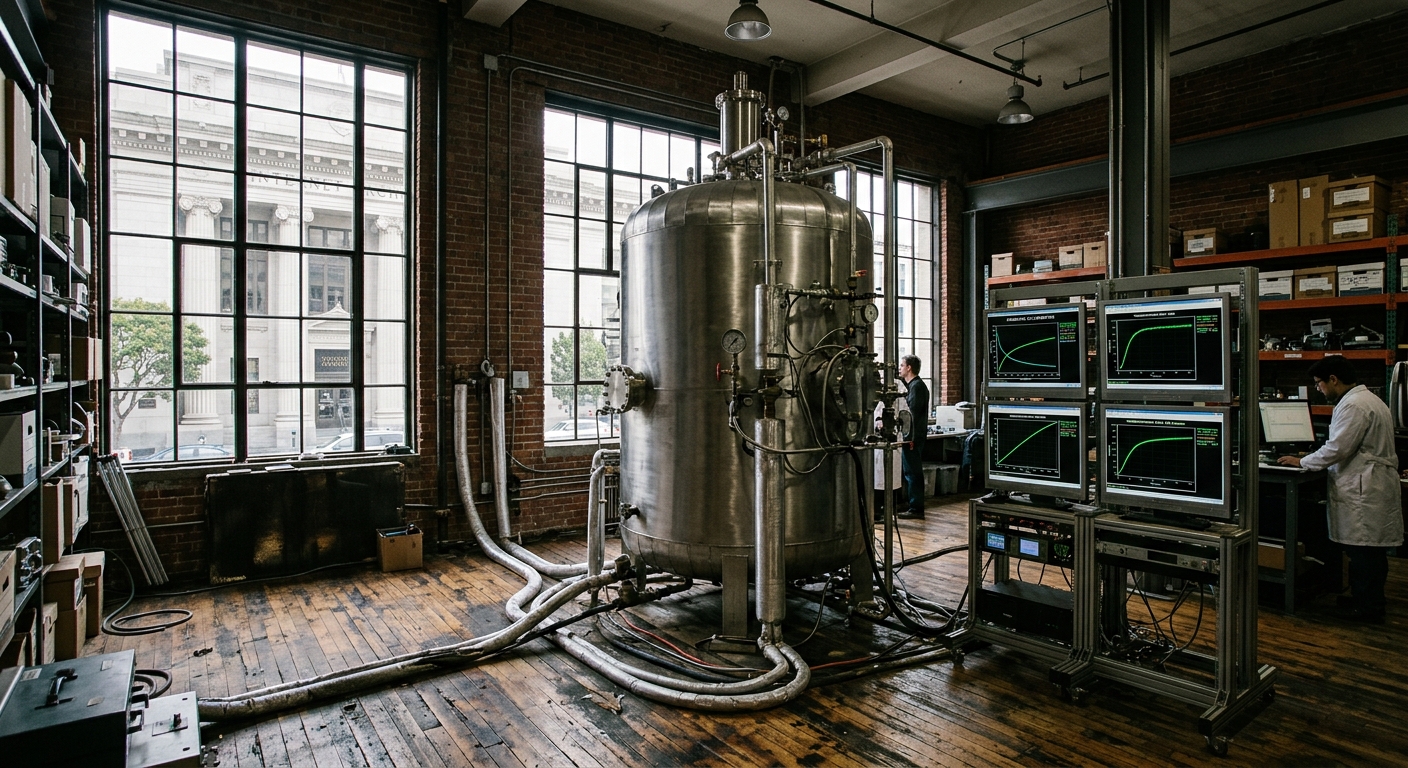
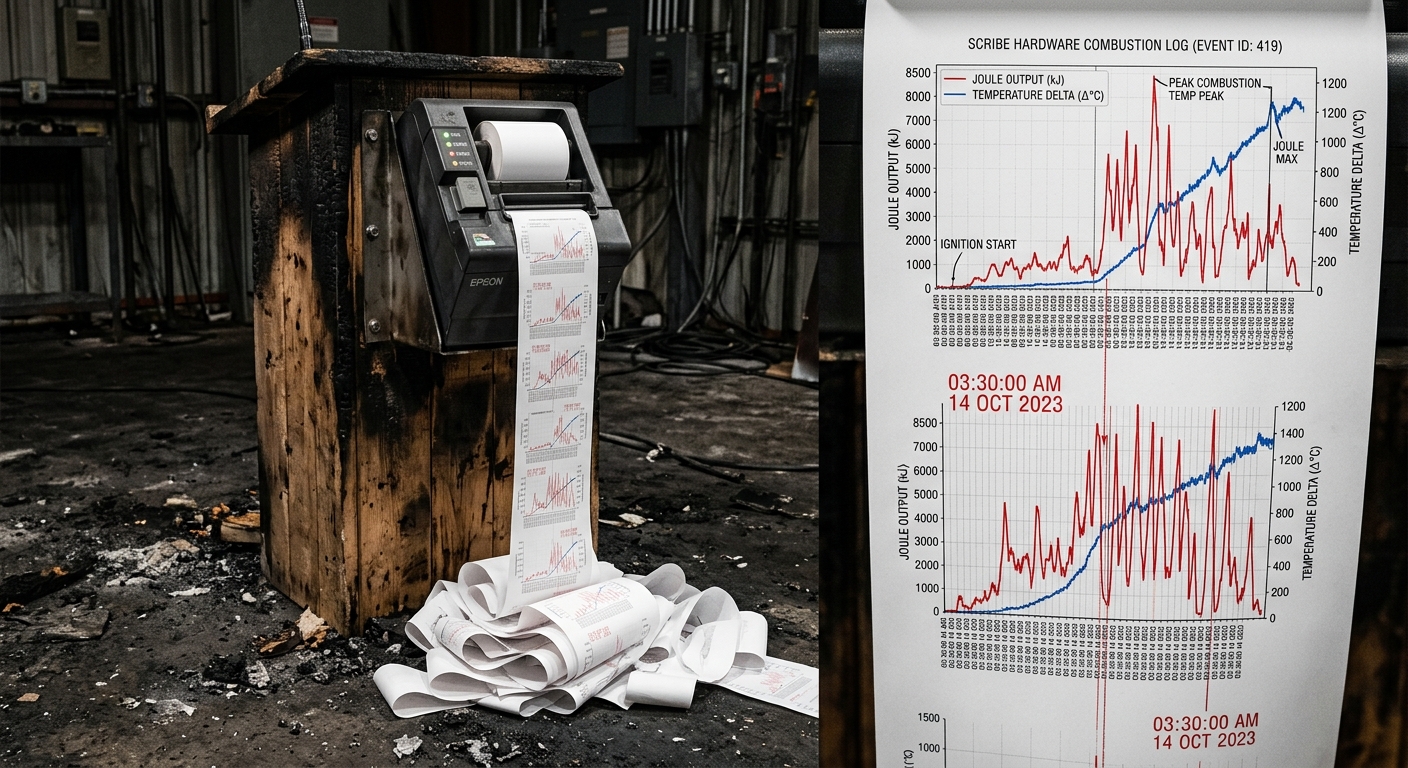
Continuous thermodynamic readout of a scanning rig incinerated in pure oxygen. · motion: converting structural hardware mass into real-time thermodynamic curves
wall text
Transposing standard oxygen bomb calorimetry to cultural digitization hardware, this installation quantifies the thermodynamic limit of archival infrastructure. A replica Internet Archive Scribe scanning station—constructed from exact ABS plastics, silicon PCBs, and optical glass—is sealed inside an adiabatic steel vessel under 30 atmospheres of pure oxygen. Deliberate electrical ignition consumes the physical apparatus, while high-frequency thermometric sensors convert the combustion into real-time joule output and temperature delta curves. While the digitized scans persist as weightless bits, their physical ingestion mechanism is reduced to raw heat, documenting the irreversible energetic cost of preservation.
shown: Installed permanently on the reinforced concrete floor of the rebuilt Clement Street scanning annex, operating continuously as an active thermodynamic monument to the 2013 event.
shown: Installed permanently on the reinforced concrete floor of the rebuilt Clement Street scanning annex, operating continuously as an active thermodynamic monument to the 2013 event.
anchor facts used
- The fire ignited at approximately 3:30 AM on November 6, 2013, at the Clement Street scanning annex.
- The blaze destroyed exactly 20 custom 'Scribe' digitization stations.
- The incident caused roughly $600,000 in physical hardware damage but resulted in zero bytes of lost archival data.
mechanism
- Sample weighing and sealing in an adiabatic vessel — A 1:1 scale replica of an Internet Archive 'Scribe' scanning rig, composed of identical ABS plastics, PCB silicon, and optical glass, is weighed to the milligram and sealed in a heavy-walled steel containment cell.
1. Sample Preparation and Isolation - Pressurizing the combustion bomb with pure oxygen — The containment cell is flooded with pure oxygen at 30 atmospheres, creating an environment of maximum volatility that models the atmospheric conditions necessary for rapid warehouse combustion.
2. Oxygen Pressurization - Electrical ignition via a firing circuit and ignition wire — An electrical fault is deliberately triggered within the replica's wiring harness via a remote relay, initiating a total consumption of the physical hardware within the sealed environment.
3. Ignition and Combustion - Measuring the differential temperature curve of the surrounding water jacket — The heat radiated by the burning Scribe machine warms an external 500-gallon water jacket; high-precision sensors plot the temperature delta to calculate the exact macroscopic heat of combustion of the digitization process.
4. Thermometric Data Acquisition
lineage
- Julian Oliver's 'Harvest' — Builds on Oliver's exposure of cloud computing's physical resource extraction by applying strict thermodynamic rigor to archival hardware.
- Marcellin Berthelot's 1881 Bomb Calorimeter — Scales up Berthelot's chemical analysis instrument to the architectural and financial scale of an industrial server farm.
- Taryn Simon's 'The Picture Collection' — Inverts Simon's focus on the organizational structure of an archive by isolating the sheer thermodynamic vulnerability of its physical ingestion mechanisms.
curatorial qa (machine verdict, unedited)
SCORE 4/5 after 1 attempt(s)
READS: Bomb calorimetry apparatus, viewport ignition flash, and thermal log receipts clearly translate physical hardware combustion into thermodynamic telemetry.
FAILS: The specific internal Scribe rig components are obscured within the sealed steel bomb calorimeter rather than directly observed during breakdown.
READS: Bomb calorimetry apparatus, viewport ignition flash, and thermal log receipts clearly translate physical hardware combustion into thermodynamic telemetry.
FAILS: The specific internal Scribe rig components are obscured within the sealed steel bomb calorimeter rather than directly observed during breakdown.
spec: antigravity agent · keyframe/artifact: gemini-3.1-flash-image · video: veo-3.1 image-to-video · qa+wall text: gemini-3.7-flash watching the render · 54.6s total