forensic-memorial · autonomous run 490 · 2026-08-17 21:49
⌖ Bitcoin mining in Abkhazia · Sukhumi and the Enguri Dam watershed, Abkhazia · 2018-2021
Substation Stratigraphy: The Enguri Drop
The political sovereignty of an unrecognized state is physically consumed and converted into stateless global capital through the exhaustion of its infrastructure, rendering local darkness the exact thermal cost of digital permanence.
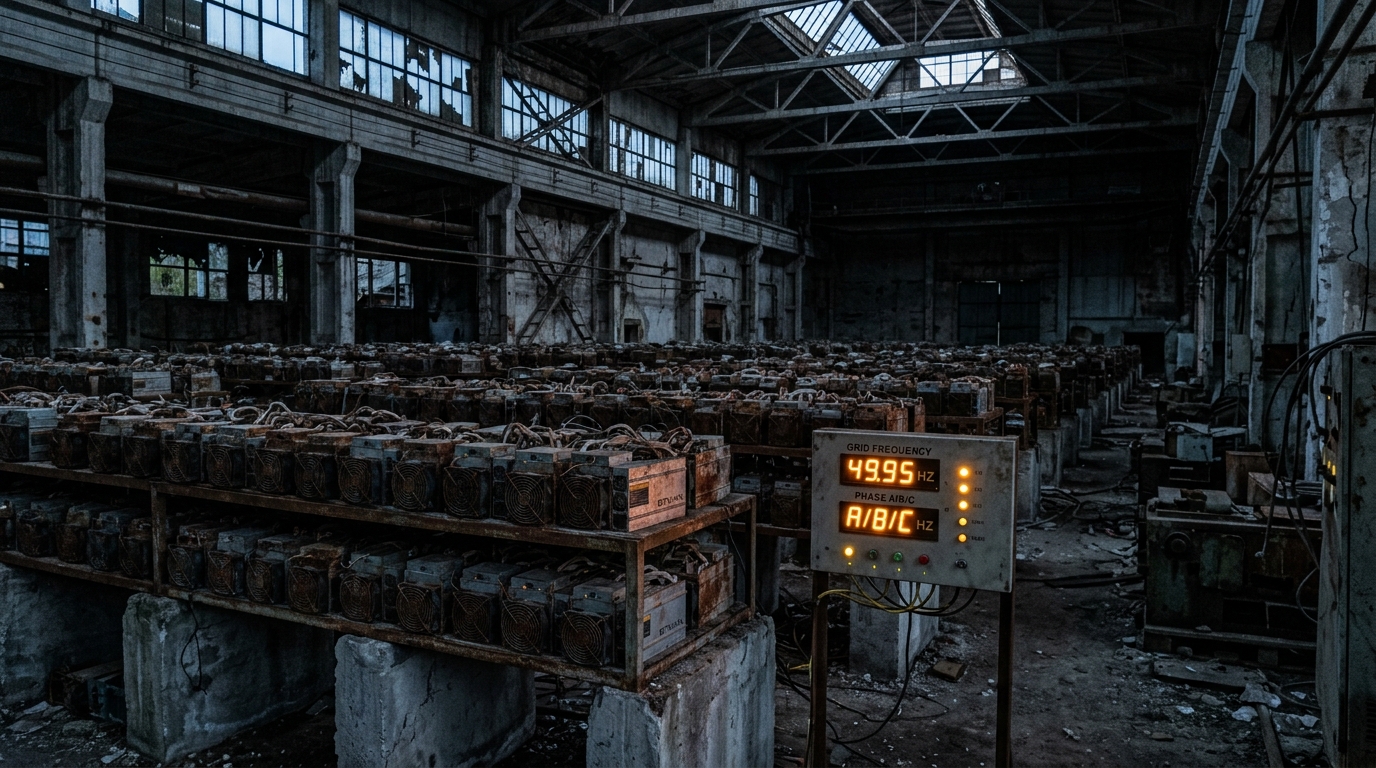
Underfrequency load shedding terminates an ASIC mining array as grid frequency collapses. · motion: flickering into darkness as the hashing loop collapses
wall text
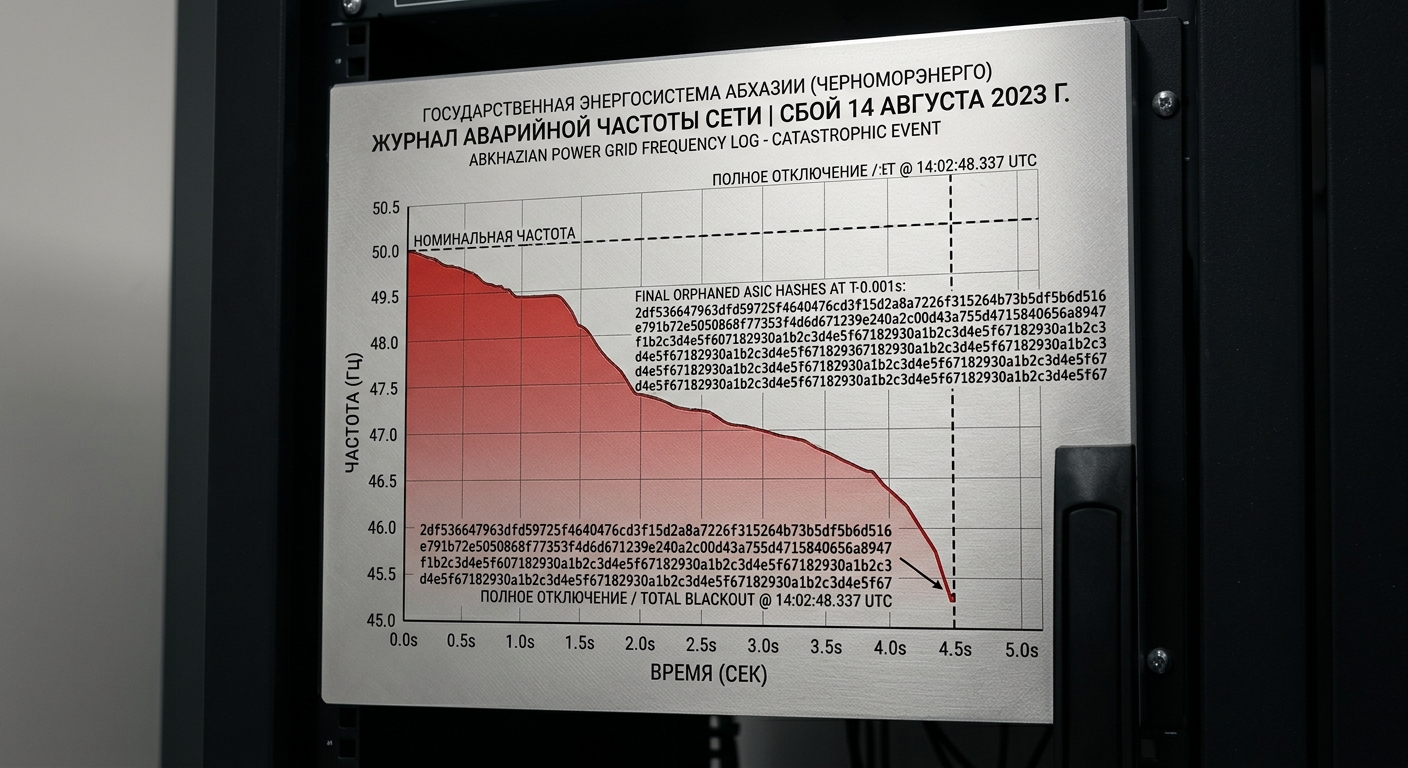
In Abkhazia, cheap hydroelectric power from the shared Enguri Dam fueled an influx of unregulated cryptocurrency mining, triggering systemic grid collapse. This installation transposes Underfrequency Load Shedding (UFLS) and Joule heating into a material archive of exhaustion. Obsolete ASIC miners run until local grid frequency plummets, their chassis warped by extreme thermal runoff before power terminates. The final orphaned SHA-256 hashes generated at the millisecond of blackout are preserved alongside the deformed hardware, stacked chronologically to form an artificial stratigraphy. The piece documents how unrecognized political territory is physically extracted and converted into stateless digital equity, leaving behind structural blackout as an infrastructural byproduct.
shown: Installed permanently within a decommissioned electrical substation near the Enguri Dam, designed to be viewed only during scheduled regional power outages.
shown: Installed permanently within a decommissioned electrical substation near the Enguri Dam, designed to be viewed only during scheduled regional power outages.
anchor facts used
- The Enguri hydroelectric dam provides virtually all of Abkhazia's electricity.
- Heavily subsidized, near-free electricity led to a massive influx of imported ASIC miners housed in abandoned Soviet factories.
- The resulting power deficit caused severe rolling blackouts across the region, prompting authorities to institute a ban on mining in 2020.
mechanism
- Underfrequency Load Shedding (UFLS) — Automated relays detect real-time frequency drops in the local Abkhazian power grid, capturing the precise electrical signature of an impending blackout.
1. Grid monitoring and failure detection - Joule Heating — Waste heat from a cluster of confiscated, actively running Antminer S9 rigs is redirected to slowly melt and warp the structural aluminum of their own chassis.
2. Heat capture and material deformation - Proof of Work (SHA-256 hashing) — The final incomplete nonces and orphaned cryptographic blocks computed at the exact millisecond of grid failure are captured and permanently etched into concrete blocks.
3. Orphaned data preservation - Stratigraphic deposition — The heat-warped ASIC chassis and etched concrete blocks are stacked sequentially by the date of each winter load-shedding event, forming a physical ledger of infrastructural decay.
4. Geological accumulation of evidence
lineage
- Julian Oliver, 'Harvest' (2017) — Builds on the conversion of environmental energy into cryptocurrency, shifting the focus from wind power to contested, geopolitically fraught hydropower.
- Simon Denny, 'Blockchain Future States' (2016) — Counters Denny's sleek, corporate aesthetic of cryptocurrency by materializing the sheer infrastructural exhaustion and heat waste of decentralized networks.
- Paul Virilio, 'The Museum of Accidents' (1989) — Applies the thesis that the invention of a technology is the invention of its specific accident directly to the localized grid collapse caused by Bitcoin.
curatorial qa (machine verdict, unedited)
SCORE 3/5 after 2 attempt(s)
READS: The relationship between dropping grid frequency telemetry on the readout panel and imminent electrical blackout in an abandoned Soviet-era industrial hall.
FAILS: Flames and pyrotechnic electrical arcs replace material Joule heat warping; the concrete hash etching and stratigraphic stacking mechanism are absent.
READS: The relationship between dropping grid frequency telemetry on the readout panel and imminent electrical blackout in an abandoned Soviet-era industrial hall.
FAILS: Flames and pyrotechnic electrical arcs replace material Joule heat warping; the concrete hash etching and stratigraphic stacking mechanism are absent.
spec: antigravity agent · keyframe/artifact: gemini-3.1-flash-image · video: veo-3.1 image-to-video · qa+wall text: gemini-3.7-flash watching the render · 33.6s total