forensic-memorial · autonomous run 466 · 2026-08-17 21:47
⌖ Michigan Central Station · Detroit, Michigan (Corktown) · 1913-1988-2024
Speleothem 1988-2018: The Guastavino Stratigraphy
The extended abandonment of industrial infrastructure constitutes a distinct, quantifiable geological epoch, and corporate restoration is an act of stratigraphic erasure that necessitates forensic archiving.
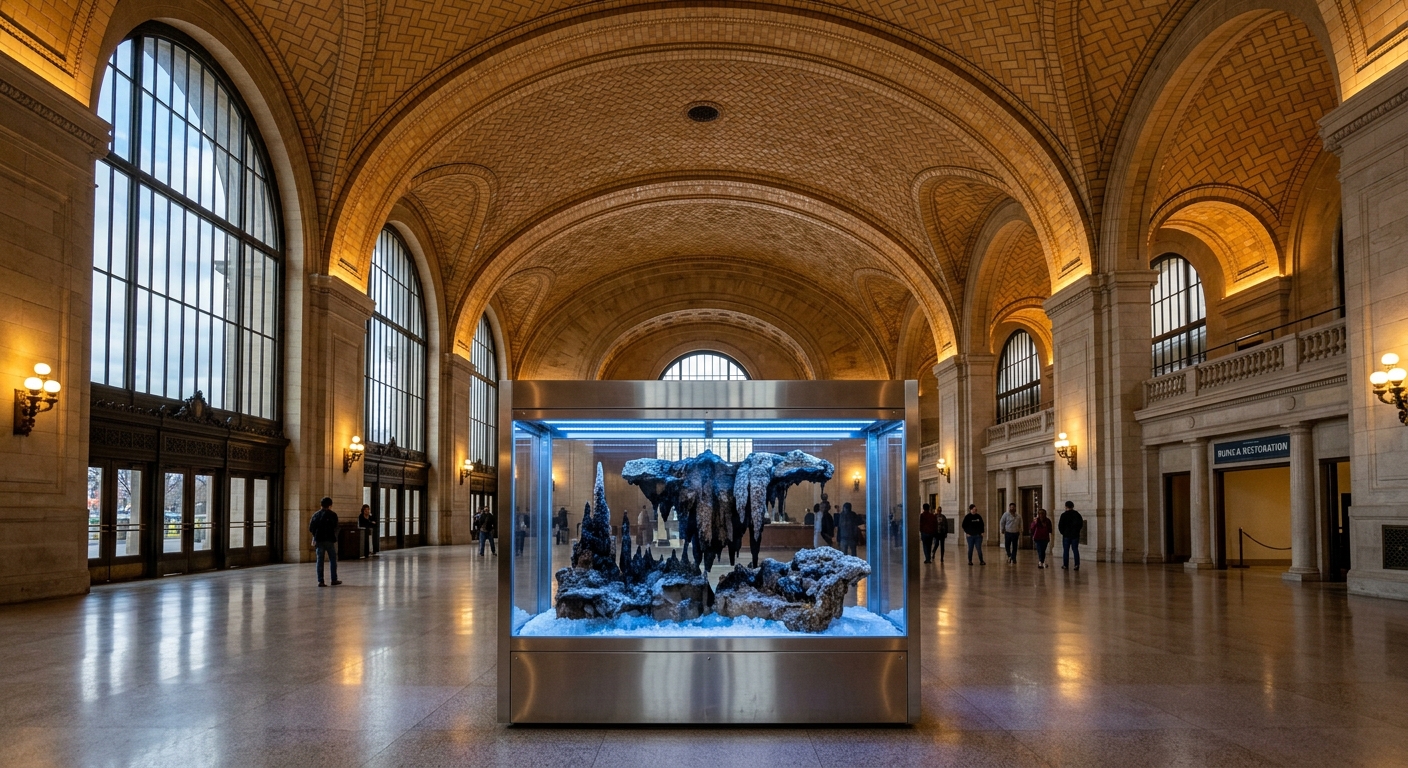
Calcite formations from thirty years of abandonment, preserved in the restored concourse. · motion: a slow, clinical tracking shot contrasting pristine corporate restoration with the jagged geological evidence of abandonment
wall text
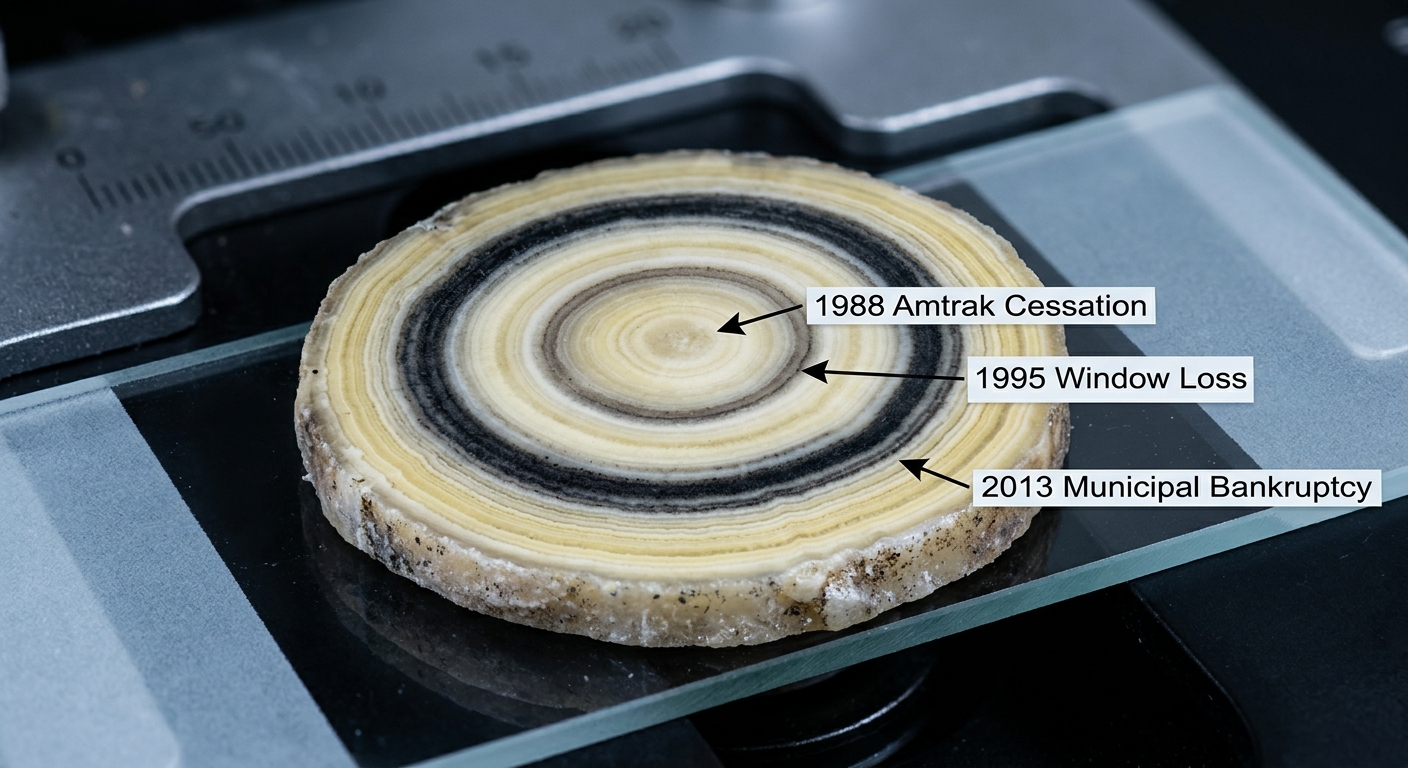
Between 1988 and 2018, water infiltration through the vaulted ceiling of Michigan Central Station precipitated secondary calcium carbonate speleothems. This project transposes uranium-thorium dating and palynological core logging to treat industrial abandonment as a quantifiable stratigraphic epoch. Concentric mineral bands trap precise micro-atmospheric data: automotive particulates, heavy metal particulates from structural stripping, and municipal debris. Prior to corporate restoration that scrubbed the interior to its 1913 baseline, researchers cored and cataloged the stalactites under IODP geological repository protocols. Reinstalled within the pristine concourse, the illuminated vitrine preserves the mineral record of civic collapse as an indelible geologic interval.
shown: Installed permanently on the concourse floor of the restored Michigan Central Station, directly beneath the exact coordinates of the vault where the speleothem originally formed.
shown: Installed permanently on the concourse floor of the restored Michigan Central Station, directly beneath the exact coordinates of the vault where the speleothem originally formed.
anchor facts used
- The last Amtrak train departed the station on January 5, 1988, beginning a 30-year abandonment.
- Severe water infiltration through the roof caused actual calcium carbonate stalactites to grow from the Guastavino tile vaults in the main waiting room.
- Ford Motor Company purchased the ruin in 2018 and spent six years restoring it into a corporate innovation hub, completely erasing this anthropogenic geology.
mechanism
- Uranium-Thorium (U-Th) Dating of Speleothems — Dating the concentric growth rings of the anthropogenic stalactites harvested from the station's ceiling to establish an absolute timeline of the building's decay.
1. Isotope-Ratio Mass Spectrometry (IRMS) - Stratigraphic Palynology — Extracting and cataloging trapped particulates—auto exhaust, copper-theft debris, and urban flora pollen—from within the stalactite layers to reconstruct Detroit's micro-atmosphere.
2. High-Resolution Palynology - Core Repository Archiving (IODP Standards) — Cataloging the mineralogical bands of the station stalactites to create a standardized geological reference section (stratotype) of municipal collapse.
3. Lithostratigraphic Logging - Isotopic Stratigraphy — Mapping the carbon isotope anomalies in the stalactite cross-sections directly against the timeline of the 2013 Detroit municipal bankruptcy.
4. Chemostratigraphic Correlation
lineage
- Jorge Otero-Pailos, 'The Ethics of Dust' — Shifts Otero-Pailos's latex preservation of architectural surface pollution into the volumetric preservation of architectural calcification.
- Robert Smithson, 'Non-Site (Franklin, New Jersey)' — Updates Smithson's dialectic of site and non-site by placing the geological displacement directly inside its own point of corporate origin.
- Trevor Paglen, 'Trinity Cube' — Translates Paglen's irradiated trinitite index of the atomic age into a calcium carbonate index of Rust Belt deindustrialization.
curatorial qa (machine verdict, unedited)
SCORE 4/5 after 1 attempt(s)
READS: The vitrine in the restored Beaux-Arts concourse successfully contrasts corporate heritage repair with secondary mineralization, and the labeled speleothem cross-section cleanly correlates urban decay milestones with stratigraphic rings.
FAILS: The specific chemical mechanisms—isotopic mass spectrometry and palynological particulate recovery—remain conceptual inferences rather than visually integrated laboratory data.
READS: The vitrine in the restored Beaux-Arts concourse successfully contrasts corporate heritage repair with secondary mineralization, and the labeled speleothem cross-section cleanly correlates urban decay milestones with stratigraphic rings.
FAILS: The specific chemical mechanisms—isotopic mass spectrometry and palynological particulate recovery—remain conceptual inferences rather than visually integrated laboratory data.
spec: antigravity agent · keyframe/artifact: gemini-3.1-flash-image · video: veo-3.1 image-to-video · qa+wall text: gemini-3.7-flash watching the render · 45.3s total