forensic-memorial · autonomous run 443 · 2026-08-17 21:46
⌖ Gallagher's brickworks automation · Perth, Western Australia and upstate New York test sites · 2015-Present
Kinematic Stratigraphy of the Hand-Molder
The complete elimination of biometric, tactile variation in automated construction creates a geological discontinuity, where the physical memory of human labor is replaced by the uniform error-correction logs of path-planning algorithms.
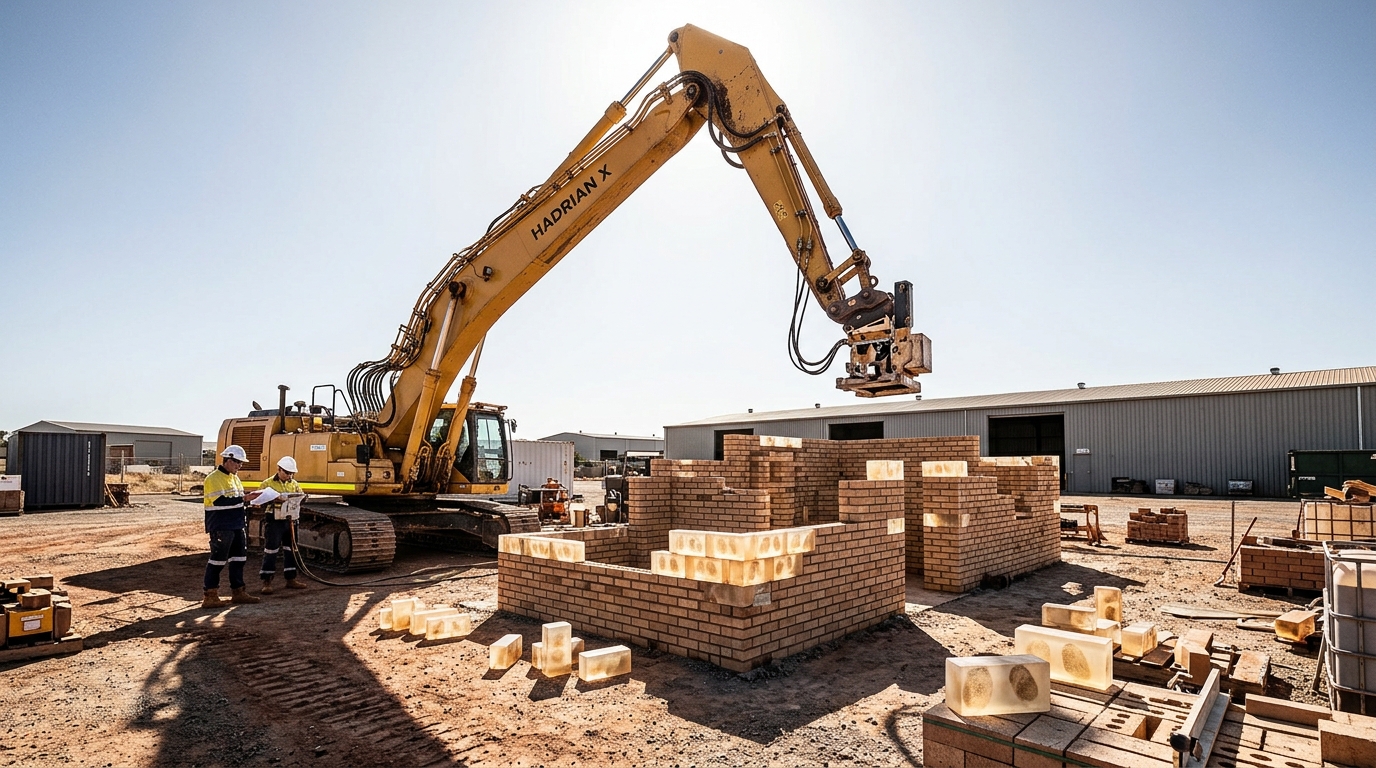
A robotic arm scans and neutralizes irregular mortar beds using real-time compensation. · motion: algorithmic smoothing overwriting biometric texture
wall text
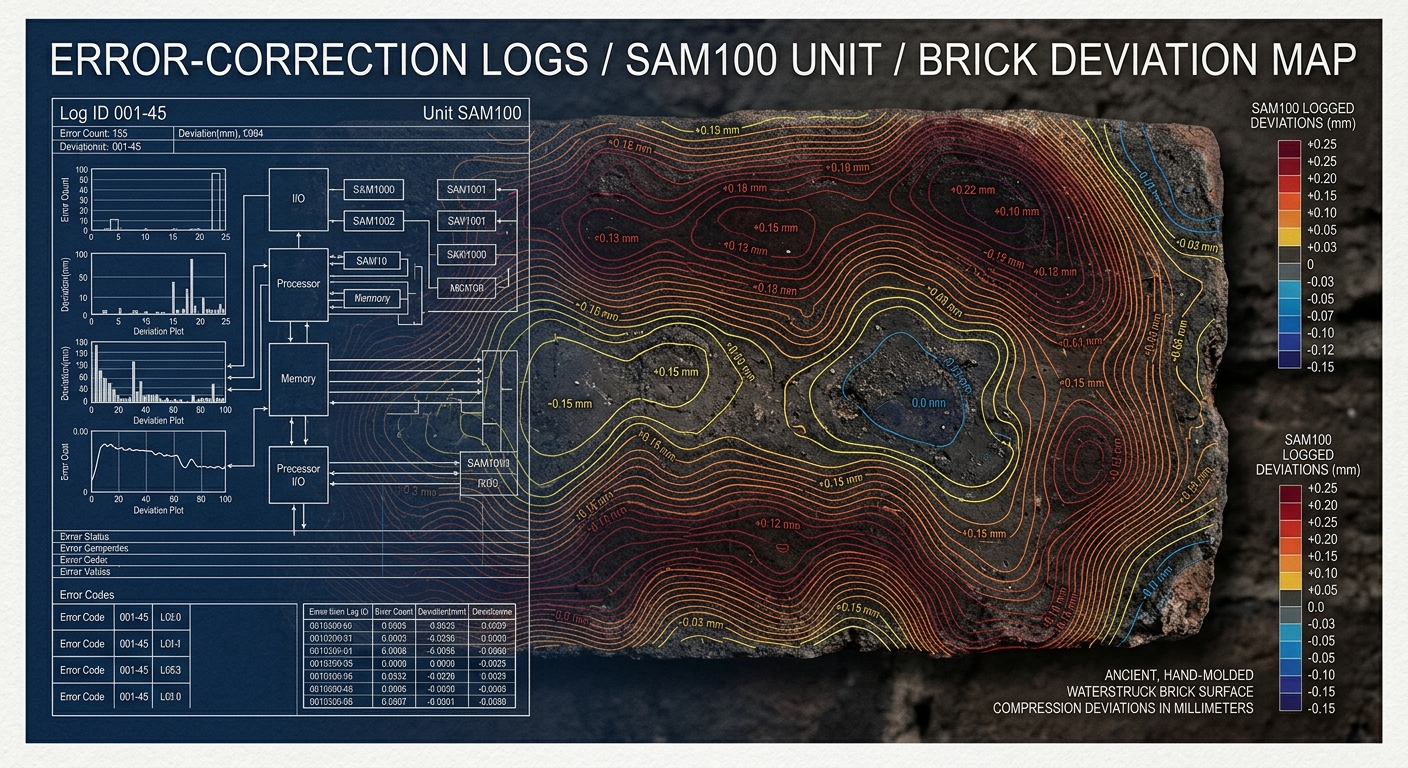
Automated masonry platforms like the SAM100 rely on laser guidance and PID control loops to eliminate irregularities caused by mortar slump or wind sway. This installation transposes white-light interferometry and stratigraphic core drilling to interrogate what happens when human error is engineered out of architecture. By scanning hand-molded 19th-century waterstruck bricks—bearing thumb impressions and variable clay compression—the system converts historical tactile labor into deviation maps. A robotic arm then deposits synthetic resin into these voids, executing path-planning routines that systematically smooth out biometric history, leaving a sterile record of algorithmic compliance.
shown: Installed directly on the scaffolding of an active robotic construction site, functioning as a real-time forensic archive of the structure being built.
shown: Installed directly on the scaffolding of an active robotic construction site, functioning as a real-time forensic archive of the structure being built.
anchor facts used
- The Hadrian X robot lays up to 1,000 standard brick equivalents per hour using a 30-meter telescopic boom.
- The SAM100 (Semi-Automated Mason) relies on a laser-guided track and dynamic error-correction algorithms to compensate for scaffolding sway.
- Traditional hand-molding of waterstruck bricks leaves unique biometric creasing patterns dependent on clay moisture and operator thumb pressure.
mechanism
- Core Drilling and Stratigraphic Superposition — Extracting vertical core samples from both a 19th-century hand-laid wall and a SAM100-laid test wall to isolate the mortar-to-brick compression ratios as physical data sets.
1. Stratigraphic Isolation - White-light Interferometry — Scanning the surface irregularities of the historical core samples at a micrometer resolution to mathematically quantify the exact volume of lost human biometric variation.
2. Surface Mapping - Inverse Kinematics and PID Control — Using the spatial coordinates of the human thumbprint anomalies to generate an intentionally inefficient, wavering path for a robotic arm.
3. Algorithmic Inversion - Fused Deposition Modeling (FDM) — The robot extrudes a synthetic resin that precisely fills and memorializes the negative space of the calculated human error, outputting transparent, data-logged bricks.
4. Memorial Extrusion
lineage
- Fastbrick Robotics (FBR), 'Hadrian X Field Testing Logs' — Provides the raw, unromanticized baseline data of automated masonry that this piece seeks to forensically document.
- Harun Farocki, 'In Comparison' (2009) — Extends Farocki's cinematic analysis of cultural brickmaking processes into a physical, quantifiable stratigraphic mechanism.
- Simon Denny, 'Extractor' (2019) — Shares the methodology of treating contemporary automated industrial extraction and deployment as a site for speculative archaeology.
curatorial qa (machine verdict, unedited)
SCORE 3/5 after 2 attempt(s)
READS: The green LiDAR projection actively mapping mortar unevenness and the robot placing translucent resin bricks successfully convey computerized terrain compensation.
FAILS: The direct link to historical biometric compression and thumbprint data is lost in the macro excavator shots, looking like standard automated masonry rather than an archaeological transposition.
READS: The green LiDAR projection actively mapping mortar unevenness and the robot placing translucent resin bricks successfully convey computerized terrain compensation.
FAILS: The direct link to historical biometric compression and thumbprint data is lost in the macro excavator shots, looking like standard automated masonry rather than an archaeological transposition.
spec: antigravity agent · keyframe/artifact: gemini-3.1-flash-image · video: veo-3.1 image-to-video · qa+wall text: gemini-3.7-flash watching the render · 40.5s total