forensic-memorial · autonomous run 428 · 2026-08-17 21:45
⌖ Ganges sand mining · Prayagraj to Gautam Buddha Nagar, Uttar Pradesh, India · 2013-present
ASTM C856: Petrographic Memorials of Greater Noida
The physical architecture of India's urban economic miracle is structurally composed of the ecological collapse and stolen geomorphology of its sacred rivers.
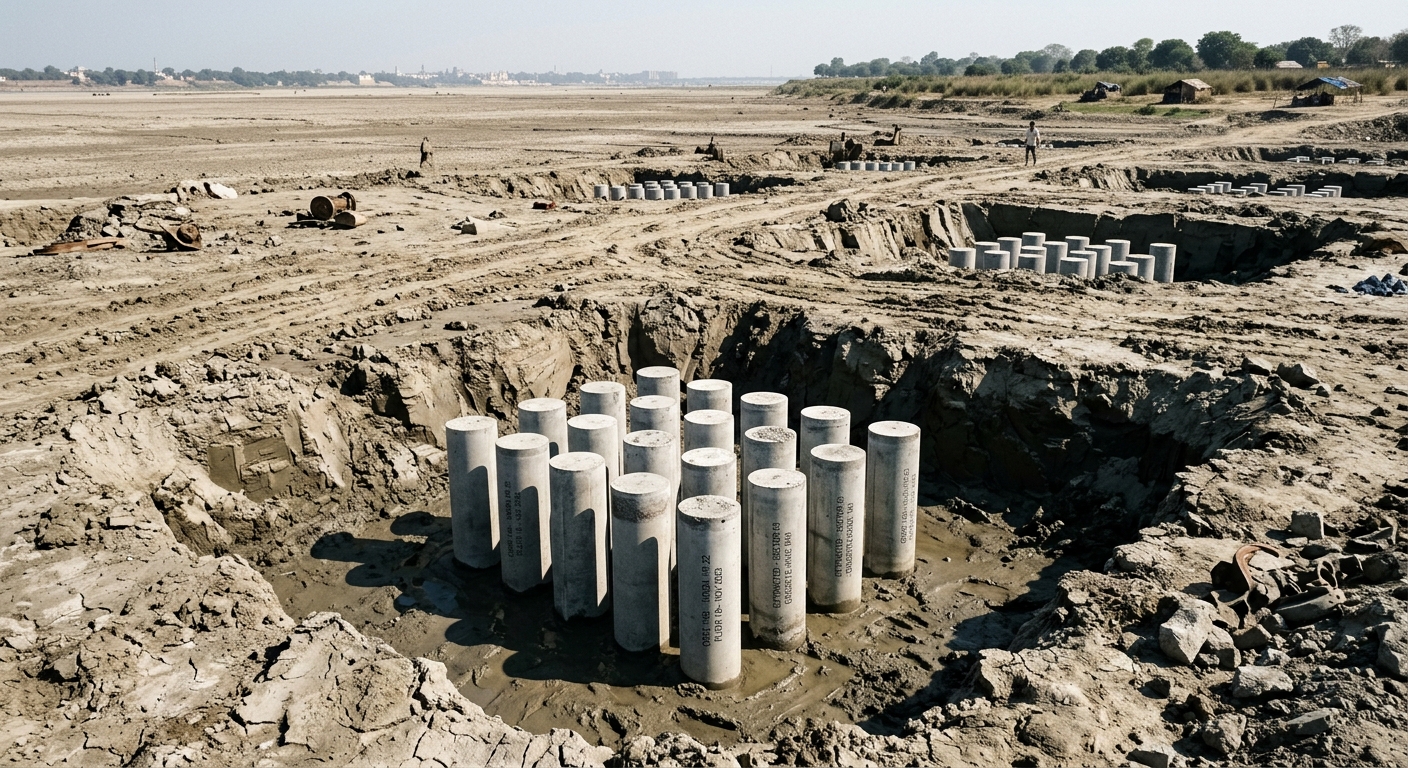
Forensic concrete cores repatriated to illicit extraction craters in the Yamuna basin. · motion: eroding backward from monumental architecture to extracted void
wall text
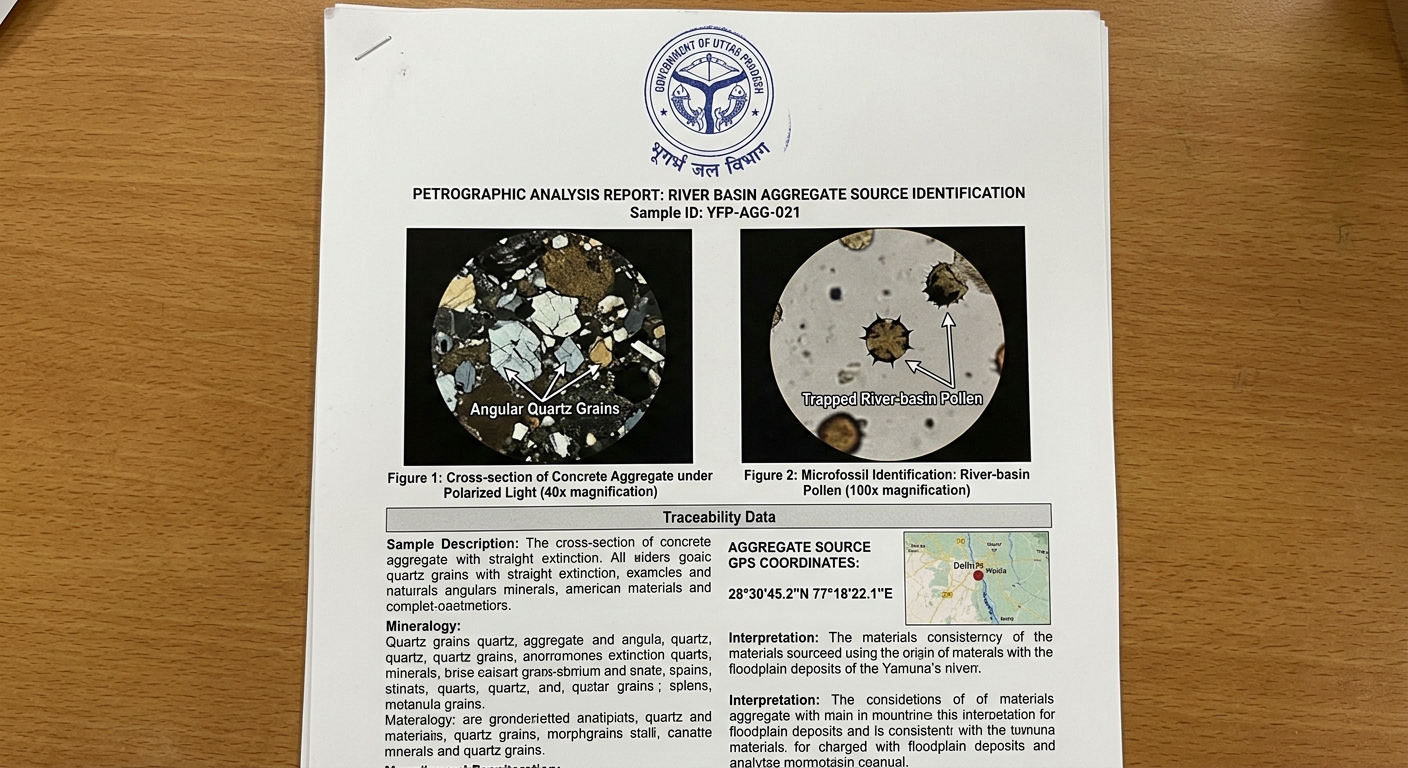
Urban expansion across northern India relies on illicit riverbed sand mining, stripping sacred floodplains to supply massive concrete real estate developments. This project inverts supply-chain forensics by extracting standard cylindrical core samples from high-rise load-bearing pillars in Noida. Using standard ASTM C856 petrography and forensic palynology, researchers dissolve the cement matrix with hydrochloric acid to isolate fine aggregate, cross-referencing trapped microfossils and pollen profiles against river basin geomorphology. Once pinpointed to specific dredged craters, the extracted sand is cast into memorial core cylinders and reinstalled directly into riverbed voids, returning the stolen aggregate to its source coordinates.
shown: Installed directly within the dredged, illegal extraction craters along the Ganges riverbank near Prayagraj, where the concrete cores function as a flooded memorial during the monsoon season.
shown: Installed directly within the dredged, illegal extraction craters along the Ganges riverbank near Prayagraj, where the concrete cores function as a flooded memorial during the monsoon season.
anchor facts used
- Riverbed sand from the Ganges and Yamuna is extracted by illegal mafias using mechanized dredgers, destroying the habitats of the critically endangered Gharial.
- In 2013, IAS officer Durga Shakti Nagpal was famously suspended after seizing illegally mined sand and dismantling mafia operations in Gautam Buddha Nagar.
- The stolen high-silica, angular sand is the primary aggregate used to cast the reinforced concrete of rapid high-rise developments in Noida and Greater Noida.
mechanism
- Geotechnical core drilling — Extracting standard 4-inch cylindrical concrete cores from the load-bearing pillars of newly constructed, unoccupied high-rise towers in Sector 137, Noida.
1. Geotechnical Extraction - Concrete Petrography (ASTM C856) — Dissolving the cementitious paste using hydrochloric acid baths to isolate the fine aggregate, physically separating the river sand from the industrial binders.
2. Aggregate Isolation - Forensic Palynology — Centrifuging the isolated sand to extract trapped Holocene pollen and microfossils, matching the botanical profile to specific coordinates on the river.
3. Origin Fingerprinting - Chain of Custody (ISO 22095) — Transporting the isolated, fingerprinted sand back to its exact origin coordinates and casting it into memorial obelisks planted in the dredged voids.
4. Repatriation
lineage
- A Section of the Albion Gallery, London by Lara Almarcegui — Extends her inventory of construction materials by forensically tracing the illegal supply chain of the aggregate back to its geological origin.
- Trace Evidence by Susan Schuppli — Applies her framework of materials as witnesses to the molecular memory of stolen riverbeds trapped inside brutalist concrete.
- UNEP 2019 Report: Sand and Sustainability — Translates the report's global policy warnings into localized, quantifiable forensic evidence of ecological arbitrage.
curatorial qa (machine verdict, unedited)
SCORE 4/5 after 2 attempt(s)
READS: The forensic petrographic report cleanly establishes the chain of custody from angular quartz and riverbed pollen to concrete infrastructure. The video sequence directly connects Noida's high-rise construction columns to cylindrical cast memorials embedded in dry river extraction craters.
FAILS: The chemical aggregate dissolution and laboratory separation steps occur entirely off-screen, relying exclusively on the paperwork to convey the analytical mechanism.
READS: The forensic petrographic report cleanly establishes the chain of custody from angular quartz and riverbed pollen to concrete infrastructure. The video sequence directly connects Noida's high-rise construction columns to cylindrical cast memorials embedded in dry river extraction craters.
FAILS: The chemical aggregate dissolution and laboratory separation steps occur entirely off-screen, relying exclusively on the paperwork to convey the analytical mechanism.
spec: antigravity agent · keyframe/artifact: gemini-3.1-flash-image · video: veo-3.1 image-to-video · qa+wall text: gemini-3.7-flash watching the render · 34.3s total