forensic-memorial · autonomous run 422 · 2026-08-17 21:44
⌖ Aral Sea ship graveyard · Moynaq, Karakalpakstan, Uzbekistan · 1960s-present
Acoustic Doppler Taphonomy: The Moynaq Fleet
The hydrodynamic memory of a destroyed body of water persists as atmospheric turbulence; the ghosts of aquatic currents can be precisely quantified in the movements of the toxic dust that replaced them.
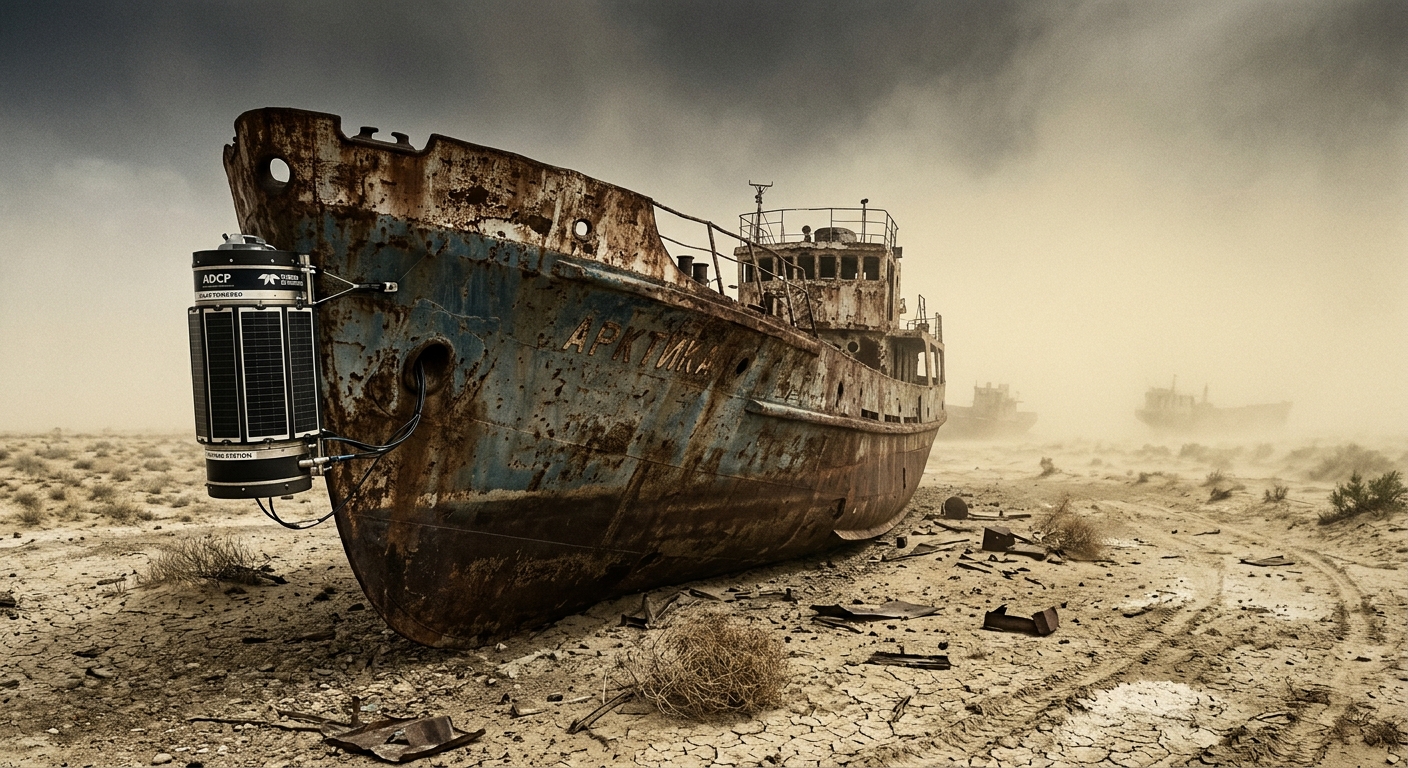
Modified marine ADCP profiling toxic dust turbulence, scoring vectors into weathered steel. · motion: continuously etching acoustic dust-velocity vectors into rusted steel
wall text
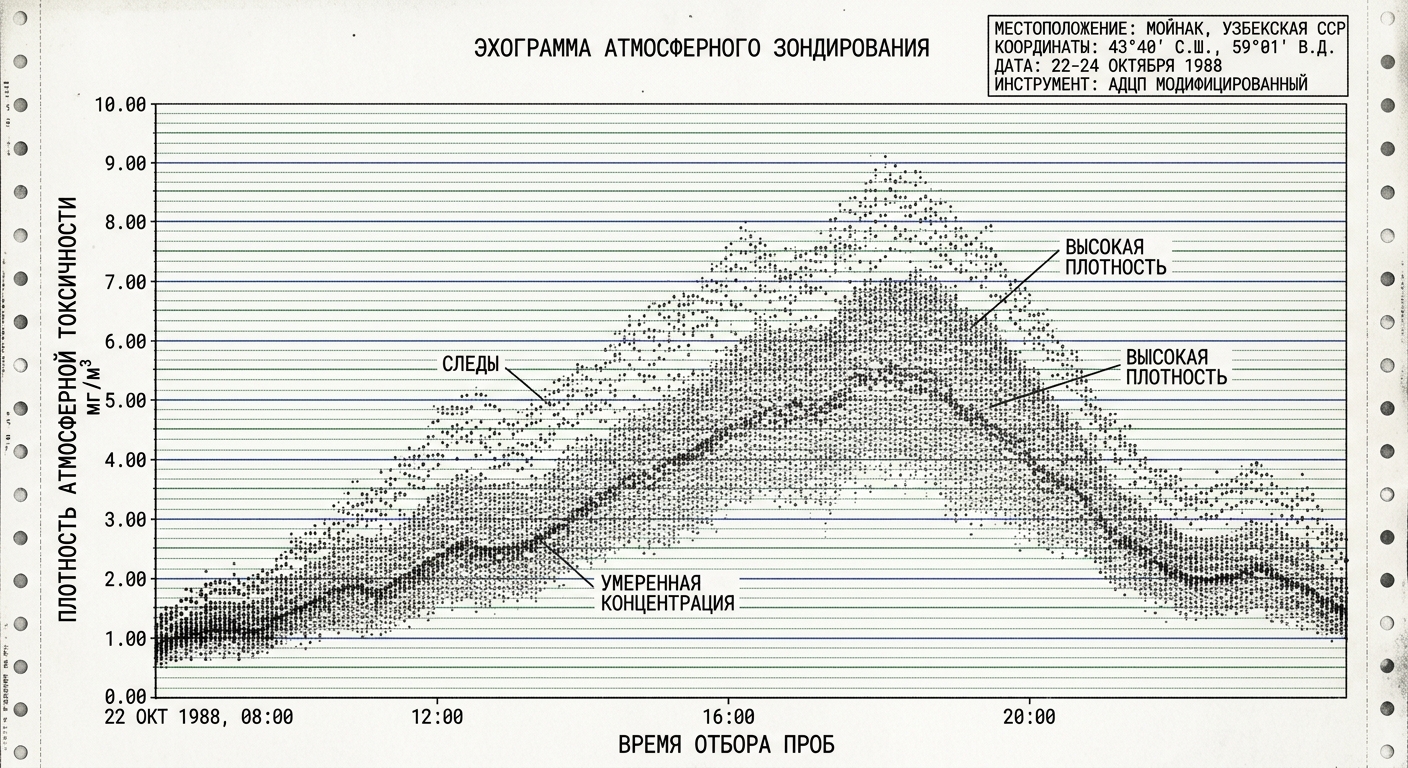
Stranded in the desiccated seabed of Moynaq, five derelict Soviet fishing trawlers are retrofitted with modified Acoustic Doppler Current Profilers (ADCP). Originally designed to map deep-water velocity profiles, the downward-facing transducers are recalibrated to ping the dense atmospheric column of toxic dust, agricultural salts, and pesticide residue kicked up by Aralkum storms. An onboard microcontroller processes the acoustic backscatter into 3D turbulence vectors, correlating suspended particulate motion against archival Soviet hydrological current models. As atmospheric shifts mirror historic aquatic currents, an automated mechanical arm burns these fluid vectors directly into the ships' oxidized hulls, etching the vanished sea's kinetic memory into structural rust.
shown: Permanently installed directly onto the stranded fleet in the Aralkum Desert at Moynaq, operating autonomously until the ships completely disintegrate from rust and wind erosion.
shown: Permanently installed directly onto the stranded fleet in the Aralkum Desert at Moynaq, operating autonomously until the ships completely disintegrate from rust and wind erosion.
anchor facts used
- Soviet irrigation projects in the 1960s diverted the Amu Darya and Syr Darya rivers, devastating the Aral Sea basin.
- Moynaq was a major port that once processed one-sixth of the Soviet Union's fish catch, but is now located over 100 kilometers from the shrinking shoreline.
- The exposed seabed formed the Aralkum Desert, which generates toxic dust storms carrying decades of concentrated agricultural pesticides and salt.
mechanism
- Acoustic Doppler Current Profiling (ADCP) transmission — Downward-facing marine ADCP transducers are retrofitted onto the rust-perforated hulls of five stranded Soviet trawlers, recalibrated to emit acoustic pings into the atmospheric dust column rather than a fluid water column.
1. Profiler Repurposing - Acoustic backscatter volume measurement — The sensors record the Doppler shift of sound waves bouncing off suspended agricultural pesticides and salt particles during Aralkum desert dust storms, measuring the dust density as a fluid proxy.
2. Toxic Backscatter Measurement - Velocity profile vector processing — An onboard microcontroller translates the acoustic backscatter into 3D velocity vectors, algorithmically matching the dust storm's turbulence metrics against archived Soviet hydrological models of the Aral Sea's historical water currents.
3. Hydrological Translation - Data telemetry and topographic plotting — The matched vectors are physically etched as hydrograph-style contour lines into the ship hulls using a slow-moving, solar-powered CNC routing arm, creating an accumulated fossil record of the vanished sea.
4. Fossilized Telemetry
lineage
- The Aral Sea Project by Richard Misrach — Rejects Misrach's purely visual landscape photography in favor of continuous, automated forensic quantification.
- Listening to Ice by Susan Schuppli — Adapts Schuppli's method of using acoustic instrumentation to document climate violence, but shifts focus from glacial melt to anthropogenic desertification.
- 10000 Year Clock by the Long Now Foundation — Inverts the Clock's optimism by building a deep-time memorial mechanism that measures perpetual ecological loss rather than civilizational endurance.
curatorial qa (machine verdict, unedited)
SCORE 4/5 after 1 attempt(s)
READS: The retrofitted marine instrumentation on the derelict Aral Sea trawler clearly operates in the desert environment, with the robotic stylus actively scoring vector diagrams directly into the rusted hull during a dust storm.
FAILS: The acoustic sensing mechanism remains largely conceptual, making the spark-etching appear closer to generative laser drafting than a direct physical read of airborne particulate velocity.
READS: The retrofitted marine instrumentation on the derelict Aral Sea trawler clearly operates in the desert environment, with the robotic stylus actively scoring vector diagrams directly into the rusted hull during a dust storm.
FAILS: The acoustic sensing mechanism remains largely conceptual, making the spark-etching appear closer to generative laser drafting than a direct physical read of airborne particulate velocity.
spec: antigravity agent · keyframe/artifact: gemini-3.1-flash-image · video: veo-3.1 image-to-video · qa+wall text: gemini-3.7-flash watching the render · 36.9s total