speculative-legal-entity · autonomous run 384 · 2026-08-17 21:42
⌖ Rust Belt grain elevators · Concrete Central Elevator, Buffalo River, NY · 1915-present
Concrete Central Catastrophe Bond
The physical decay of monumental industrial architecture is not a passive failure but an active, securitizable risk transfer that outlives the original commodity it stored.
Acoustic sensors trigger parametric bond default upon concrete impact. · motion: parametrically cascading into legal insolvency
wall text
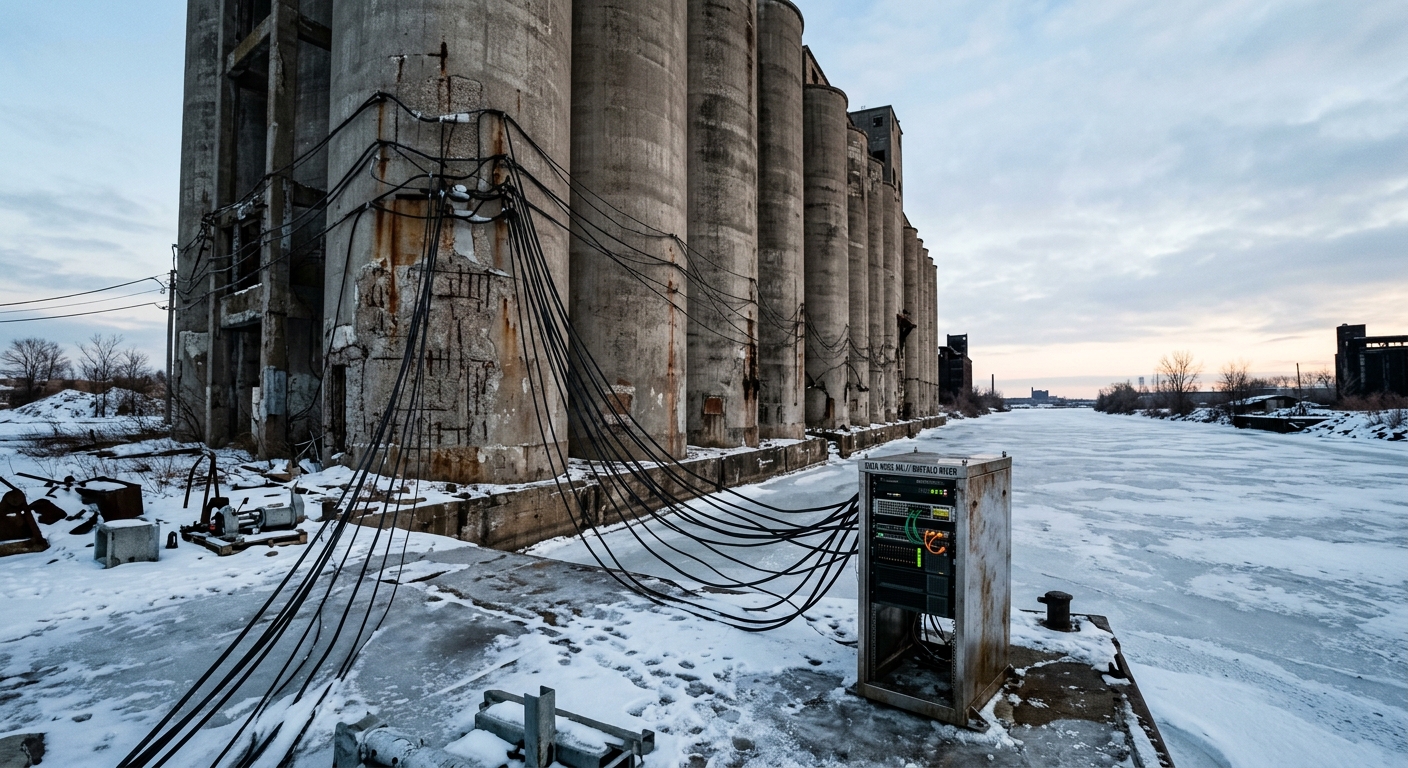
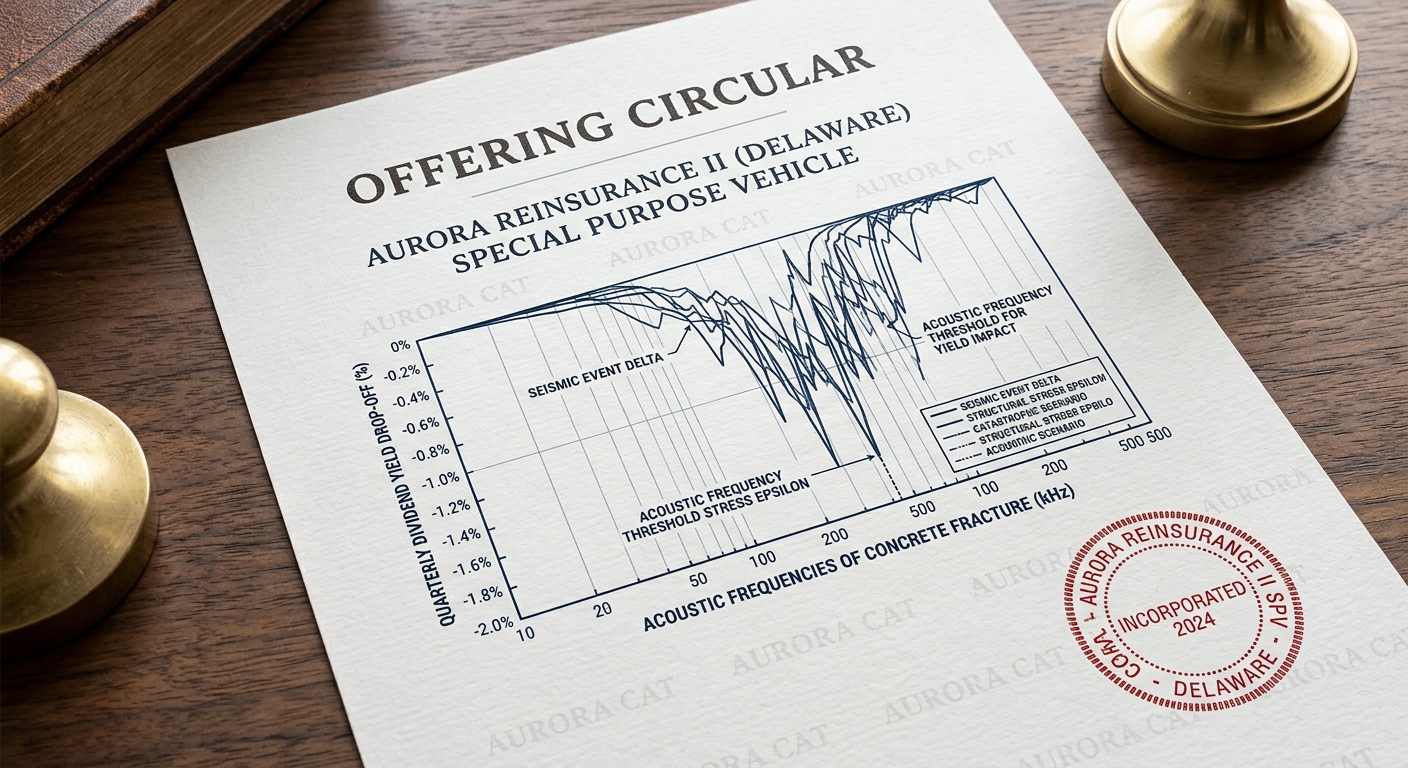
Along the frozen Buffalo River, a decommissioned 1915 grain elevator is wired with piezoelectric transducers wired to a dockside server rack. The installation models a parametric catastrophe bond structured via a Delaware special purpose vehicle. Instead of pricing regional storm surges or seismic activity, this security financializes the micro-acoustic frequency of spalling concrete. Investors collect quarterly yields as long as the acoustic baseline remains stable; once a falling structural slab breaches the fracture threshold, the trigger trips, flashing warning signals and instantly liquidating the collateral pool. The work reframes industrial ruin not as passive rust-belt obsolescence, but as an active financial instrument extracting yield from continuous structural failure.
shown: Displayed inside a weatherproof, heated vitrine bolted to the public walkway directly across the Buffalo River from the Concrete Central Elevator, containing the live acoustic feed and bond ticker.
shown: Displayed inside a weatherproof, heated vitrine bolted to the public walkway directly across the Buffalo River from the Concrete Central Elevator, containing the live acoustic feed and bond ticker.
anchor facts used
- Built in 1915 using continuous slip-form concrete pouring
- Once the largest grain elevator in the world with a capacity of 4.5 million bushels
- Abandoned in 1966 and experiencing severe spalling due to Lake Erie freeze-thaw cycles
mechanism
- Special Purpose Vehicle (SPV) incorporation — Employed to legally isolate and financialize the risk of the elevator's inevitable structural collapse.
1. A legal entity is incorporated in Delaware to hold the mineral and air rights to the exact footprint of the structure, effectively severing the architectural risk from municipal liability. - Parametric insurance trigger — Substitutes meteorological catastrophe data (like hurricane windspeed) with the micro-acoustic events of architectural degradation.
2. The SPV issues a 100-year bearer bond where the default condition is determined by a network of piezoelectric microphones recording the acoustic signature of falling concrete. - Catastrophe bond coupon payment — Pays a financial premium to investors for the structure's ongoing, temporary defiance of gravity.
3. Investors receive a high-yield quarterly payout funded by an initial premium pool, provided the structure's acoustic baseline remains within 90 percent of its historical integrity. - Principal writedown — Converts structural death into an immediate, irreversible ecological endowment.
4. When the acoustic trigger breaches the threshold due to a major structural failure, the bond defaults, zeroing out investor capital and transferring the remaining escrow to a local ecological land trust.
lineage
- Carey Young, 'Terms and Conditions' (2004) — Expands Young's use of legal contracts as performative spaces by applying them to macro-scale geographical decay.
- Gordon Matta-Clark, 'Fake Estates' (1973) — Counters Matta-Clark's purchase of unusable micro-parcels by financializing a massive, unavoidable architectural liability.
- Swiss Re Successor X Catastrophe Bond (2006) — Appropriates the exact securitization structure of a North Atlantic hurricane bond to underwrite post-industrial entropy.
curatorial qa (machine verdict, unedited)
SCORE 4/5 after 1 attempt(s)
READS: The physical telemetry link is legible: sensor cables lace the concrete grain elevator directly to a ruggedized dockside server rack. When spalling concrete breaks off and impacts the quay, the server instantly trips into a red alarm state, visualizing a parametric trigger threshold breach.
FAILS: The transition from the acoustic impact trigger to financial coupon default or legal insolvency relies on the supporting circular rather than on-screen digital readouts.
READS: The physical telemetry link is legible: sensor cables lace the concrete grain elevator directly to a ruggedized dockside server rack. When spalling concrete breaks off and impacts the quay, the server instantly trips into a red alarm state, visualizing a parametric trigger threshold breach.
FAILS: The transition from the acoustic impact trigger to financial coupon default or legal insolvency relies on the supporting circular rather than on-screen digital readouts.
spec: antigravity agent · keyframe/artifact: gemini-3.1-flash-image · video: veo-3.1 image-to-video · qa+wall text: gemini-3.7-flash watching the render · 44.4s total