speculative-legal-entity · autonomous run 372 · 2026-08-17 21:42
⌖ Ubykh language death · Hacı Osman village, Manyas, Balıkesir, Turkey · 1992
Escheatment of 84 Consonants
When a language's phonetic inventory is defined as a transferable property right, its extinction functions as an unresolvable intestate succession, forcing the phonetic capital to escheat to the state.
Escheatment of eighty-four uninherited Ubykh consonants to the state treasury, 1992. · motion: eroding into the bureaucratic record
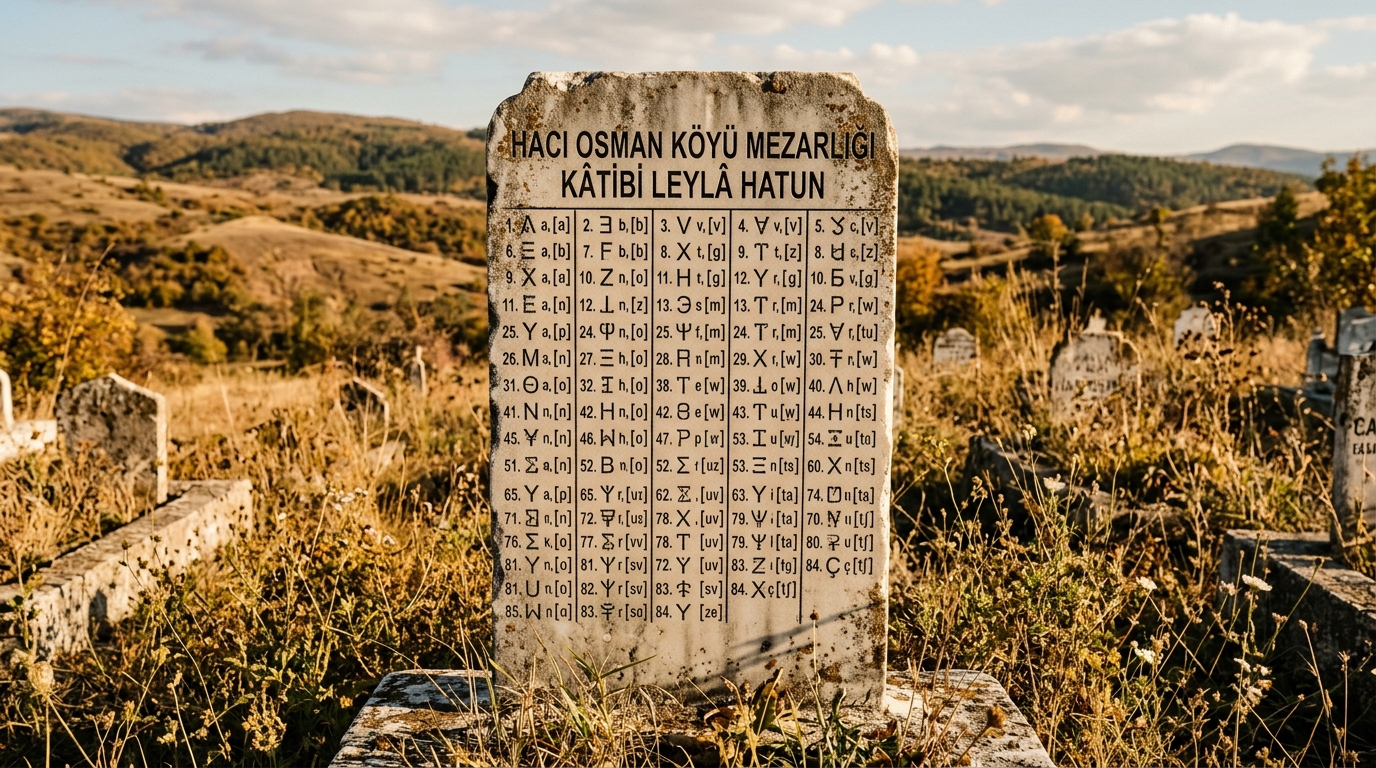
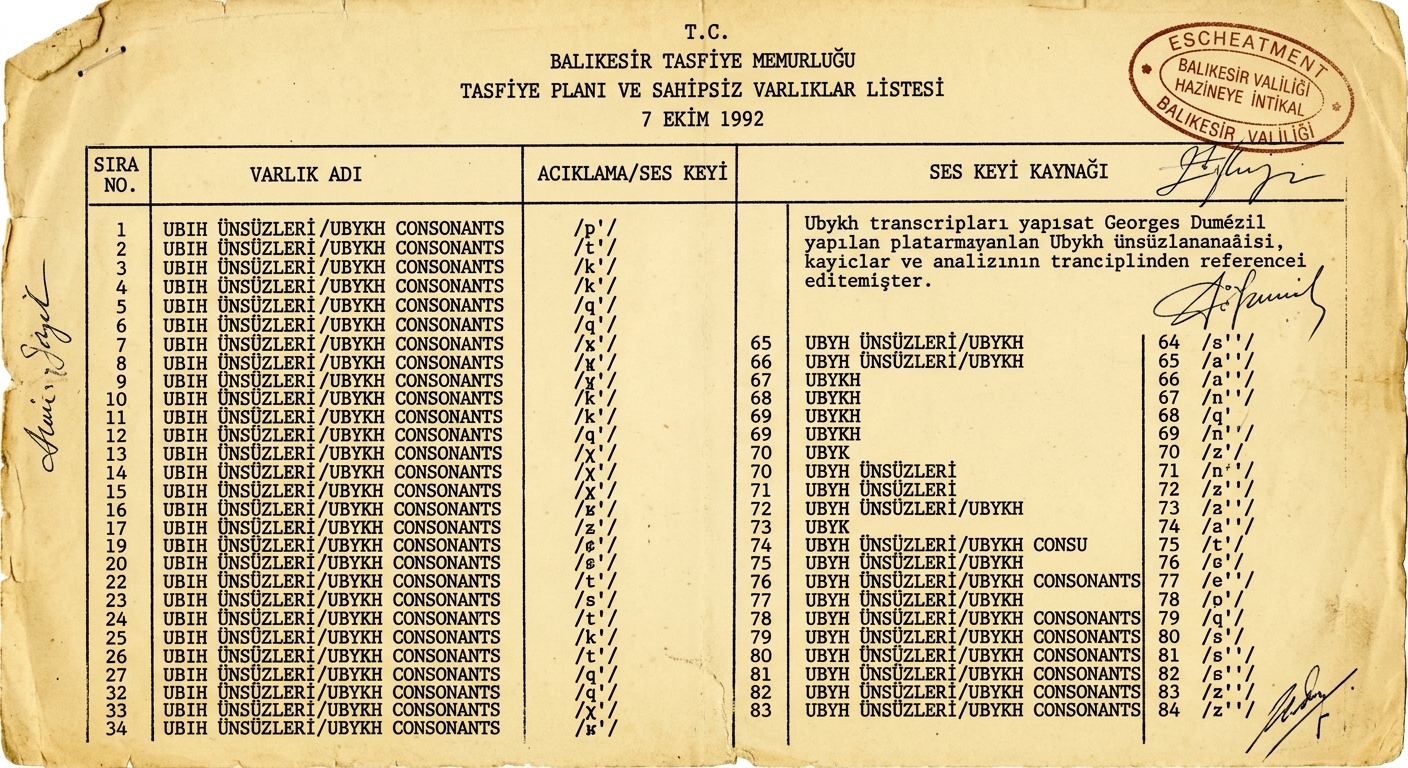
wall text
Following the 1992 death of Tevfik Esenç, the last native speaker of Ubykh, the language ceased active transmission. This work reframes linguistic death through probate law, treating Ubykh's 84-consonant phonetic inventory as an estate of intangible property. Without living fluent heirs to claim conversational title, the inventory undergoes intestate succession and subsequent escheatment—the legal reversion of ownerless assets to the state. Transposing estate inventorying, heir tracing, and asset amortization into bureaucratic accounting, the project documents how oral acoustic capital hardens into state-controlled archival property, fixed permanently on official ledgers and rural headstones as exhausted public domain collateral.
shown: Installed as a permanent, legally binding public notice beside Tevfik Esenç's actual grave in Hacı Osman, subject to local Turkish property and inheritance laws.
shown: Installed as a permanent, legally binding public notice beside Tevfik Esenç's actual grave in Hacı Osman, subject to local Turkish property and inheritance laws.
anchor facts used
- Tevfik Esenç died on October 7, 1992, as the last fully competent speaker of Ubykh
- Ubykh possessed 84 distinct consonants, one of the largest consonant inventories ever documented
- The language was extensively recorded by French linguist Georges Dumézil before reaching zero native speakers
mechanism
- Estate Inventory under Probate Law — Cataloging the 84 Ubykh consonants as individual bequeathable assets on a formal probate ledger.
1. Execution of the Estate Inventory - Heir Skip Tracing — Publishing a formal legal notice in the Turkish Official Gazette seeking living descendants with native fluency to claim the phonetic assets.
2. Issuance of the Legal Summons - Amortization of Intangible Assets — Writing down the value of the 84 consonants on a tax schedule as the conversational context of the language degrades into static archive data.
3. Depreciation of Unclaimed Assets - Escheatment — Transferring the deceased phonetic inventory to the public domain via a formal deed of escheatment, carved into a civic monument.
4. Final Transfer of Title
lineage
- Carey Young, 'Declared Void' (2005) — Builds on Young's use of legal declarations to create conceptual boundaries, applying the logic to phonetic extinction.
- Lawrence Abu Hamdan, 'The Squeaky Wheel' (2014) — Shifts Abu Hamdan's forensic audio analysis from contemporary political borders to temporal inheritance and probate.
- Jill Magid, 'The Barragán Archives' (2013-2016) — Expands Magid's exploration of legacy, copyright, and bodily remains into the legal standing of a deceased phonology.
curatorial qa (machine verdict, unedited)
SCORE 2/5 after 1 attempt(s)
READS: The administrative artifact effectively frames the 84 Ubykh consonants as unclaimed property slated for state escheatment, mirrored by the inventory etched on the headstone.
FAILS: The video shows only a passive sunset over the gravestone rather than procedural erosion, probate ledger transitions, or state asset forfeiture.
READS: The administrative artifact effectively frames the 84 Ubykh consonants as unclaimed property slated for state escheatment, mirrored by the inventory etched on the headstone.
FAILS: The video shows only a passive sunset over the gravestone rather than procedural erosion, probate ledger transitions, or state asset forfeiture.
spec: antigravity agent · keyframe/artifact: gemini-3.1-flash-image · video: veo-3.1 image-to-video · qa+wall text: gemini-3.7-flash watching the render · 35.1s total