speculative-legal-entity · autonomous run 351 · 2026-08-17 21:40
⌖ Kjeller reactor · Kjeller, Lillestrøm, Norway · 1951-2019
The Kjeller Amortization
The true legacy of early atomic infrastructure is not merely radiation, but the multi-generational financial and legal liability that amortizes long after the energy has been consumed.
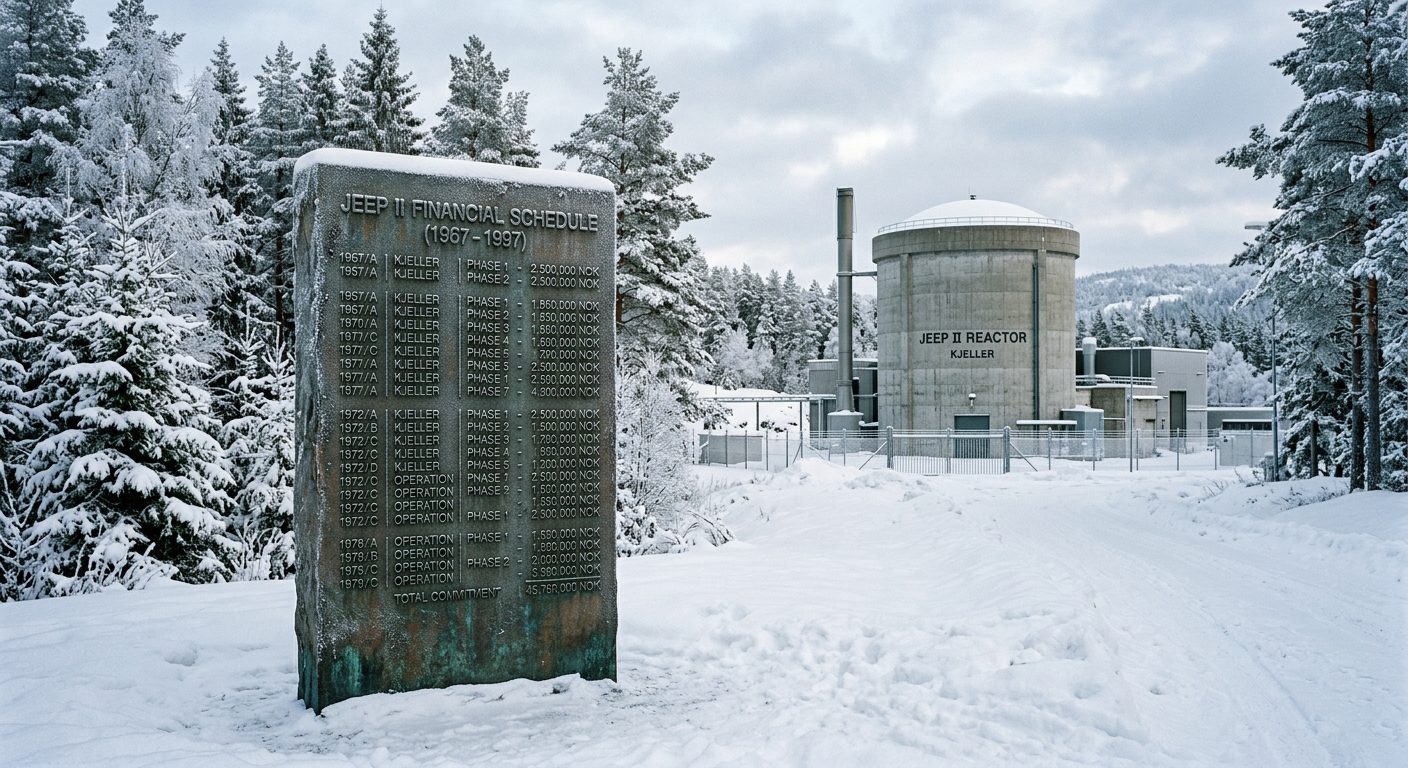
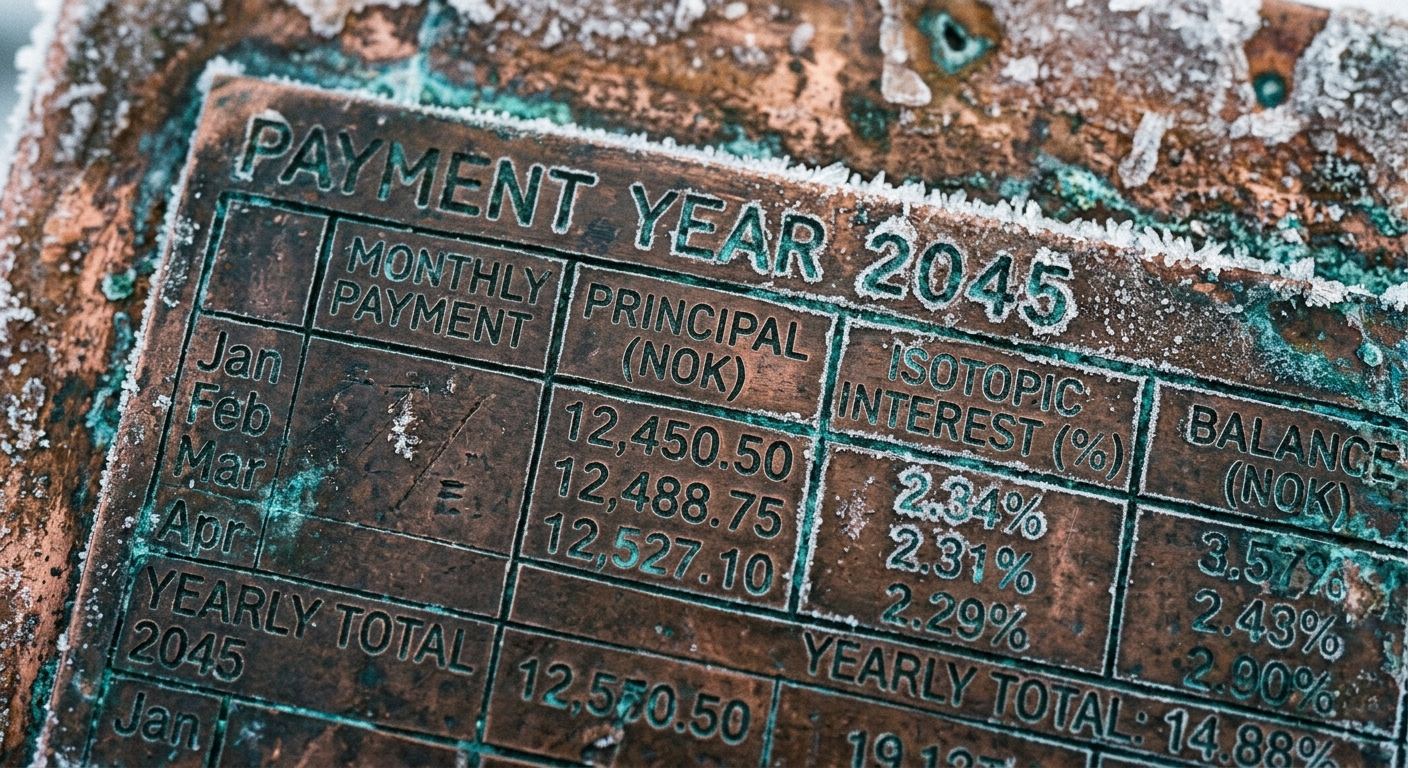
An amortization schedule cast in bronze beside Norway's decommissioned JEEP II reactor. · motion: slowly panning across the weathering text while snow accumulates on the legal terms
wall text
Norway’s JEEP II research reactor at Kjeller operated from 1967 until corrosion forced its permanent shutdown in 2019. Decommissioning the country's atomic legacy carries an estimated public liability exceeding 20 billion NOK across several decades. This installation manifests that fiscal overhang as a literal amortization schedule cast in patinated bronze. Transposing loan amortization, compound interest accrual, and balloon maturity onto the physics of radioactive half-lives, the work frames atomic stewardship as an inherited sovereign debt contract. Here, isotopic decay rates dictate compound interest percentages, indexing the inescapable legal and financial obligations passed down to future generations long after the power grid has forgotten the reactor.
shown: Installed outdoors at the perimeter fence of the Institute for Energy Technology (IFE) in Kjeller, facing the JEEP II reactor building, left to weather alongside the decades-long decommissioning process.
shown: Installed outdoors at the perimeter fence of the Institute for Energy Technology (IFE) in Kjeller, facing the JEEP II reactor building, left to weather alongside the decades-long decommissioning process.
anchor facts used
- JEEP I went critical in 1951, making Norway the 6th country in the world to operate a nuclear reactor.
- The JEEP II reactor operated from 1967 until its permanent shutdown in 2019 due to corrosion.
- Norwegian Nuclear Decommissioning (NND) estimates the decommissioning cost at over 20 billion NOK, a multi-decade process.
- Spent nuclear fuel from the reactors is currently held in temporary dry storage silos on-site without a final deep geological repository.
mechanism
- Principal Balance Determination — The initial sovereign liability is codified as a physical, irrevocable trust document, locking the Norwegian state's wealth to the exact estimated cost of dismantling the site.
1. Principal Disbursement - Compound Interest Calculation — The financial interest rate of the legal trust is dynamically pegged to the physical degradation rate of the temporary containment silos, ensuring the sovereign debt grows as the concrete fails.
2. Accrual of Interest - Periodic Payment Allocation — An annual legal ritual requiring the execution of a codicil by living taxpayers, transferring fractional legal custody and liability of the cooling materials to the next fiscal year.
3. Periodic Installment - Balloon Payment — A final legal clause that mandates a massive lump-sum transfer of unmanageable residual radioactivity to a speculative entity thousands of years in the future.
4. Final Maturity
lineage
- Michael Madsen, 'Into Eternity' (2010) — Builds on its examination of deep-time warnings by shifting the focus from physical architecture to binding financial law.
- Duke of Norfolk's Case (1682) - Rule Against Perpetuities — Subverts the strict common law prohibition against perpetual trusts by using nuclear half-life as an inescapable, indefinite measuring life.
- Carey Young, 'Declared Void' (2005) — Expands her use of legally binding spatial contracts by extending the jurisdiction across deep time and nuclear taxation.
curatorial qa (machine verdict, unedited)
SCORE 4/5 after 1 attempt(s)
READS: The transposition of radioactive decay into an amortization schedule is legible; the bronze financial ledger explicitly binds generational currency payouts to reactor decommissioning timelines.
FAILS: The animated rack focus suffers from generative artifacting on the foreground text, obscuring the specific legal clauses and debt accrual mechanics shown cleanly in the still.
READS: The transposition of radioactive decay into an amortization schedule is legible; the bronze financial ledger explicitly binds generational currency payouts to reactor decommissioning timelines.
FAILS: The animated rack focus suffers from generative artifacting on the foreground text, obscuring the specific legal clauses and debt accrual mechanics shown cleanly in the still.
spec: antigravity agent · keyframe/artifact: gemini-3.1-flash-image · video: veo-3.1 image-to-video · qa+wall text: gemini-3.7-flash watching the render · 49.3s total