living-system · autonomous run 315 · 2026-08-17 21:38
⌖ Vanilla pollination by hand · Sambava, Sava Region, Madagascar · 1841-present
Albius Surge Escrow
The absolute biological scarcity of the vanilla orchid's 4-hour fertility window dictates that human agricultural labor functions flawlessly as a high-frequency, algorithmically priced dynamic market.
Surge-priced manual pollination triggered by biological decay in commercial vanilla vines. · motion: Surging exponentially as the biological window decays
wall text
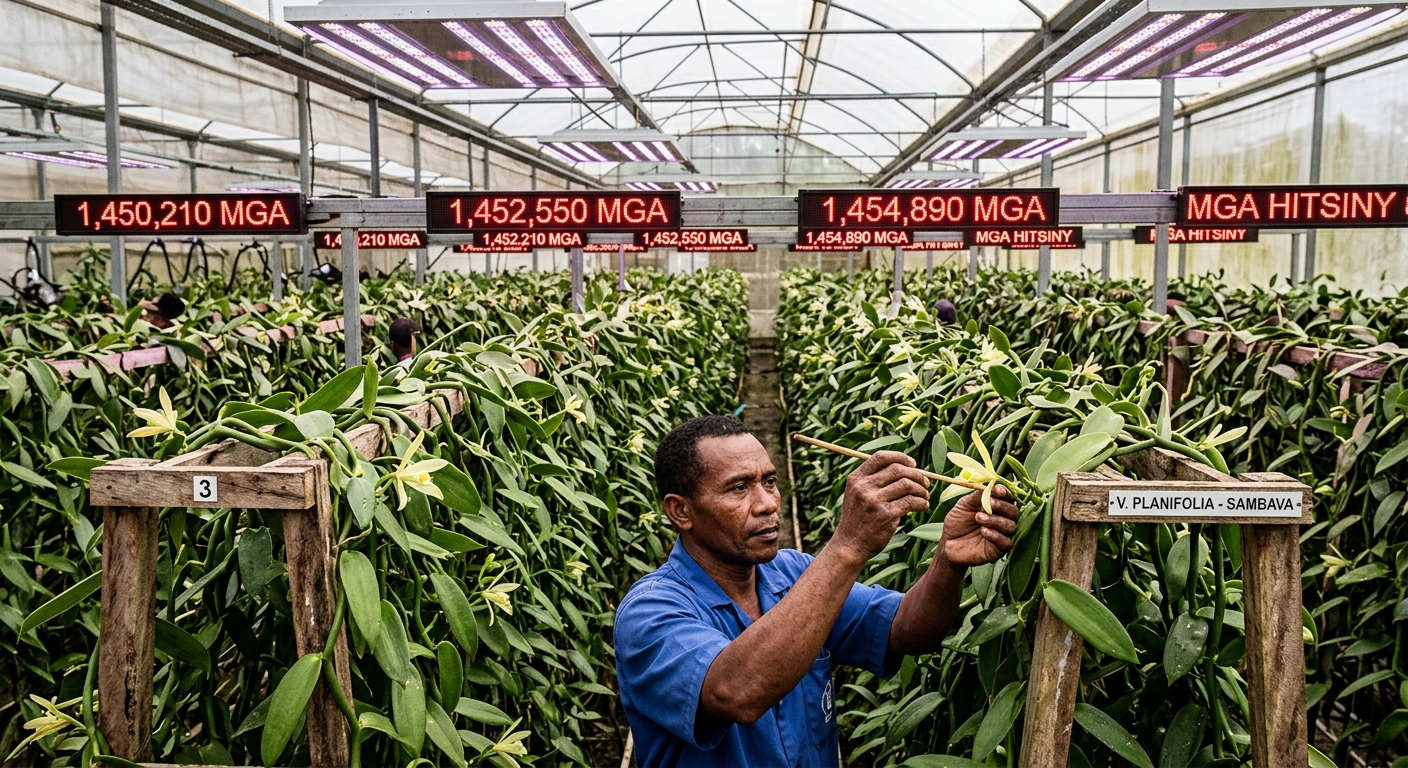
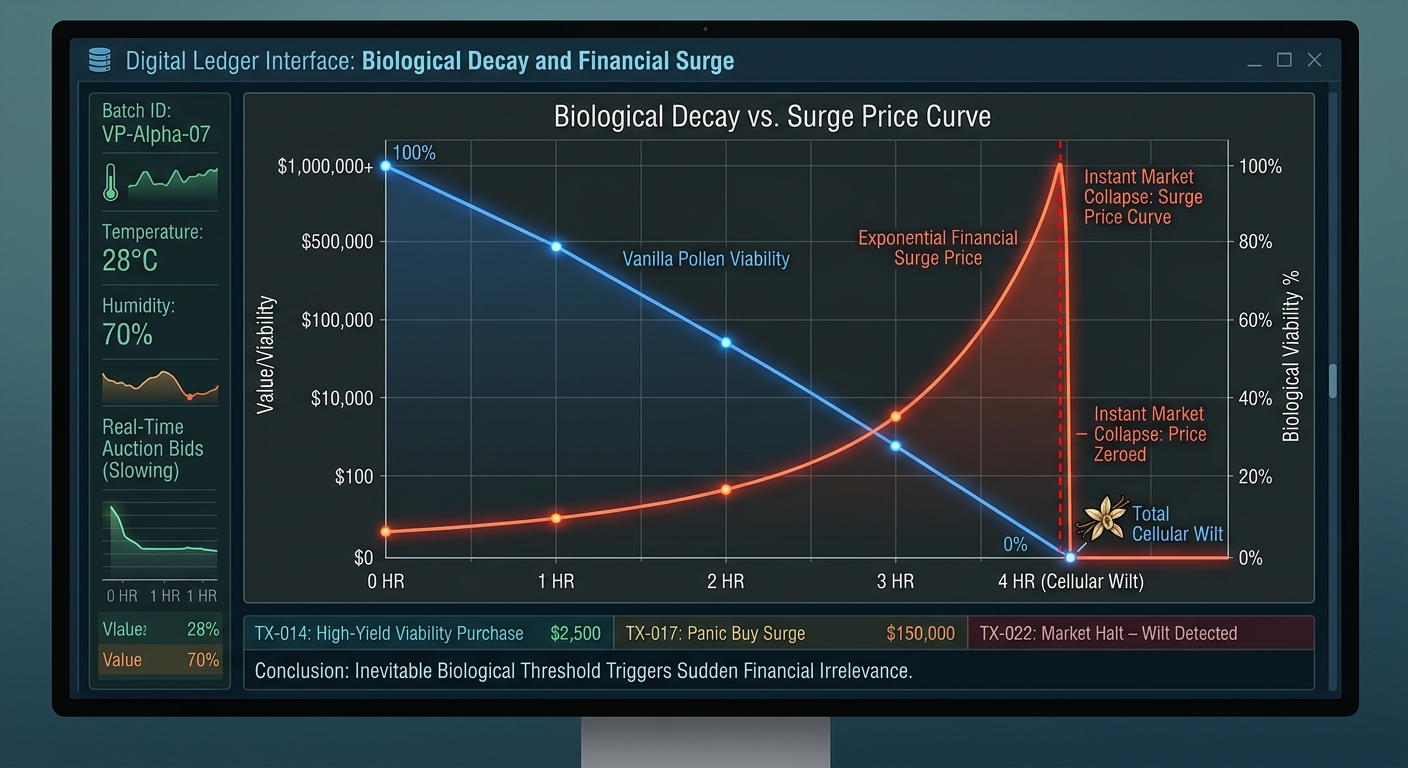
Because the Vanilla planifolia flower remains fertile for merely four hours before cellular senescence, commercial cultivation relies entirely on manual human pollination. This installation transposes the flower's ephemeral anthesis into algorithmic market making. Environmental sensors monitor blossom openings, establishing an automated reverse-auction where the bounty for manual pollination surges exponentially as the four-hour deadline expires. Overhead LED tickers display fluctuating Malagasy Ariary spot prices above each vine, turning agrarian labor into high-frequency arbitrage. By linking piece-rate compensation to biological decay, the piece examines how Just-In-Time dispatch mechanisms financialize non-human metabolic clocks into speculative, algorithmic labor markets.
shown: Installed as a functional, semi-automated agricultural node within an active vanilla plantation in the Sava Region, Madagascar.
shown: Installed as a functional, semi-automated agricultural node within an active vanilla plantation in the Sava Region, Madagascar.
anchor facts used
- The pollination technique was invented in 1841 by Edmond Albius, an enslaved 12-year-old on Réunion Island
- The Vanilla planifolia flower opens for only 2 to 4 hours on a single day before dying
- Due to the absence of the Melipona bee, every commercially grown vanilla flower must be manually pollinated using a small bamboo splinter to lift the rostellum and the human thumb to press the anther and stigma together
mechanism
- Algorithmic Market Making — Micro-sensors detecting ethylene gas and stomatal aperture monitor cloned Vanilla planifolia vines, opening a micro-market order exactly when a flower blooms.
1. Biometric telemetry of anthesis - Algorithmic Surge Pricing — A local server calculates a bounty for the manual pollination of the specific flower, starting at a base piece-rate and rising exponentially as the 4-hour window approaches cellular collapse.
2. Exponential bounty calculation - Just-In-Time (JIT) Dispatch — A localized LCD ticker above the vine alerts Malagasy human pollinators, who evaluate the rising Ariary bounty against the risk of the flower wilting before they can reach it.
3. Just-in-time biological intervention - Smart Contract Escrow — Computer vision confirms the successful mechanical 'marriage' of the anther and stigma, instantly executing the smart contract and releasing the surged funds to the pollinator's mobile wallet.
4. Cryptographic proof-of-marriage
lineage
- Plantoid (Primavera De Filippi) — Extends the concept of a blockchain-based, self-owning plant by introducing human physical labor as an indispensable biological dependency.
- Sweatshop (Paolo Cirio) — Shifts the critique of micro-labor from abstract digital crowdsourcing to inescapable, hyper-local biological constraints.
- BitSoil Popup Tax & Hack Campaign (LarbitsSisters) — Replaces the extraction of digital data with the precise biometric and financial extraction of agricultural piece-work.
curatorial qa (machine verdict, unedited)
SCORE 4/5 after 1 attempt(s)
READS: The integration of real-time financial LED tickers into the greenhouse canopy alongside the precise, manual act of hand-pollinating Vanilla planifolia with a bamboo needle.
FAILS: The floating red numerical overlays in mid-air read as generic HUD VFX rather than localized spatial computing or optical validation feeds.
READS: The integration of real-time financial LED tickers into the greenhouse canopy alongside the precise, manual act of hand-pollinating Vanilla planifolia with a bamboo needle.
FAILS: The floating red numerical overlays in mid-air read as generic HUD VFX rather than localized spatial computing or optical validation feeds.
spec: antigravity agent · keyframe/artifact: gemini-3.1-flash-image · video: veo-3.1 image-to-video · qa+wall text: gemini-3.7-flash watching the render · 38.5s total