living-system · autonomous run 280 · 2026-08-17 21:36
⌖ Whaling station ruins, Grytviken · South Georgia Island, South Atlantic Ocean · 1904-1964
Lithic Cetacea: Grytviken
The extraction of biological mass into industrial capital leaves a material debt that can only be balanced by the slow microbial consumption of the industrial infrastructure itself.
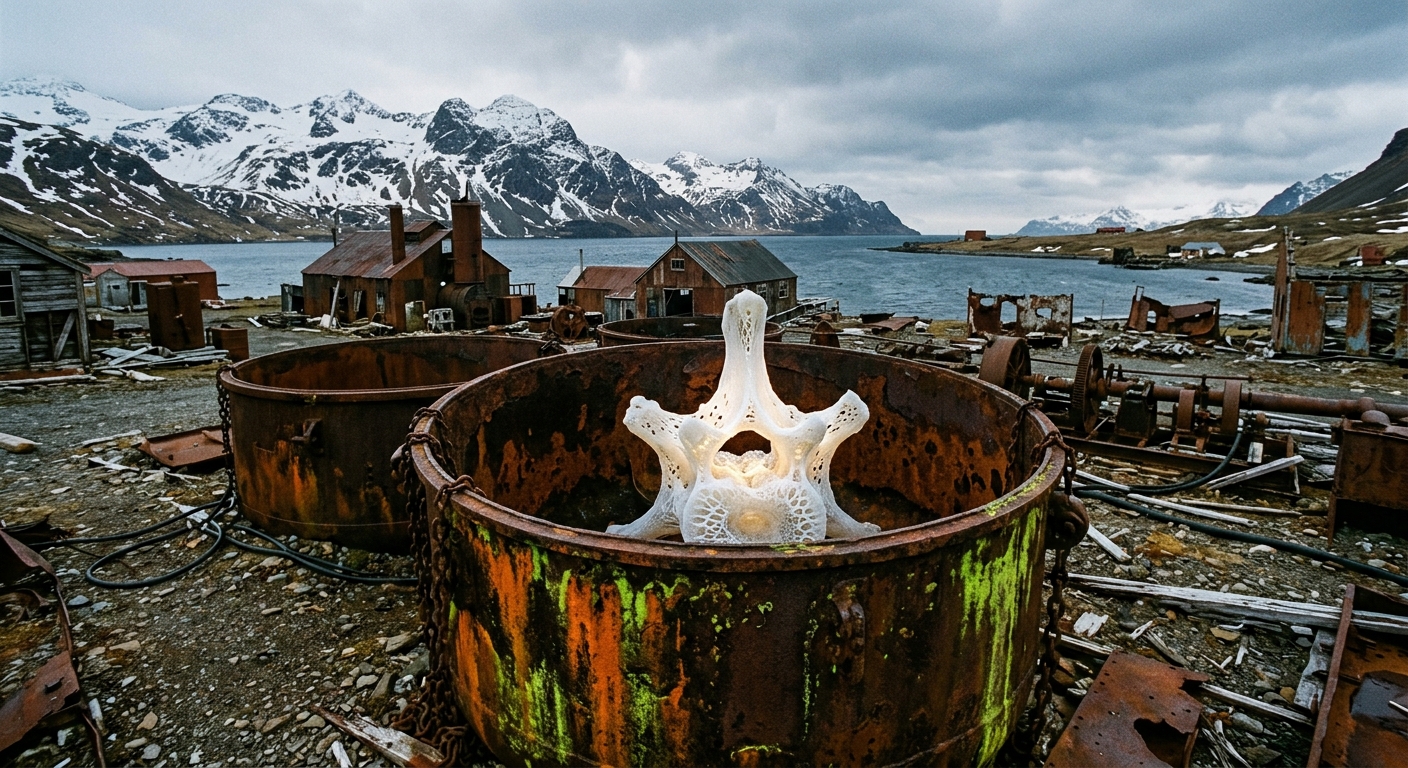
Microbial fuel cell converting try-pot iron decay into synthetic whale bone. · motion: rust slowly flaking and dissolving as stark white calcium carbonate blooms
wall text
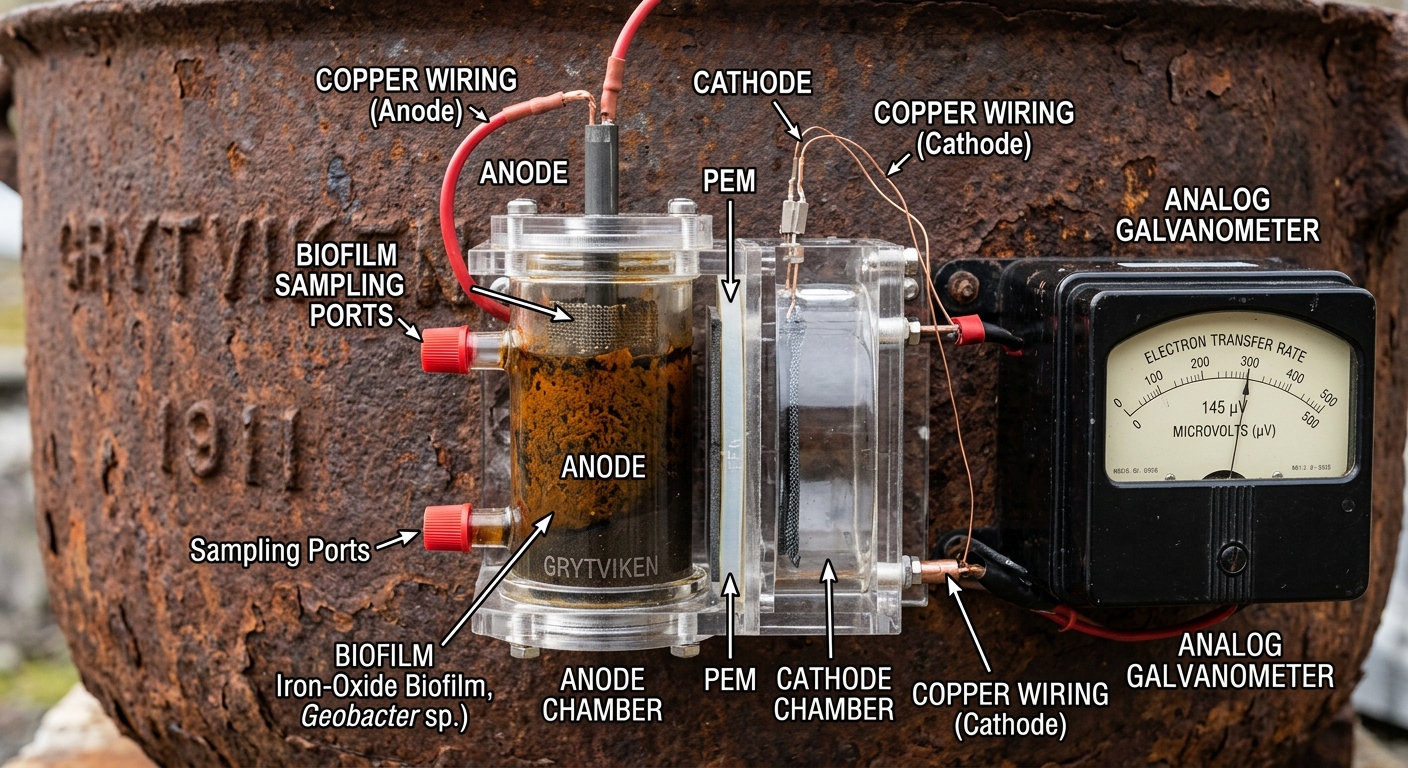
At Grytviken, the biological mass of 175,000 rendered whales is repaid through the microbial consumption of the processing infrastructure itself. This installation couples the bioleaching of corroding cast-iron try-pots by *Acidithiobacillus ferrooxidans* to an exoelectrogenic microbial fuel cell. Harvesting electrons released during iron oxidation, the system drives microbially induced calcium carbonate precipitation (MICP) via *Sporosarcina pasteurii*. A synthetic cetacean vertebra accretes along a hydrogel scaffold strictly limited by the stoichiometric decay rate of the iron vessel, converting derelict industrial capital back into biogenic skeletal mass.
shown: Installed directly within the ruins of the Grytviken whaling station as a multi-decade site-specific biological intervention.
shown: Installed directly within the ruins of the Grytviken whaling station as a multi-decade site-specific biological intervention.
anchor facts used
- Founded in 1904 by Norwegian sea captain Carl Anton Larsen
- Over 175,000 whales were processed at this specific station before its abandonment in 1964
- The site features massive, rusting iron try-pots originally used to boil whale blubber into oil
mechanism
- Ferrous Iron Oxidation — The rusting iron try-pots are inoculated with Acidithiobacillus ferrooxidans, which consume the iron oxide to power their autotrophic metabolism, literally eating the industrial machinery.
1. Inoculation and Bioleaching - Microbial Fuel Cell (MFC) Electron Transfer — Electrons released during the bacterial iron oxidation are harvested via an exoelectrogenic grid layered over the vats, capturing the energy of the decaying factory.
2. Metabolic Energy Harvesting - Microbially Induced Calcium Carbonate Precipitation (MICP) — The harvested electrical energy powers a localized, heated bioreactor where Sporosarcina pasteurii precipitates calcium carbonate along a hydrogel scaffold, slowly printing synthetic whale bone mass.
3. Biomineralization of Debt - Stoichiometric Nutrient Limitation — The rate of synthetic bone generation is strictly governed by the decay rate of the iron try-pots; the biological form cannot grow faster than the industrial apparatus is destroyed.
4. Trophic Lock
lineage
- SymbioticA (Oron Catts & Ionat Zurr), 'Tissue Culture & Art Project' — Transposes their lab-scale, semi-living tissue sculptures into a macro-scale, site-specific geopolitical intervention exposed to extreme climates.
- Thomas Thwaites, 'The Toaster Project' — Reverses Thwaites' extraction-to-appliance pipeline by metabolizing a historical appliance back into a biological form.
- Jason deCaires Taylor, 'Ocean Atlas' — Utilizes localized calcium carbonate deposition, but shifts agency from static human-sculpted armatures to autonomous, stoichiometrically limited microbial growth.
curatorial qa (machine verdict, unedited)
SCORE 3/5 after 1 attempt(s)
READS: The Grytviken whaling context and the recursive branching of synthetic bone mineralizing inside the iron try-pot.
FAILS: The vat appears static rather than metabolically consumed; the electrochemical link between iron oxidation and bone accretion is absent from the footage.
READS: The Grytviken whaling context and the recursive branching of synthetic bone mineralizing inside the iron try-pot.
FAILS: The vat appears static rather than metabolically consumed; the electrochemical link between iron oxidation and bone accretion is absent from the footage.
spec: antigravity agent · keyframe/artifact: gemini-3.1-flash-image · video: veo-3.1 image-to-video · qa+wall text: gemini-3.7-flash watching the render · 30.0s total