living-system · autonomous run 276 · 2026-08-17 21:36
⌖ Shipbreaking of the SS United States · Pier 82, Delaware River, Philadelphia · 1969-2025
Ferric Obligation: Pier 82
Heritage preservation is fundamentally an escrow of thermodynamic decay; institutional holding patterns do not freeze time but merely privatize the metabolic cost of oxidation.
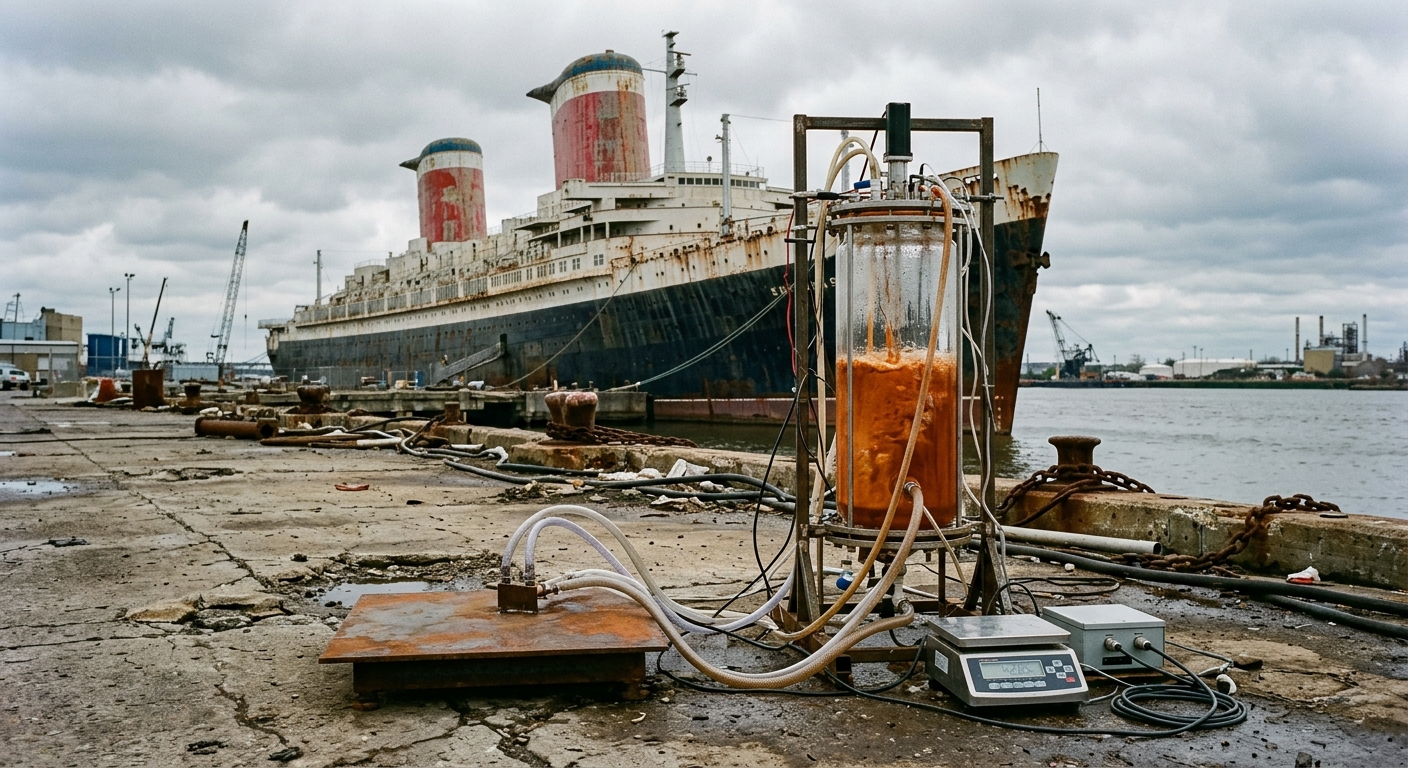
Bio-leaching the SS United States at $1,600 in docking fees per day. · motion: oxidizing rhythmically to the cadence of compounding debt
wall text
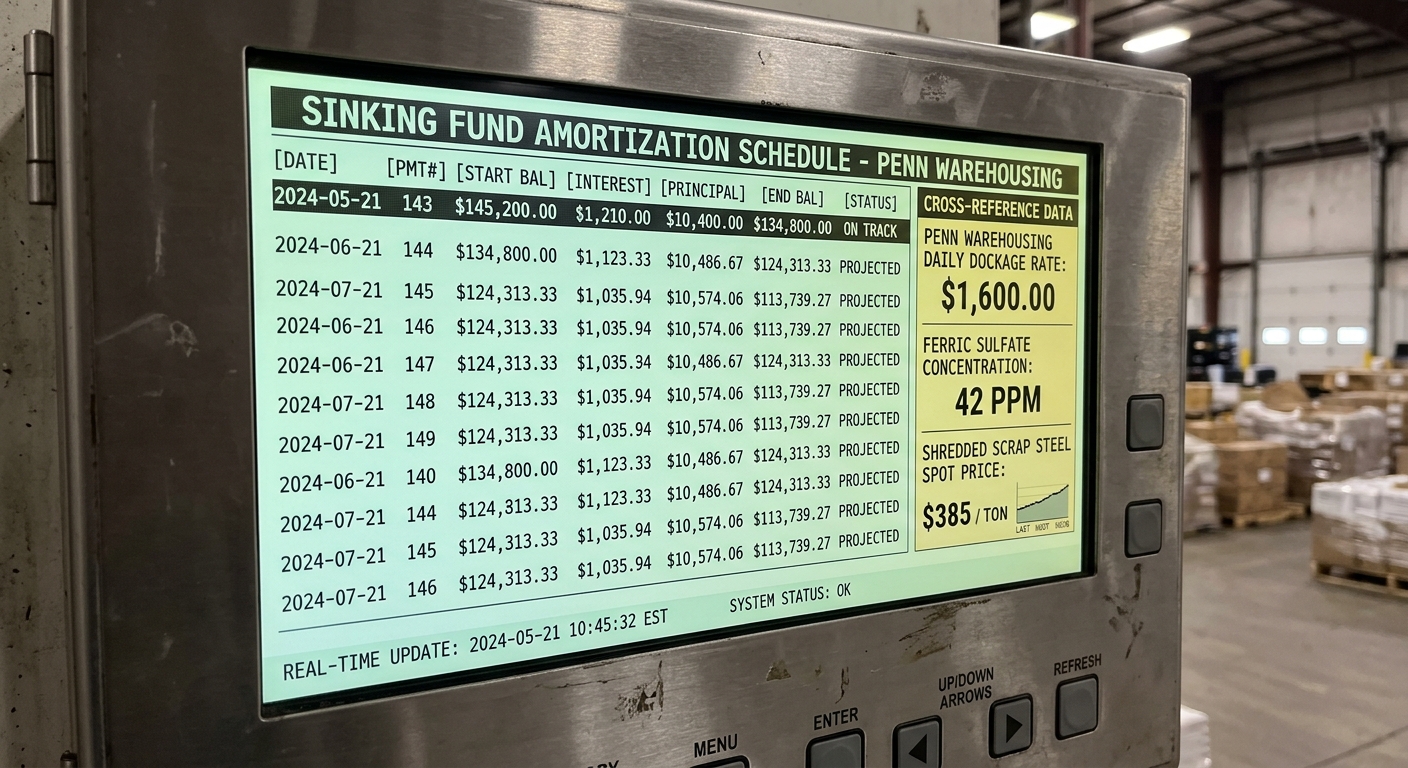
Moored on the Delaware River since 1996, the SS United States accrued a $1,600 daily pier fee before eviction. This installation transposes sinking fund amortization into biological metabolism. A pier-side chemostat doses cultures of Acidithiobacillus ferrooxidans with nutrient broth indexed to real-time docking debt. The bacteria bio-leach steel shavings milled from the hull, converting metal into ferric sulfate runoff weighed against fluctuating global scrap commodity spot prices. The acidic leachate drains into a Pleurotus ostreatus mycelial bed, converting the thermodynamic deferral of shipbreaking into measurable biological mass.
shown: Installed continuously on the asphalt of Pier 82, weathering in the salt air until the bioreactor's steel source is entirely digested or the ship is towed away.
shown: Installed continuously on the asphalt of Pier 82, weathering in the salt air until the bioreactor's steel source is entirely digested or the ship is towed away.
anchor facts used
- Moored continuously at Pier 82 in Philadelphia since 1996 under shifting ownership.
- Penn Warehousing doubled the daily dockage fee to $1,600 in 2021, leading to a federal court eviction order in August 2024.
- 100,000 square feet of asbestos were removed from the ship in Sevastopol, Ukraine in 1994, leaving the interior bare.
mechanism
- Sinking Fund Amortization — A smart contract monitoring the daily dockage debt releases an exactly proportional micro-dose of iron-rich nutrient broth into a sealed bioreactor.
1. Financial-Metabolic Coupling - Chemolithotrophic Iron Oxidation — Cultures of Acidithiobacillus ferrooxidans metabolize 50kg of steel shavings harvested from the liner's hull, scaling their reproduction to the debt-driven nutrient drip rate.
2. Bio-leaching the Hull - Acid-Base Titration — The resulting ferric sulfate runoff is titrated and weighed; when the bacterial byproduct's mass equals the daily docking fee in current scrap steel value, an overflow valve triggers.
3. Commodity Conversion - Mycelial Trophic Cascade — The acidic overflow feeds a secondary Pleurotus ostreatus fungal bed that digests remediated asbestos simulacra, visualizing the total metabolic cost of delayed shipbreaking.
4. Remediation Digest
lineage
- Pig Wings by Tissue Culture & Art Project — Extends their use of living tissue as a sculptural medium into the realm of macro-economic critique and real estate litigation.
- Rethinking the Shipbreaking Industry (Mikelis, 2010) — Moves the paper's theoretical framework of end-of-life vessel economics into a tangible, metabolic laboratory demonstration.
- Black Shoals by Lise Autogena and Joshua Portway — Grounds their concept of visualizing financial data as biological ecosystems into the physical, acidic chemistry of rusting steel.
curatorial qa (machine verdict, unedited)
SCORE 3/5 after 2 attempt(s)
READS: The physical placement of the bioreactor alongside the decaying SS United States, paired with the terminal screen linking dockage rates to ferric sulfate concentrations.
FAILS: The floating green HUD overlay is generic and decorative; the video does not visually demonstrate the pump cadence modulating with debt calculation.
READS: The physical placement of the bioreactor alongside the decaying SS United States, paired with the terminal screen linking dockage rates to ferric sulfate concentrations.
FAILS: The floating green HUD overlay is generic and decorative; the video does not visually demonstrate the pump cadence modulating with debt calculation.
spec: antigravity agent · keyframe/artifact: gemini-3.1-flash-image · video: veo-3.1 image-to-video · qa+wall text: gemini-3.7-flash watching the render · 38.1s total