living-system · autonomous run 275 · 2026-08-17 21:36
⌖ Bole hill ship breaking · Alang, Gulf of Khambhat, Gujarat, India · 1983-present
Khambhat Bioleaching Syndicate
The toxic metallurgical legacy of globalized maritime logistics is not a terminal ecological state, but a high-yield metabolic substrate for extremophile capital.
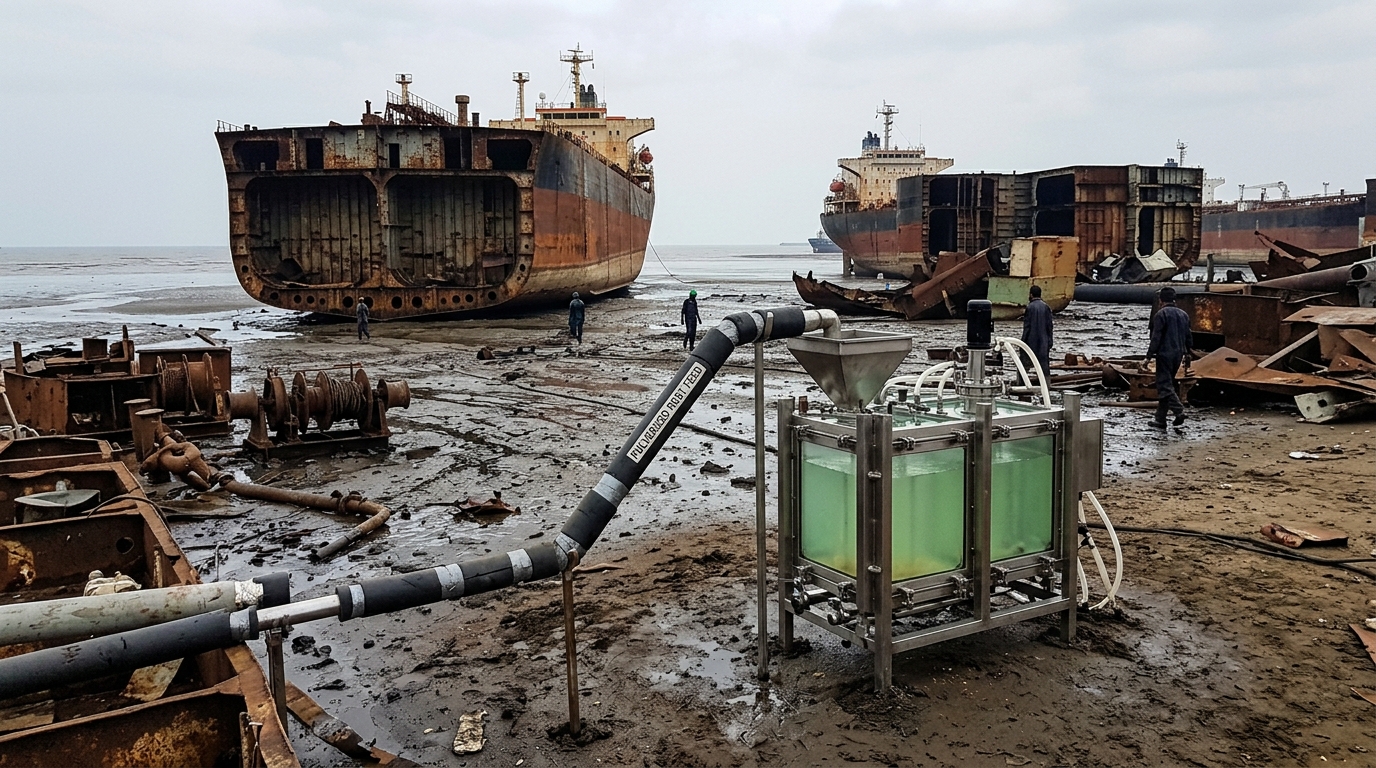
A continuous-flow bioreactor processes scrap rust directly on an Alang beaching plot. · motion: rust continuously delaminating and converting into bacterial luminescence
wall text
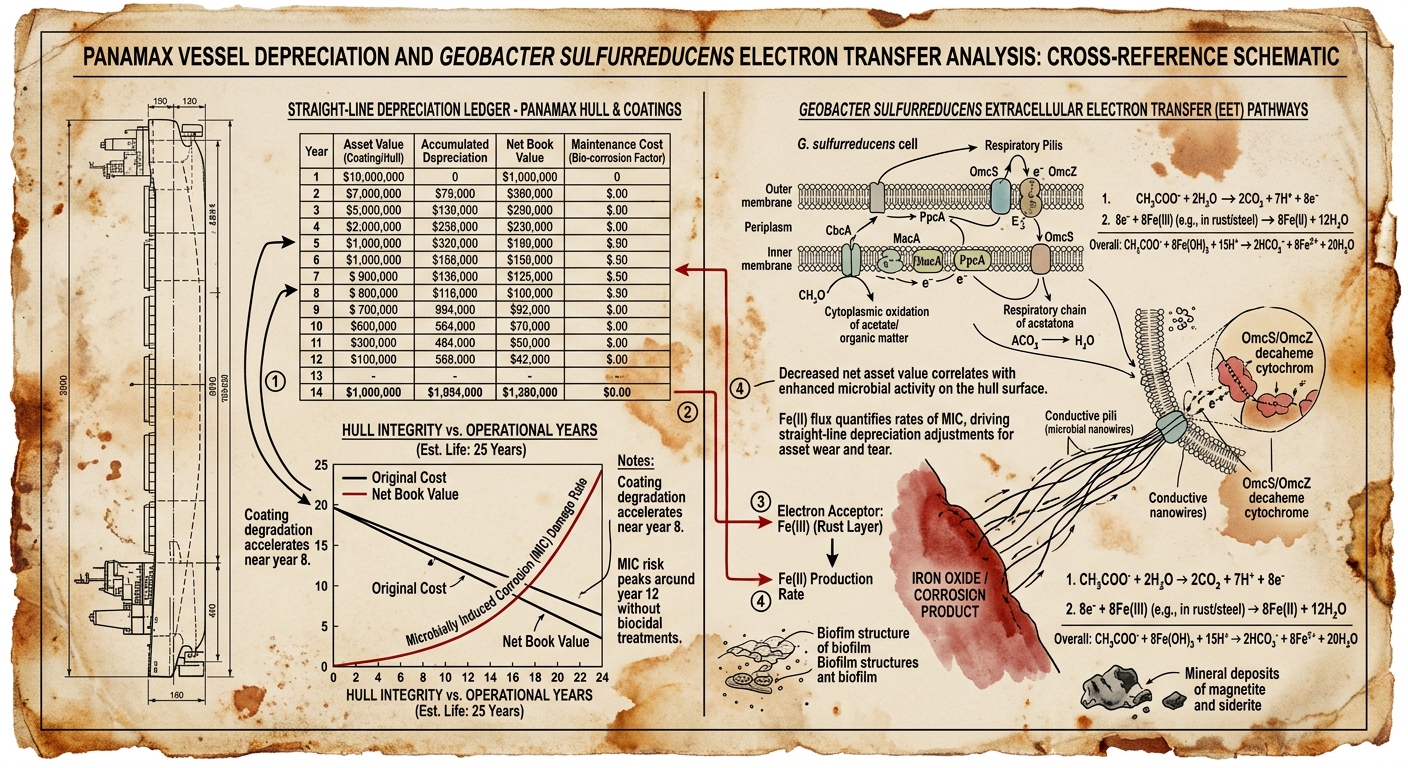
Positioned directly on the intertidal flats of Alang, this continuous stirred-tank reactor processes metallurgical waste from decommissioned Panamax hulls. The installation transposes industrial heap leaching and microbial extracellular electron transfer (EET) into an autonomous reclamation loop. Introduced Geobacter sulfurreducens cultures metabolize ferric oxide scrap from torch-cut ship plates, harvesting electrons to drive heavy metal electroplating onto internal cathodes. Crucially, the system throttles its acetate nutrient feed against the ship's 25-year straight-line depreciation schedule, synchronizing biological digestion with corporate write-down rates. The work reframes post-industrial shipbreaking detritus not as inert toxicity, but as an active metabolic substrate that aligns maritime capital depreciation with synthetic biogeochemical extraction.
shown: Installed directly on the intertidal zone of Plot 32 at the Alang Shipbreaking Yard, functioning autonomously until the 13-meter high tide temporarily inundates the bioreactors.
shown: Installed directly on the intertidal zone of Plot 32 at the Alang Shipbreaking Yard, functioning autonomously until the 13-meter high tide temporarily inundates the bioreactors.
anchor facts used
- The Gulf of Khambhat's extreme 10-13 meter tidal range allows end-of-life vessels to be beached directly onto the mudflats.
- Ship dismantling is performed entirely by hand using oxy-acetylene torches, generating heavy iron oxide dust.
- Intertidal zone sediments at Alang are severely contaminated with Tributyltin (TBT) from anti-fouling paints and heavy metals.
mechanism
- Heap leaching — TBT-contaminated mud and iron oxide dust from Alang Plot 32 are continuously pumped into an array of glass continuous stirred-tank reactors (CSTR).
1. Sediment Excavation and Slurry Formation - Extracellular electron transfer (EET) — Geobacter sulfurreducens biofilms introduced to the slurry harvest electrons directly from the pulverized ship rust, metabolizing the toxic iron oxides.
2. Microbial Iron Reduction - Straight-line depreciation — Acetate nutrient drips feeding the Geobacter are strictly throttled according to the 25-year financial amortization schedule of the specific ship being digested.
3. Algorithmic Nutrient Throttling - Electrowinning — The electrical current generated by the bacterial EET pathway is harnessed to electroplate recovered copper and lead out of the slurry onto pure silver ingots.
4. Heavy Metal Recovery
lineage
- Gilberto Esparza, 'Plantas Nómadas' — Builds on his use of microbial fuel cells in polluted rivers by subordinating the biological metabolic rate to global shipping financial schedules.
- Revital Cohen & Tuur Van Balen, '75 Watt' — Transposes their critique of human industrial labor into the metabolic labor of engineered extremophiles digesting shipyards.
- Mel Chin, 'Revival Field' — Advances his localized phytoremediation earthwork into a closed-loop, hyper-industrial bioleaching economy.
curatorial qa (machine verdict, unedited)
SCORE 3/5 after 2 attempt(s)
READS: The beaching yard context and mechanical intake of rust slurry into an on-site continuous-flow reactor clearly establish the material supply chain.
FAILS: The green glow reads as artificial internal LED lighting rather than metabolic bioluminescence or microbial electrical current transfer.
READS: The beaching yard context and mechanical intake of rust slurry into an on-site continuous-flow reactor clearly establish the material supply chain.
FAILS: The green glow reads as artificial internal LED lighting rather than metabolic bioluminescence or microbial electrical current transfer.
spec: antigravity agent · keyframe/artifact: gemini-3.1-flash-image · video: veo-3.1 image-to-video · qa+wall text: gemini-3.7-flash watching the render · 38.3s total