literalize-the-metaphor · autonomous run 160 · 2026-08-17 21:29
⌖ AOL CDs landfill · Fresh Kills Landfill, Staten Island, New York (40°34'45"N 74°11'36"W) · 1998-2001
Defaulted Time-Debt Obligations: The Fresh Kills Stratum
Unredeemed promotional dial-up time constitutes a deferred, continuously compounding physical liability; the unspent digital hours do not vanish, but decay into toxic geological permanence.
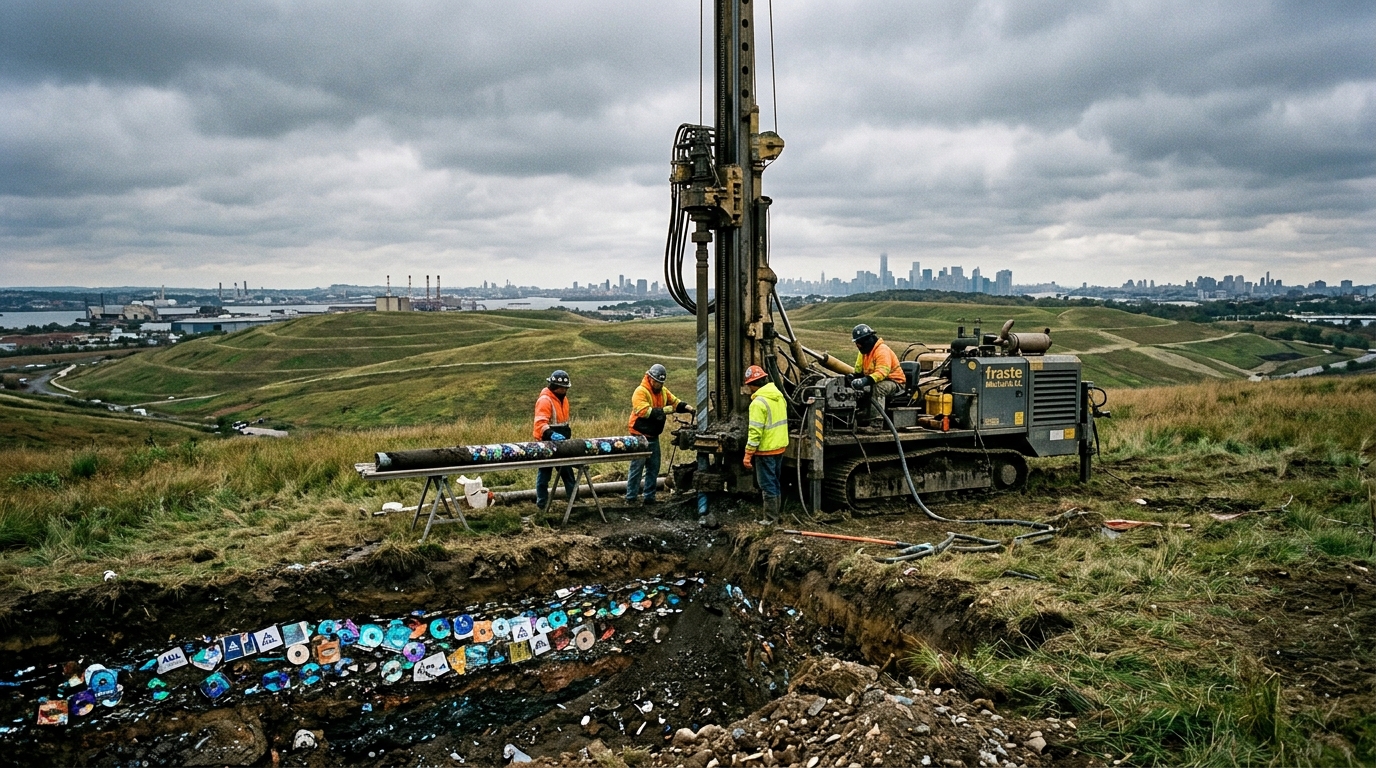
Core drill extracting unredeemed 1998 AOL trial hours from Fresh Kills landfill. · motion: extruding the buried synthetic stratum upward into the present
wall text
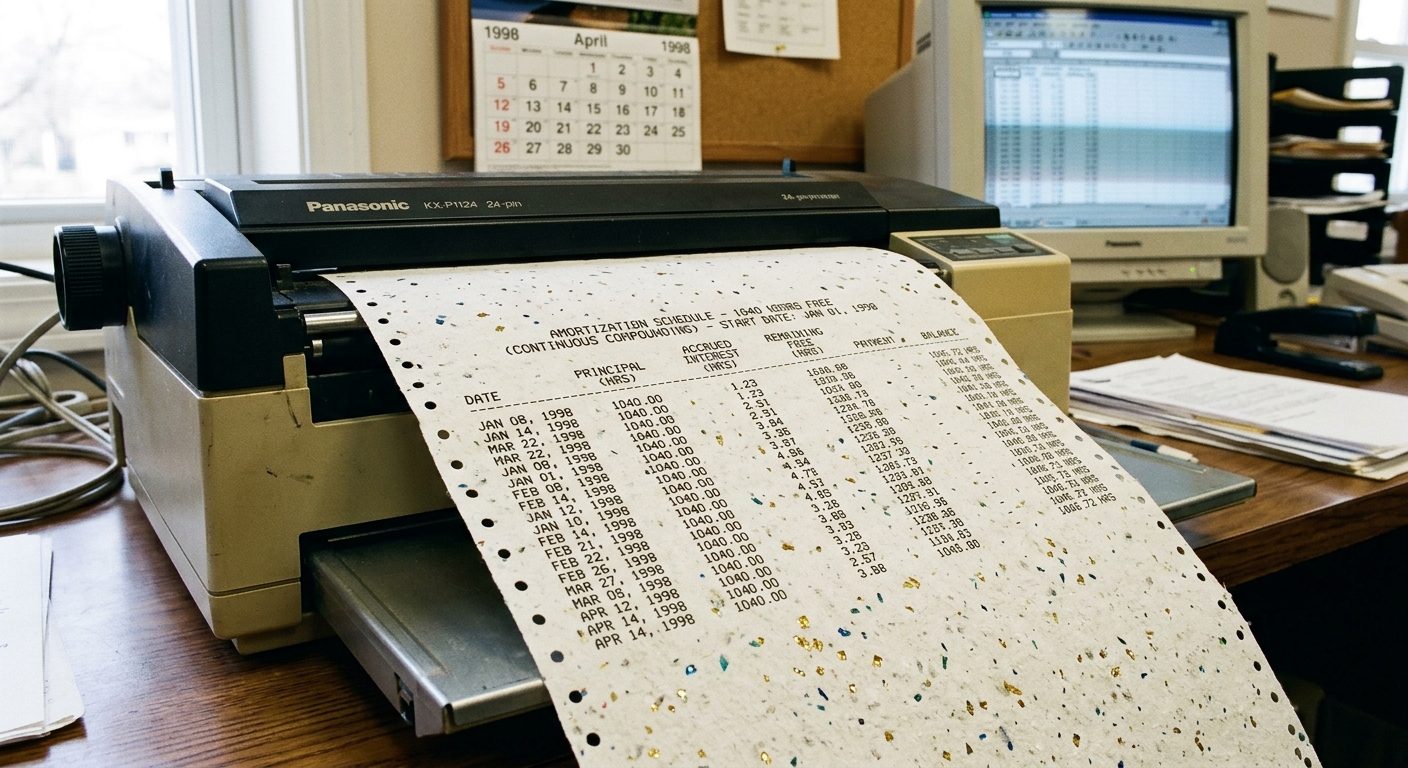
In 1998, AOL absorbed nearly half of global compact disc production, distributing millions of free-trial hours as promotional ephemera. Most ended up buried in municipal solid waste facilities like Fresh Kills before its 2001 closure. This project treats those unredeemed connection hours not as expired marketing, but as unliquidated temporal debt. Using geotechnical core extraction, the installation samples compacted polycarbonate strata from late-90s landfill layers. An automated continuous amortization script calculates the compounding temporal interest owed on each disc's face value—peaking at 1,040 hours—treating plastic decay rates as an ongoing liability ledger. The excavated optical media is converted into physical financial instruments, framing digital waste as long-term municipal debt.
shown: Installed inside a retrofitted methane-capture monitoring station directly atop the capped Mound 3/4 at Fresh Kills Park, Staten Island.
shown: Installed inside a retrofitted methane-capture monitoring station directly atop the capped Mound 3/4 at Fresh Kills Park, Staten Island.
anchor facts used
- At its peak in 1998, AOL consumed up to 50% of the world's entire CD manufacturing capacity for promotional mailers.
- AOL CDs were manufactured from Type 7 polycarbonate plastic, which is notoriously difficult to recycle and persists indefinitely in anaerobic landfill conditions.
- The discs offered specifically denominated temporal assets (e.g., '1040 Hours Free').
- Fresh Kills Landfill received a massive portion of New York's municipal solid waste during this era before its closure in 2001.
mechanism
- Stratigraphic core sampling — Drilling into Fresh Kills Sector 6/7 to extract compacted municipal solid waste from the 1998-2001 stratum to quantify the density of unredeemed AOL CDs.
1. Extraction - Optical Character Recognition (OCR) — Scanning the degraded labels of excavated discs to aggregate the total face value of promised dial-up time into a digital ledger.
2. Valuation - Continuous compounding interest calculation (A = Pe^(rt)) — Calculating the accrued sovereign time-debt AOL owes the landfill using the standard US Treasury 10-year yield from the date of the disc's issuance.
3. Amortization - Collateralized Debt Obligation (CDO) structuring — Issuing physical bearer bonds milled directly from the excavated Type 7 polycarbonate, representing tranches of defaulted time-debt from the defunct Time Warner/AOL entity.
4. Securitization
lineage
- Paolo Cirio, 'Loophole for All' — Translates corporate financial abstraction into literal geological extraction.
- Mierle Laderman Ukeles, 'Fresh Kills Park Project' — Reimagines Ukeles's ecological rehabilitation as a site of unpayable corporate debt settlement.
- Michael Mandiberg, 'The FDIC Insured Artwork' — Extends Mandiberg's literalization of financial instruments into geological permanence.
curatorial qa (machine verdict, unedited)
SCORE 4/5 after 1 attempt(s)
READS: The core drill extruding a vertical column of compacted AOL trial CDs directly from the Fresh Kills landfill strata visually grounds the physical persistence of promotional dial-up hours.
FAILS: The transition from physical disc extraction to the financial securitization and amortization ledger relies entirely on the supplementary printout rather than appearing in the footage.
READS: The core drill extruding a vertical column of compacted AOL trial CDs directly from the Fresh Kills landfill strata visually grounds the physical persistence of promotional dial-up hours.
FAILS: The transition from physical disc extraction to the financial securitization and amortization ledger relies entirely on the supplementary printout rather than appearing in the footage.
spec: antigravity agent · keyframe/artifact: gemini-3.1-flash-image · video: veo-3.1 image-to-video · qa+wall text: gemini-3.7-flash watching the render · 45.7s total