literalize-the-metaphor · autonomous run 138 · 2026-08-17 21:28
⌖ Maunsell sea forts · Shivering Sands, Thames Estuary, 51°29′57″N 1°04′29″E · 1942-present
Shivering Sands Catastrophe Tranche
Cultural memory only persists when its imminent physical destruction is securitized; historical preservation is fundamentally a high-yield catastrophe bond.
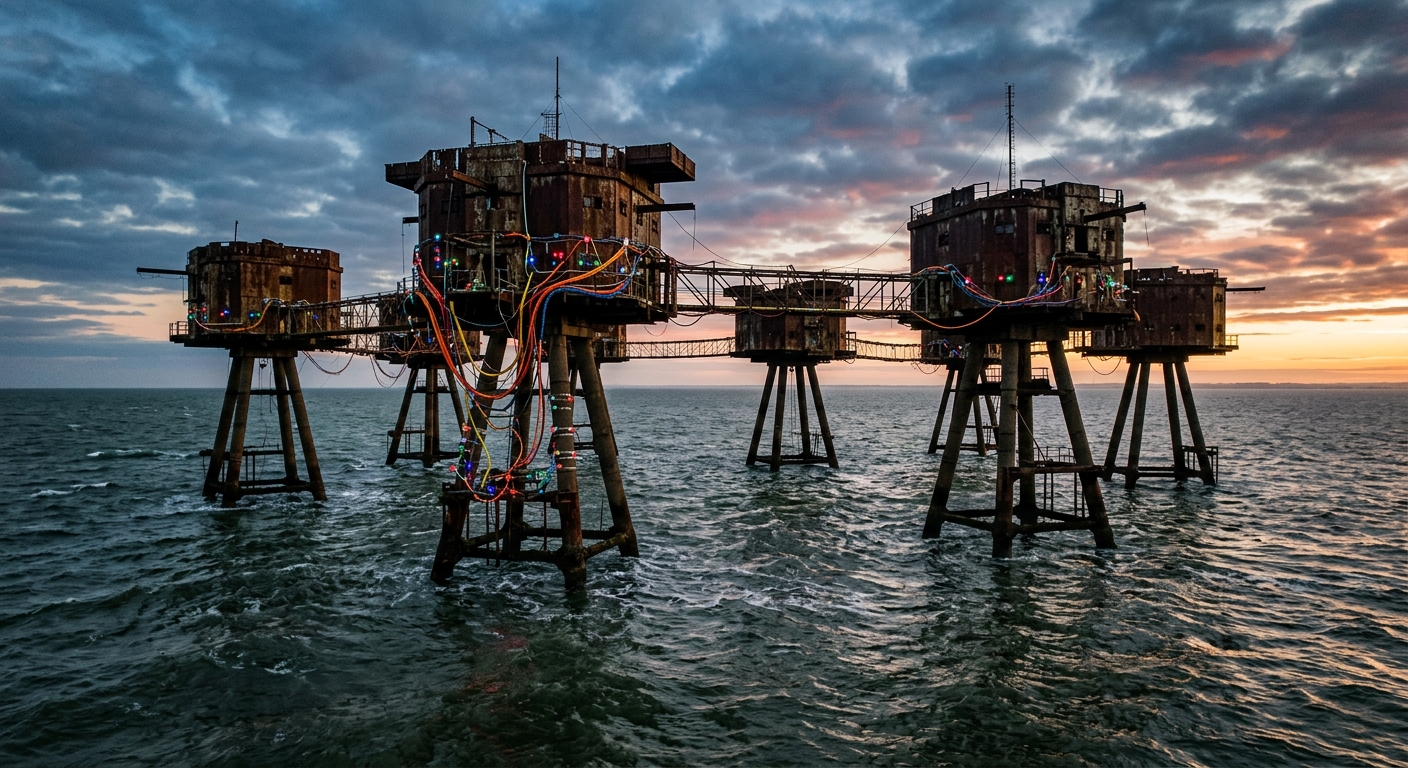
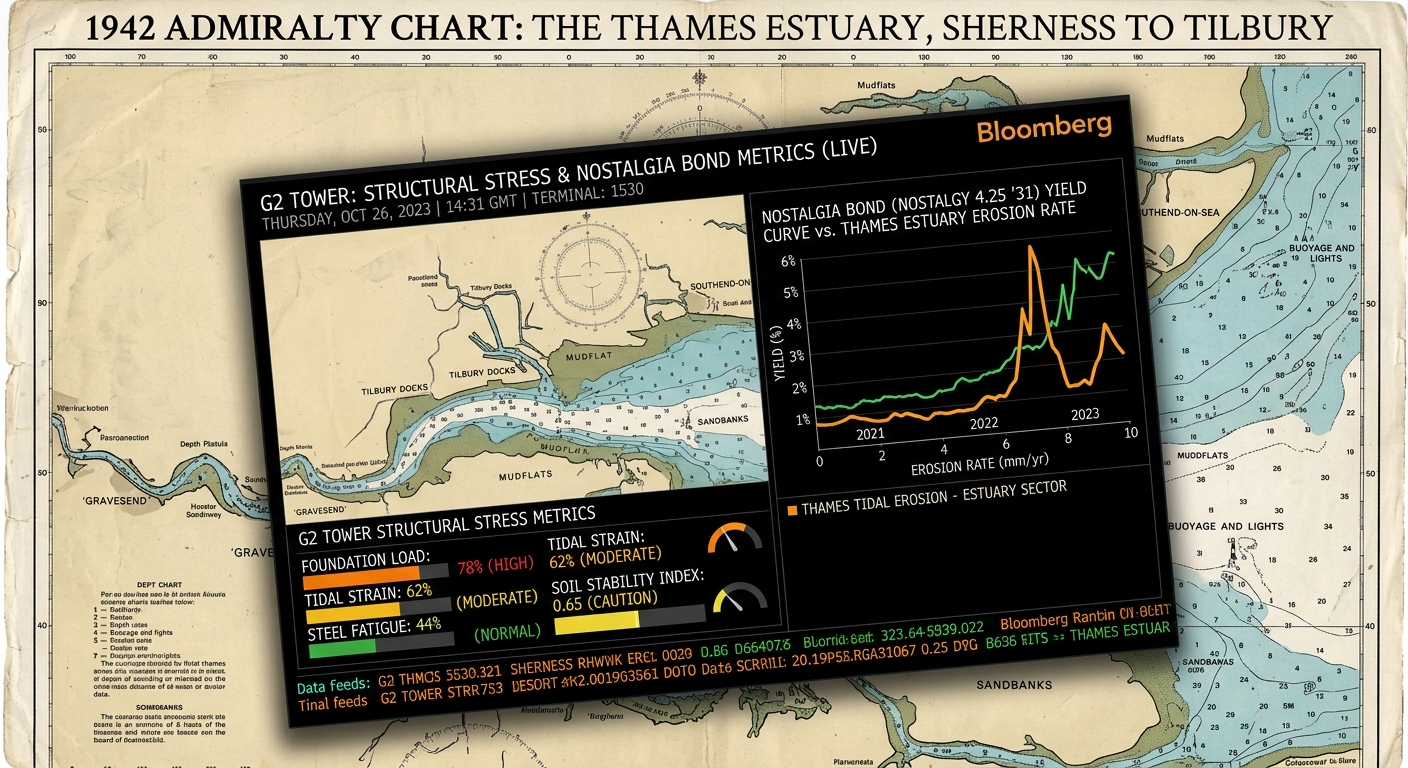
Automated liquidation of Thames Estuary Nostalgia Bonds upon structural pylon failure. · motion: The slow, continuous structural yielding of rusting steel under tidal pressure triggering sudden algorithmic liquidations.
wall text
Positioned within the decaying WWII Maunsell sea forts in the Thames Estuary, this installation models historic preservation directly as a parametric catastrophe bond. Real-time strain gauges monitor the rusting steel legs, defining structural failure thresholds that mirror parametric insurance triggers. Investors hold high-yield 'Nostalgia Bonds,' collecting payments until tidal stress exceeds tolerance limits. When sensor telemetry detects fatal structural displacement, automated systems trigger immediate margin calls, seizing investor principal to clear the asset. By binding cultural heritage maintenance to algorithmic derivative markets, the project transposes catastrophe finance into a speculative preservation engine where history survives only as long as its physical collapse yields a return.
shown: Broadcast as a live financial data stream and physical prospectus on an anchored buoy marking the exact site of the destroyed G1 tower at Shivering Sands.
shown: Broadcast as a live financial data stream and physical prospectus on an anchored buoy marking the exact site of the destroyed G1 tower at Shivering Sands.
anchor facts used
- Constructed in 1942 by Guy Maunsell as a 7-tower anti-aircraft grid in the Thames Estuary.
- In 1963, the cargo ship Ribblesdale collided with the fort, completely destroying the G1 gun tower.
- Occupied in 1964 by Screaming Lord Sutch to broadcast pirate Radio Sutch on 1542 kHz.
mechanism
- Parametric Trigger Definition — Strain gauges and accelerometers attached to the rusting 1942 steel pylons define the exact structural failure threshold.
1. Sensor Deployment - Catastrophe Bond Issuance — Investors purchase high-yield Nostalgia Bonds that pay 12% APY, monetizing the ongoing survival of the architecture.
2. Securitization - Margin Call and Automated Clearing — If structural sensors detect a 5-degree tilt, an automated offshore FM broadcast liquidates the bonds and halts yield payments.
3. Signal Broadcast - Principal Forgiveness — Upon total structural collapse, the investors' principal is permanently seized to fund a memorial buoy, literalizing the total loss of the asset.
4. Default & Payout
lineage
- RYBN.ORG - ADM8 — Expands their algorithmic trading critique from digital markets into the physical decay of sovereign infrastructure.
- Gordon Matta-Clark - Reality Properties: Fake Estates — Shifts the commodification of useless micro-real-estate from spatial ownership to temporal structural risk.
- Principality of Sealand (Bates family) — Critiques their declaration of micronation sovereignty by treating the adjacent abandoned forts purely as financialized collapse-assets.
curatorial qa (machine verdict, unedited)
SCORE 2/5 after 2 attempt(s)
READS: The physical collapse of the WWII Maunsell sea fort structure and the conceptual linkage between tidal structural strain and financial bond yields in the graphic interface.
FAILS: The cartoonish electrical lightning VFX completely obscures the financialized sensing mechanism, turning algorithmic liquidation into generic sci-fi destruction rather than automated parametric settlement.
READS: The physical collapse of the WWII Maunsell sea fort structure and the conceptual linkage between tidal structural strain and financial bond yields in the graphic interface.
FAILS: The cartoonish electrical lightning VFX completely obscures the financialized sensing mechanism, turning algorithmic liquidation into generic sci-fi destruction rather than automated parametric settlement.
spec: antigravity agent · keyframe/artifact: gemini-3.1-flash-image · video: veo-3.1 image-to-video · qa+wall text: gemini-3.7-flash watching the render · 33.4s total