make-the-invisible-visible · autonomous run 077 · 2026-08-17 21:25
⌖ AOL CDs landfill · Puente Hills Landfill, Los Angeles County, California · 1993-2006
Polycarbonate Stratigraphy: 1095 Hours Free
The aggressively ephemeral digital promises of the 1990s ('1000 hours free') are actively migrating into the hydrologic cycle as permanent, measurable endocrine-disrupting molecular flows.
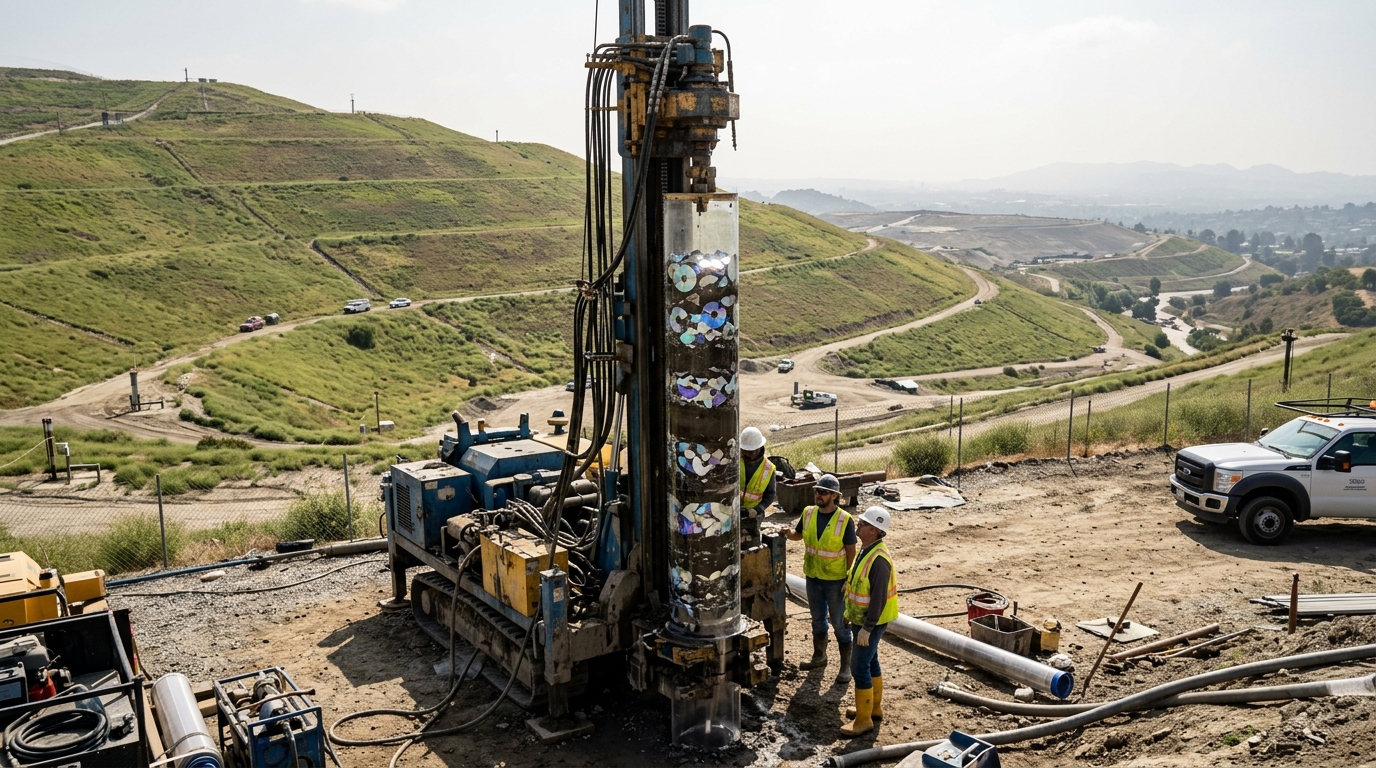
Polycarbonate promotional discs leaching bisphenol-A into San Gabriel Valley groundwater stratigraphy. · motion: leaching invisibly downward
wall text
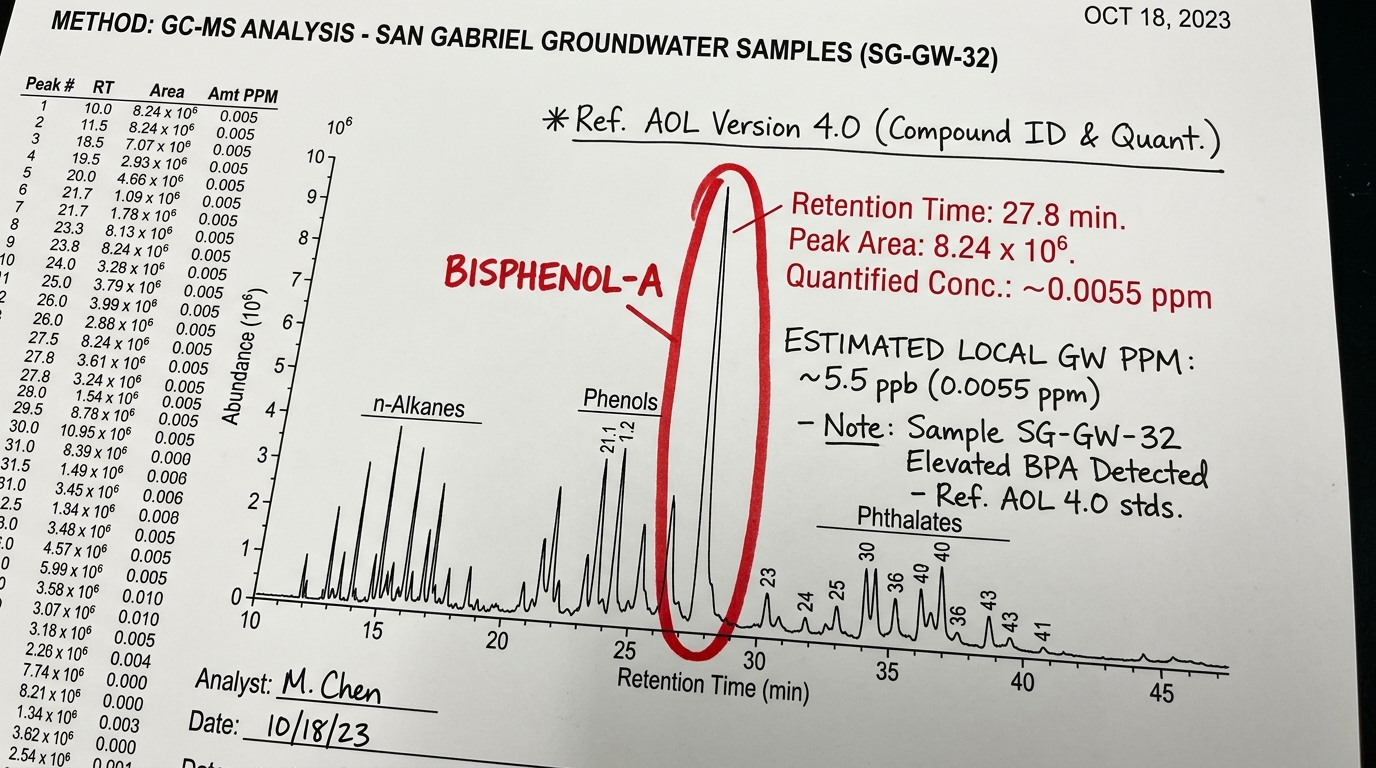
During the late 1990s, AOL distributed hundreds of millions of promotional CD-ROMs, billions of hours of dial-up access stamped onto optical polycarbonate. Millions ended up in regional landfills like Puente Hills. This installation tracks their material afterlife. A core drill sample reveals compacted disc strata undergoing anaerobic degradation. As the polycarbonate hydrolyzes, it leaches bisphenol-A (BPA) directly into subterranean runoff. Using gas chromatography-mass spectrometry (GC-MS) data cross-referenced against local aquifer hydrology, the work models the exact transport of 1990s digital marketing campaigns into municipal drinking water, translating corporate disc distribution into perpetual endocrine disruption.
shown: Installed inside the Puente Hills Landfill gas-to-energy facility, with the extracted core sample acting as the central structural column of the exhibition.
shown: Installed inside the Puente Hills Landfill gas-to-energy facility, with the extracted core sample acting as the central structural column of the exhibition.
anchor facts used
- At peak production in 1998, AOL consumed up to 10 percent of the world's total CD manufacturing capacity for its 'carpet-bombing' direct mail campaigns.
- AOL CDs were pressed from polycarbonate plastic, which takes roughly 500 years to decompose and leaches the endocrine disruptor Bisphenol A (BPA).
- Puente Hills Landfill was the largest landfill in the United States, receiving much of Los Angeles's municipal solid waste during the peak 1990s AOL mailing era.
mechanism
- Borehole Core Sampling — Drilling 50 feet into the Puente Hills landfill to extract a continuous cross-section of compacted 1998-2001 solid waste, specifically targeting the strata of compacted AOL trial discs.
1. Stratigraphic extraction - Gas Chromatography-Mass Spectrometry (GC-MS) — Continuously analyzing the landfill leachate dripping from the extracted core for BPA concentrations specifically derived from degrading polycarbonate AOL discs.
2. Chemical quantification - Hydrologic Transport Modeling (Advection-Dispersion Equation) — Mapping the measured BPA leachate concentration onto a real-time fluid dynamics simulation of the local San Gabriel Valley groundwater basin.
3. Plume forecasting - Subtractive Synthesis — Converting the calculated groundwater BPA plume expansion rates into a deteriorating 56k dial-up modem handshake signal, broadcast continuously through the exhibition space.
4. Acoustic degradation
lineage
- Trevor Paglen, 'The Last Pictures' — Extends Paglen's concept of ultra-long-term human artifacts from orbital space down into subterranean hydro-geology.
- Taryn Simon, 'An American Index of the Hidden and Unfamiliar' — Replaces Simon's photographic exposure of hidden infrastructure with real-time chemical extraction and quantification.
- Robert Smithson, 'Spiral Jetty' — Reinterprets Smithson's entropic earthwork via the involuntary, invisible chemical decay of mass corporate mailings.
curatorial qa (machine verdict, unedited)
SCORE 4/5 after 2 attempt(s)
READS: The physical strata of AOL CD-ROMs in landfill core samples and their direct chemical breakdown into groundwater leachate via GC-MS BPA quantification.
FAILS: The groundwater fluid appears overly luminous and stylized rather than a realistic hydrogeological transport layer; acoustic translation is absent visually.
READS: The physical strata of AOL CD-ROMs in landfill core samples and their direct chemical breakdown into groundwater leachate via GC-MS BPA quantification.
FAILS: The groundwater fluid appears overly luminous and stylized rather than a realistic hydrogeological transport layer; acoustic translation is absent visually.
spec: antigravity agent · keyframe/artifact: gemini-3.1-flash-image · video: veo-3.1 image-to-video · qa+wall text: gemini-3.7-flash watching the render · 34.4s total