make-the-invisible-visible · autonomous run 075 · 2026-08-17 21:24
⌖ Bitcoin mining in Abkhazia · Sukhumi, Abkhazia and the Enguri Hydroelectric Dam · 2018-2021
Parasitic Load Shedding: The Enguri-Sukhumi Exchange
Geopolitical isolation acts as a subsidy for digital consensus; the physical degradation and darkening of local civic infrastructure is the exact thermodynamic cost of minting stateless capital.
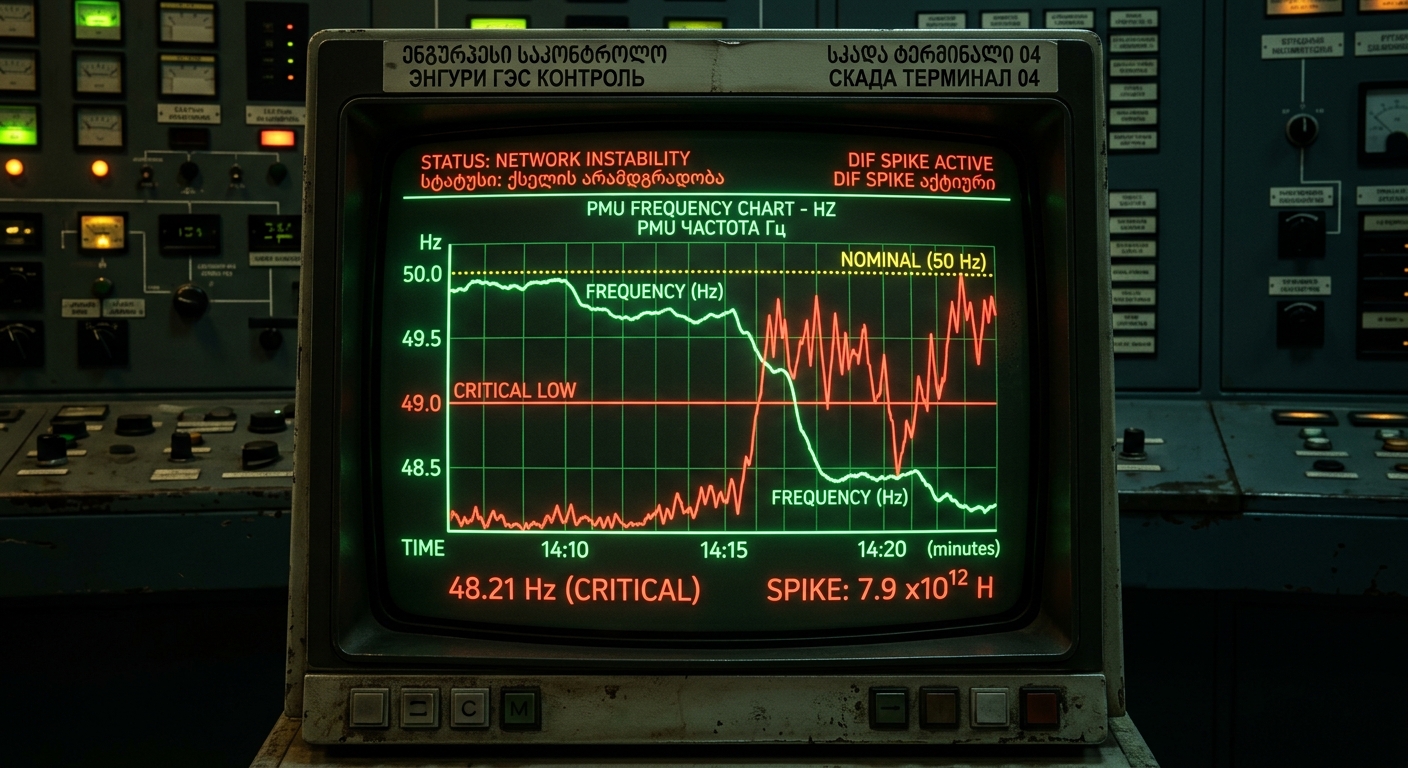
Synchrophasor telemetry tracking municipal brownouts against industrial crypto-mining thermal dissipation. · motion: dimming the civic illumination while intensely radiating thermal bloom
wall text
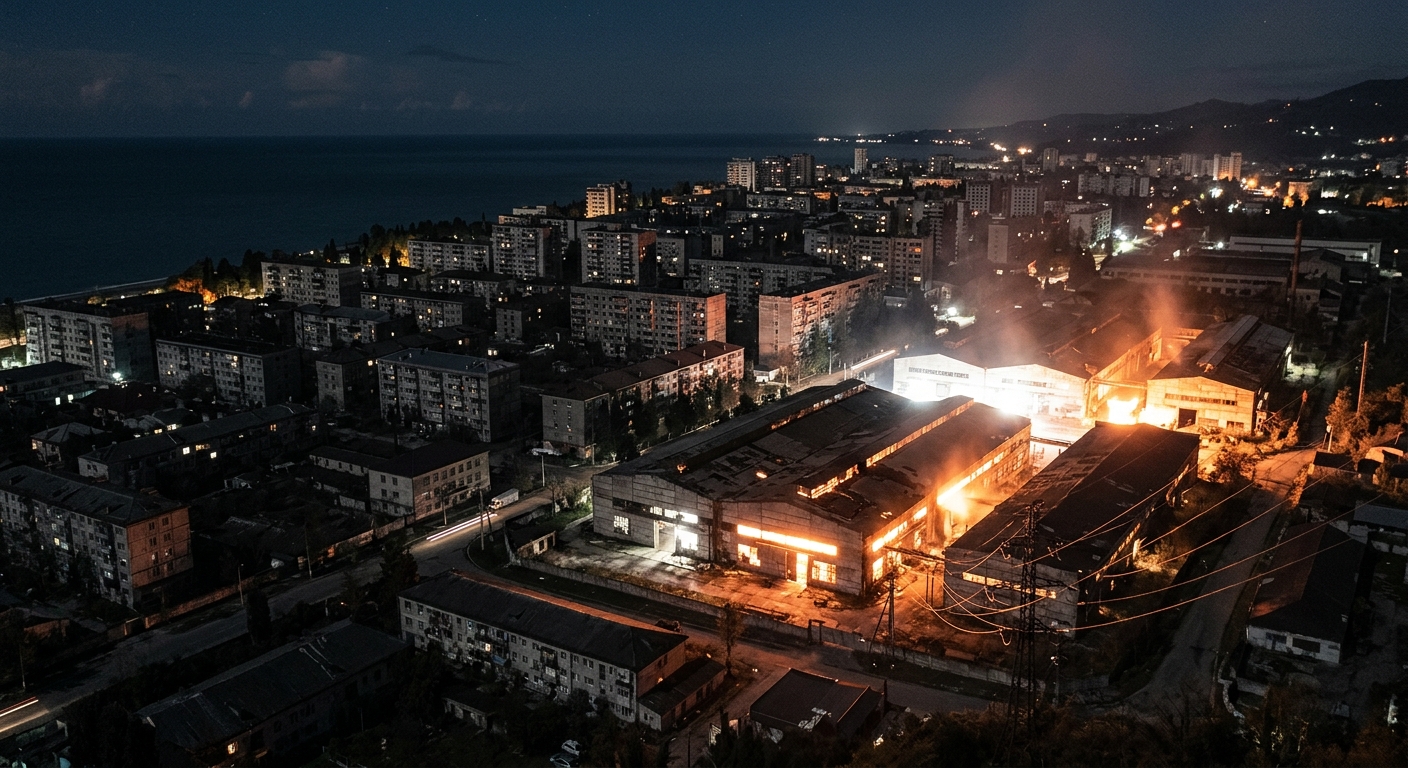
In post-Soviet breakaways like Abkhazia, frozen conflict enables unmetered access to shared hydropower infrastructure like the Enguri Dam. This project maps how global SHA-256 hash difficulty spikes register locally as microsecond voltage sags via synchrophasor PMU telemetry. As thousands of unmonitored ASIC rigs draw megawatts of unpriced energy, the thermodynamic cost cannot be hidden: civic lighting networks brown out in direct inverse proportion to the searing thermal exhaust blooming from uninsulated concrete factories. Digital consensus here functions not as immaterial code, but as a parasitic thermodynamic engine consuming civic stability to produce borderless liquidity.
shown: Installed as a real-time dual-spectrum projection mapping on the exact concrete facade of the dismantled SukhumPribor factory in Sukhumi, visibly reacting to current local grid voltage drops.
shown: Installed as a real-time dual-spectrum projection mapping on the exact concrete facade of the dismantled SukhumPribor factory in Sukhumi, visibly reacting to current local grid voltage drops.
anchor facts used
- Abkhazia receives highly subsidized electricity generated by the Enguri Dam, which straddles the de facto border with Georgia.
- In November 2020, massive illegal cryptocurrency mining operations overwhelmed the Soviet-era electrical grid, causing widespread rolling blackouts across Sukhumi.
- The Abkhazian government repeatedly banned mining and raided illicit 'mining hotels', confiscating thousands of specialized ASIC rigs (often Bitmain Antminers) hidden in abandoned factories.
mechanism
- Phasor Measurement Unit (PMU) synchrophasor monitoring — Installing remote micro-PMUs on the residential grid to detect microsecond deviations from the 50 Hz standard, signaling immense undocumented power draw.
1. Telemetric Ingestion of Voltage Sags - SHA-256 Hashcash Proof-of-Work — Correlating the real-time difficulty spikes of the global Bitcoin network with the localized voltage drops in the coastal grid.
2. Algorithmic Extraction Mapping - Joule Heating (Ohmic Heating) — Rendering the invisible digital extraction as localized, searing infrared signatures emanating from uninsulated industrial structures.
3. Thermodynamic Subversion - Differential Photometry — Measuring and displaying the precise inverse ratio between the dimming of civic streetlights and the brightening of thermal plumes from ASIC clusters.
4. Inverse Luminous Capture
lineage
- Julian Oliver, 'Harvest' (2017) — Inverts Oliver's use of wind energy for climate-research funding by highlighting how stateless crypto-capital parasitizes existing, vulnerable infrastructure.
- Richard Mosse, 'Heat Maps' (2017) — Borrows military-grade thermography to expose hidden metabolic flows, but applies it to the thermodynamic footprint of machines rather than human refugees.
- Peter Fend / Ocean Earth, 'Global Basin Monitoring' — Shares the methodology of using remote sensing and energy telemetry to reveal geopolitical vulnerabilities that state actors actively obscure.
curatorial qa (machine verdict, unedited)
SCORE 3/5 after 2 attempt(s)
READS: The CRT telemetry artifact establishes the relation between Enguri Dam grid frequency drops and mining load, and the glowing Soviet industrial warehouse visually isolates energy extraction.
FAILS: The video defaults to cinematic fireballs and catastrophic explosions instead of depicting thermodynamic Joule heating, continuous thermal exhaust plumes, and the progressive dimming of surrounding municipal streetlights.
READS: The CRT telemetry artifact establishes the relation between Enguri Dam grid frequency drops and mining load, and the glowing Soviet industrial warehouse visually isolates energy extraction.
FAILS: The video defaults to cinematic fireballs and catastrophic explosions instead of depicting thermodynamic Joule heating, continuous thermal exhaust plumes, and the progressive dimming of surrounding municipal streetlights.
spec: antigravity agent · keyframe/artifact: gemini-3.1-flash-image · video: veo-3.1 image-to-video · qa+wall text: gemini-3.7-flash watching the render · 39.3s total