make-the-invisible-visible · autonomous run 051 · 2026-08-17 21:23
⌖ Michigan Central Station · Corktown, Detroit, Michigan · 1913-1988-2024
Time-Domain Reflectometry: The Copper Scavenger Archive
The exact timeline and geography of illicit resource extraction during urban abandonment can be structurally read as a permanent material memory embedded in the severed infrastructure itself.
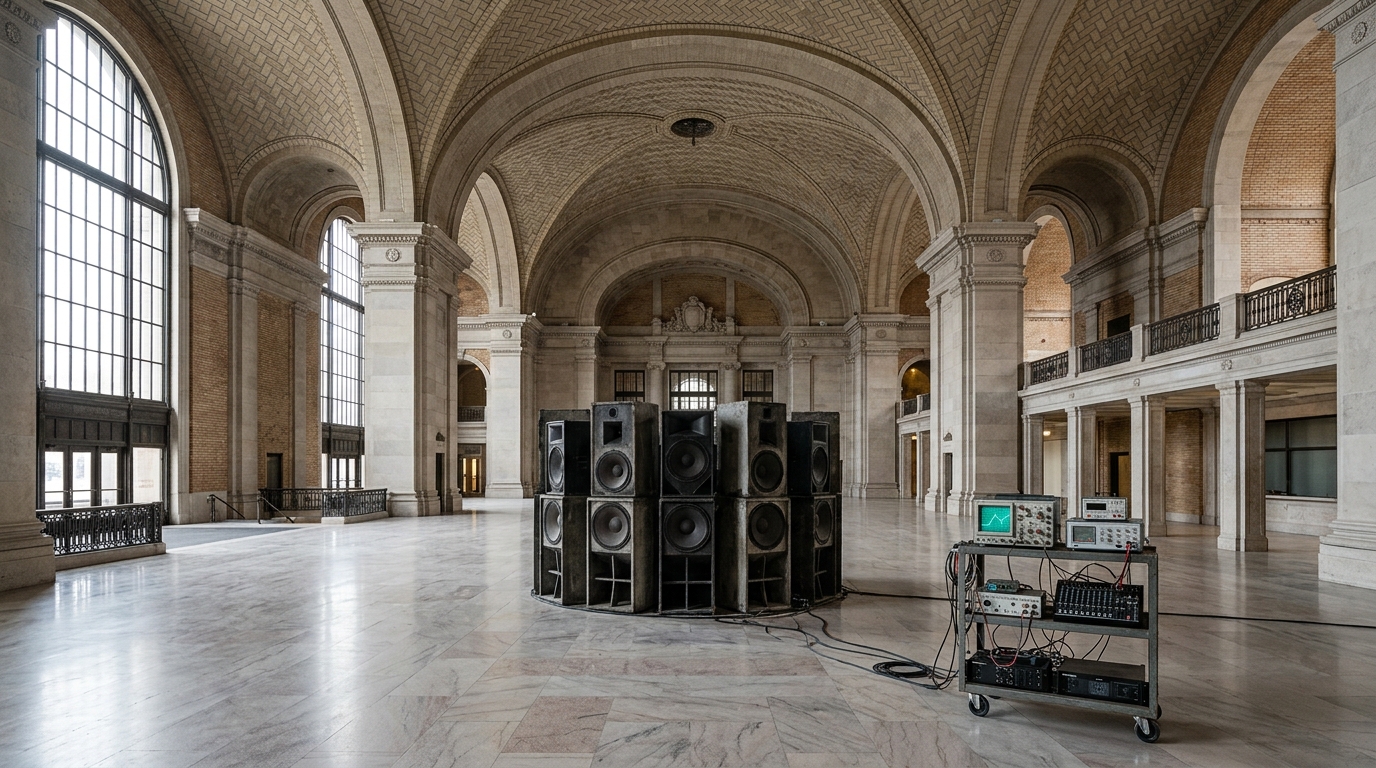
Subwoofers actuate cymatic dust patterns using time-domain reflectometry data from severed wiring. · motion: dust on the marble floor rhythmically vibrating and dancing in cymatic patterns
wall text
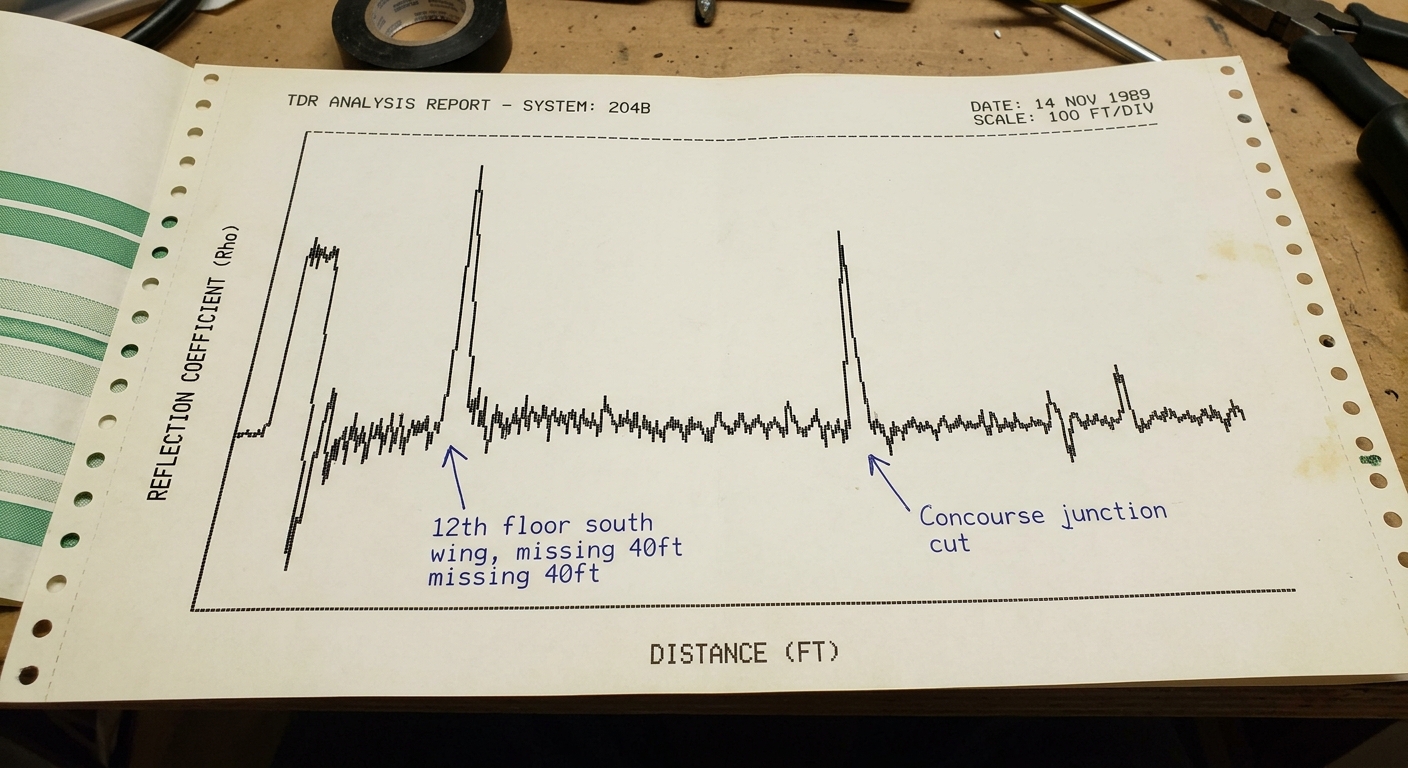
This installation maps decades of informal copper salvage across Michigan Central Station. Using Time-Domain Reflectometry (TDR), high-frequency electrical pulses are injected into severed 1913 conduit lines in the sub-basement. When a pulse strikes an open cut left by metal scrappers, the impedance mismatch reflects the signal back to the receiver. The calculated linear distance to each historical cut is mapped directly to sub-bass frequencies and broadcast through a circular subwoofer array in the restored waiting room. The resonant architecture vibrates fine debris into cymatic nodal patterns, transposing structural theft into tactile acoustic spatialization.
shown: Installed directly in the restored Michigan Central Station grand waiting room as a temporary, site-specific acoustic intervention.
shown: Installed directly in the restored Michigan Central Station grand waiting room as a temporary, site-specific acoustic intervention.
anchor facts used
- The station was abandoned from 1988 until Ford Motor Company's purchase in 2018, during which time illicit scavengers stripped the 18-story building of almost all accessible 1913 copper wiring.
- The 2024 restoration left certain original basement electrical conduits severed and capped, preserving the historical cuts.
- The main concourse features a 68-foot-tall Guastavino tile vaulted ceiling with unique, highly resonant acoustic properties.
mechanism
- Time-Domain Reflectometry (TDR) — High-frequency electromagnetic pulses are injected into the severed ends of the station's original 1913 electrical conduits exposed in the sub-basement.
1. Pulse Generation - Signal Reflection / Fault Location — When the electrical pulse reaches a physical cut where wire was stolen, the impedance mismatch reflects a portion of the signal back. The return time calculates the exact linear distance to the scrapper's cut.
2. Impedance Mismatch Detection - Digital-to-Analog Conversion — The microsecond delay times and signal degradation of the reflected pulses are mapped to specific acoustic frequencies, with longer distances yielding deeper, resonant bass tones.
3. Data Translation - Acoustic Resonance — The converted frequencies are broadcast via omnidirectional subwoofers into the restored grand waiting room, utilizing the masonry arches to amplify the sonic signature of the missing copper.
4. Acoustic Actuation
lineage
- Susan Schuppli, 'Material Witness' (2020) — Extends Schuppli's concept of matter recording external events, applying it to industrial copper wire as a recording surface for urban decay.
- Christina Kubisch, 'Electrical Walks' (2004-) — Inverts Kubisch's electromagnetic sonification by making the structural absence (the cut) rather than the presence of current the source of sound.
- Gordon Matta-Clark, 'Conical Intersect' (1975) — Builds on Matta-Clark's physical cuts into architecture by reading the unauthorized, economic cuts made by anonymous actors over thirty years.
curatorial qa (machine verdict, unedited)
SCORE 4/5 after 2 attempt(s)
READS: The acoustic translation lands effectively: subwoofers pulse low frequencies into the concourse, causing fine particulate on the marble floor to organize into resonant cymatic geometries, corroborated by the TDR printout.
FAILS: The direct indexical relationship between specific wire break distances and exact harmonic frequencies relies entirely on external documentation rather than legible telemetry during playback.
READS: The acoustic translation lands effectively: subwoofers pulse low frequencies into the concourse, causing fine particulate on the marble floor to organize into resonant cymatic geometries, corroborated by the TDR printout.
FAILS: The direct indexical relationship between specific wire break distances and exact harmonic frequencies relies entirely on external documentation rather than legible telemetry during playback.
spec: antigravity agent · keyframe/artifact: gemini-3.1-flash-image · video: veo-3.1 image-to-video · qa+wall text: gemini-3.7-flash watching the render · 30.2s total