make-the-invisible-visible · autonomous run 031 · 2026-08-17 21:22
⌖ Whaling station ruins, Grytviken · South Georgia Island, South Atlantic Ocean · 1904-1964
Anodic Polarization of Grytviken
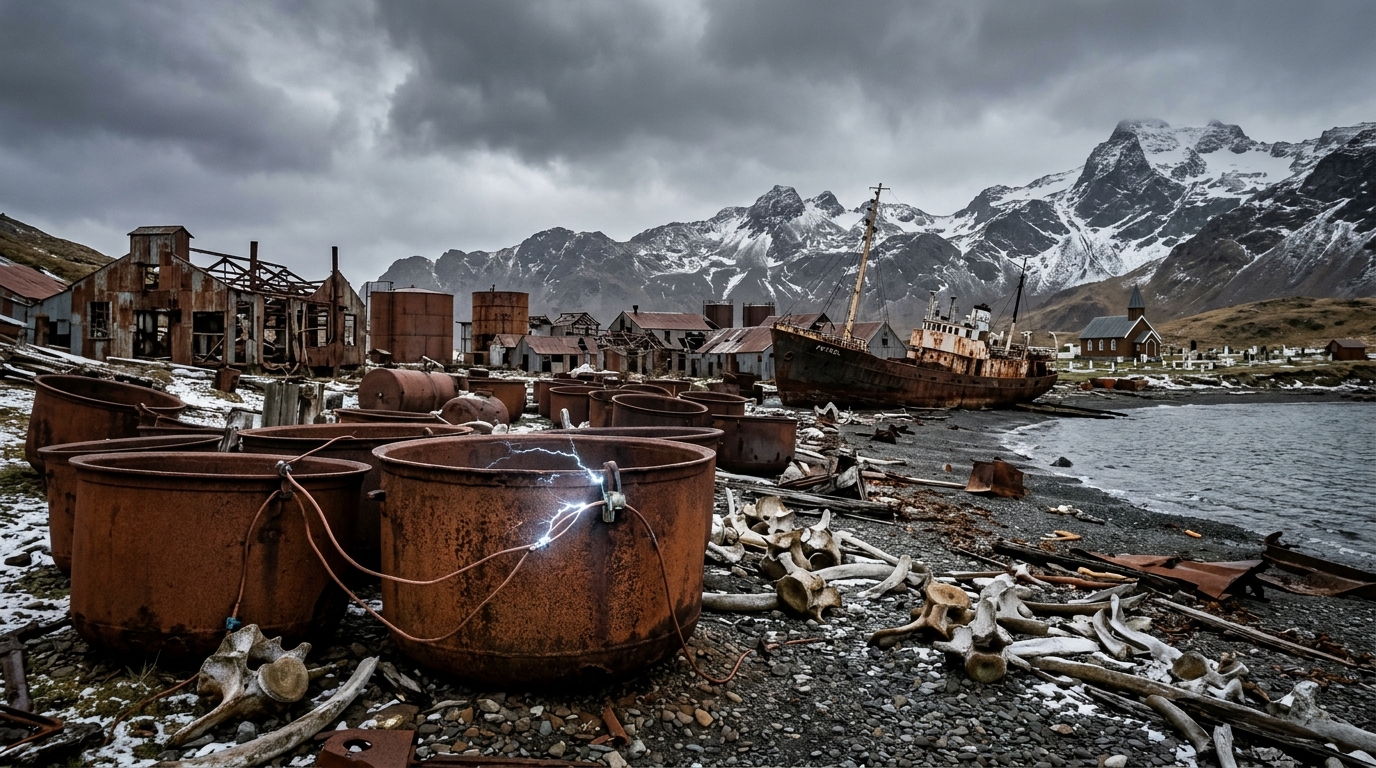
The historical extraction of marine biomass acts as an unpaid ecological debt, rendering the rusting industrial ruins of Grytviken a sacrificial anode for the ocean's ongoing acidification.
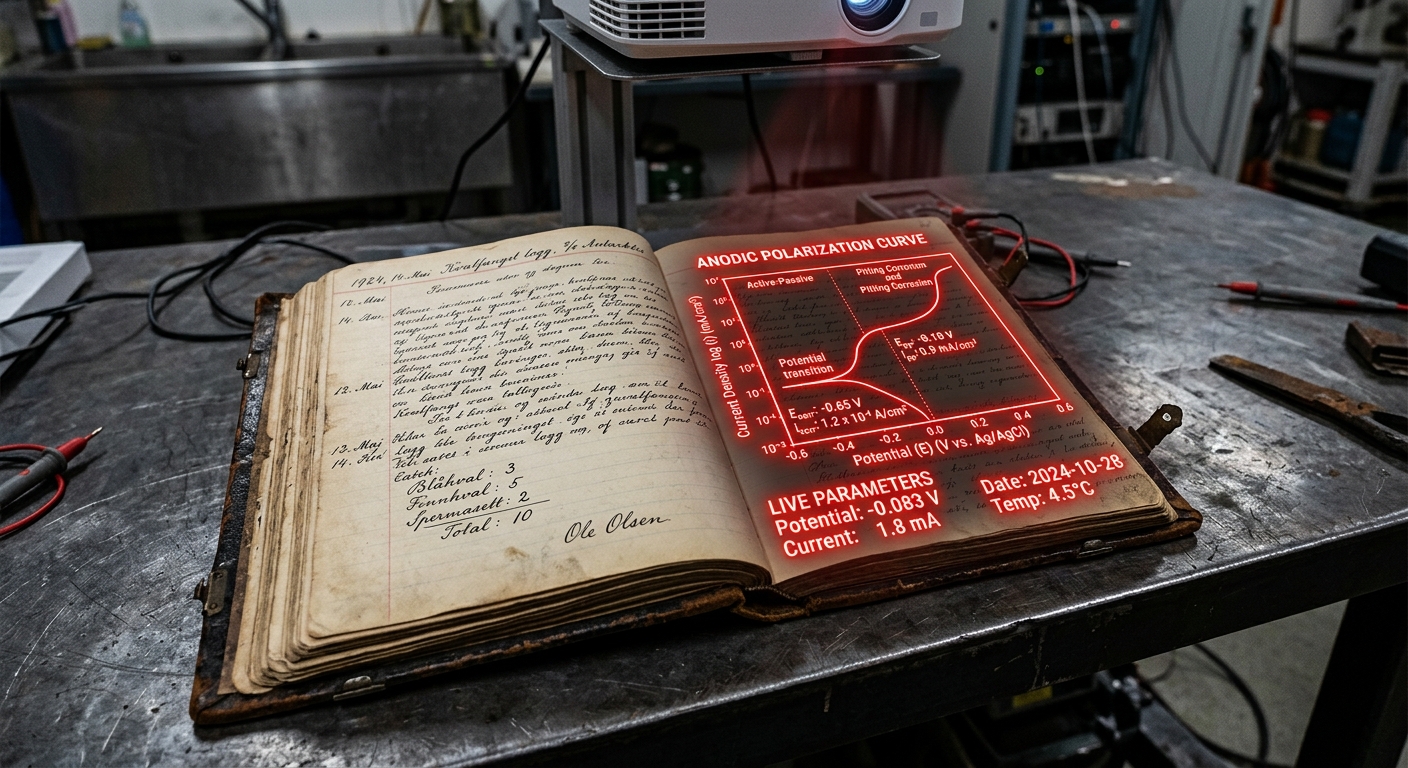
Electrically accelerated corrosion of whaling try-pots driven by historical catch logs. · motion: shedding oxidized iron mass in direct proportion to calculated deficits
wall text
Between 1904 and 1964, the Grytviken station processed 54,259 whales, eliminating millions of tons of biological carbon storage from the Southern Ocean. This project transposes historical catch reconstruction into an electrochemical apparatus. Daily logbook extraction totals are mapped to lost carbon sequestration capacity, modulating a direct electrical current applied to the site's surviving cast-iron try-pots. Through anodic polarization, the iron vessels are forced into accelerated dissolution proportional to past exploitation. Flakes of shed iron oxide accumulate beneath each vat, using gravimetric analysis to render historical biomass removal as literal, physical infrastructure collapse. The ruin functions as a sacrificial anode for an unpaid ecological deficit.
shown: Installed permanently on-site at Grytviken, powered by a small solar array, allowing the try-pots to autonomously dissolve into the soil until the carbon debt is fully materialized.
shown: Installed permanently on-site at Grytviken, powered by a small solar array, allowing the try-pots to autonomously dissolve into the soil until the carbon debt is fully materialized.
anchor facts used
- Founded in 1904 by Norwegian Carl Anton Larsen
- Total historic catch at the Grytviken station was 54,259 whales
- The site contains original cast-iron try-pots used for boiling whale blubber
mechanism
- Historical catch reconstruction — Parsing the station's logbooks (1904-1964) to calculate the exact daily biological mass of the 54,259 whales processed at the site.
1. Digitize catch logs - Carbon cycle modeling — Converting the missing whale biomass into its equivalent lost carbon-sink capacity over the subsequent decades.
2. Calculate carbon deficit - Anodic polarization — Applying a localized direct electric current to the original iron try-pots, with the voltage dynamically scaled to the daily calculated carbon debt.
3. Apply electrical current - Gravimetric analysis — Continuously collecting and weighing the flaking iron oxide (rust) as a physical, real-time materialization of the invisible historical carbon deficit.
4. Weigh the decay
lineage
- Andrew Pershing et al., 'The Impact of Whaling on the Ocean Carbon Cycle' (2010) — Translates their theoretical marine carbon-sink calculations into a physical, destructive electromechanical process.
- Allan Sekula, Fish Story (1995) — Builds on his documentation of maritime space by quantifying the invisible metabolic cost of oceanic extraction.
- Gustav Metzger, Auto-Destructive Art (1959) — Applies his concept of self-destroying monuments directly to authentic historical industrial infrastructure.
curatorial qa (machine verdict, unedited)
SCORE 3/5 after 2 attempt(s)
READS: The wiring of historical try-pots and the material flaking of iron oxide amid whale bones effectively signals forced accelerated decay.
FAILS: The discharge manifests as theatrical CGI lightning arcs rather than submerged electrochemical anodic polarization, and the gravimetric collection mechanism is absent.
READS: The wiring of historical try-pots and the material flaking of iron oxide amid whale bones effectively signals forced accelerated decay.
FAILS: The discharge manifests as theatrical CGI lightning arcs rather than submerged electrochemical anodic polarization, and the gravimetric collection mechanism is absent.
spec: antigravity agent · keyframe/artifact: gemini-3.1-flash-image · video: veo-3.1 image-to-video · qa+wall text: gemini-3.7-flash watching the render · 29.7s total