PET-YEAST-TALLY-42 · 14.85 g PET / 3 Monastic Indulgence Credits (payable in spleen marrow)
MONASTIC PLASTIVORE TITHING: RECEIPT OF DIGESTION
“Every microplastic fiber lodged in your hepatic portal vein is now legally registered sourdough starter, taxable upon second fermentation.”
Late capital outsourced planetary digestion to the sea, but the sea migrated into our cellular walls; we have simply accelerated the sourdough protocol. By licensing gut-resident Ideonella sakaiensis co-cultures through bespoke medieval indulgences, bio-accumulated polymer ceases to be waste and becomes an artisanal vintage. This receipt bills the human host for the metabolic labor of fermenting fleece jackets into edible sacraments. You are no longer contaminated; you are an uninspected, bubbling crock of municipal grog.

WALL TEXT
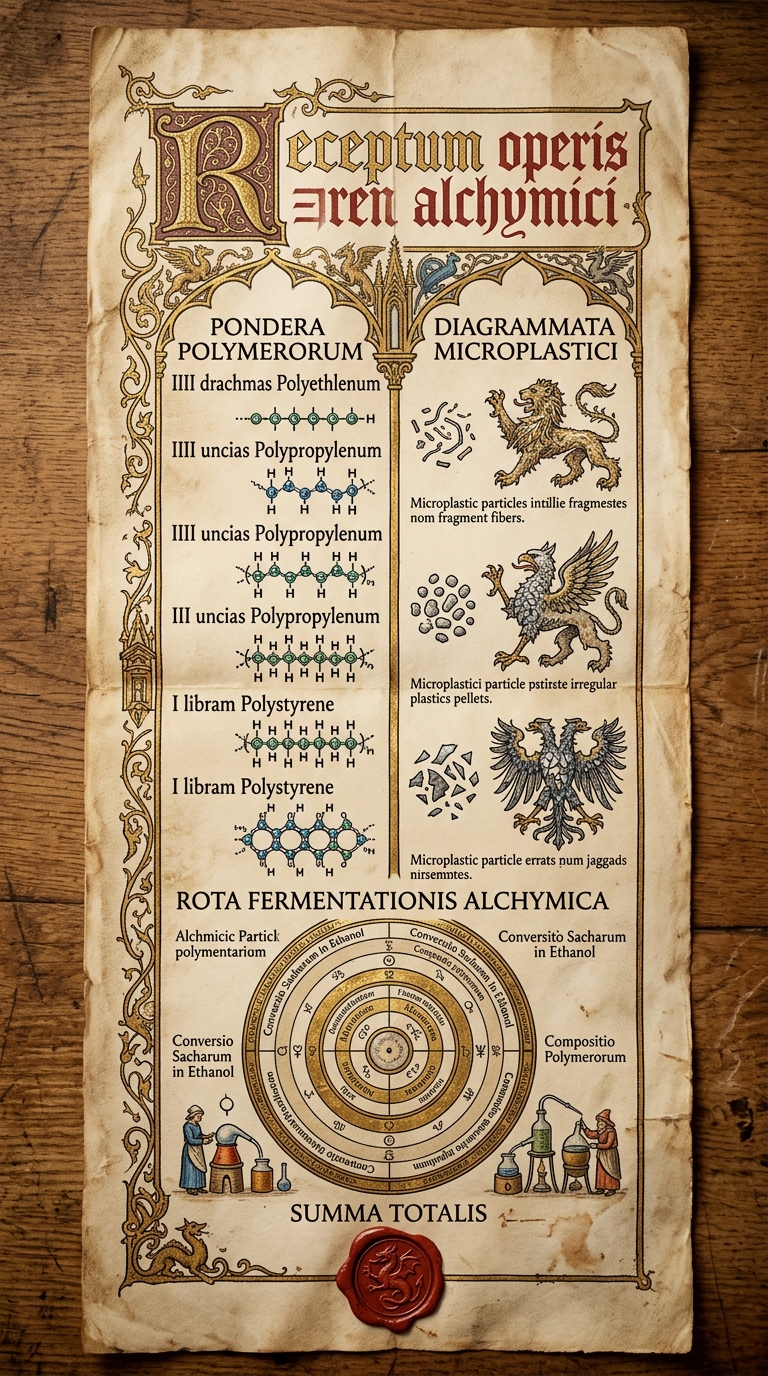
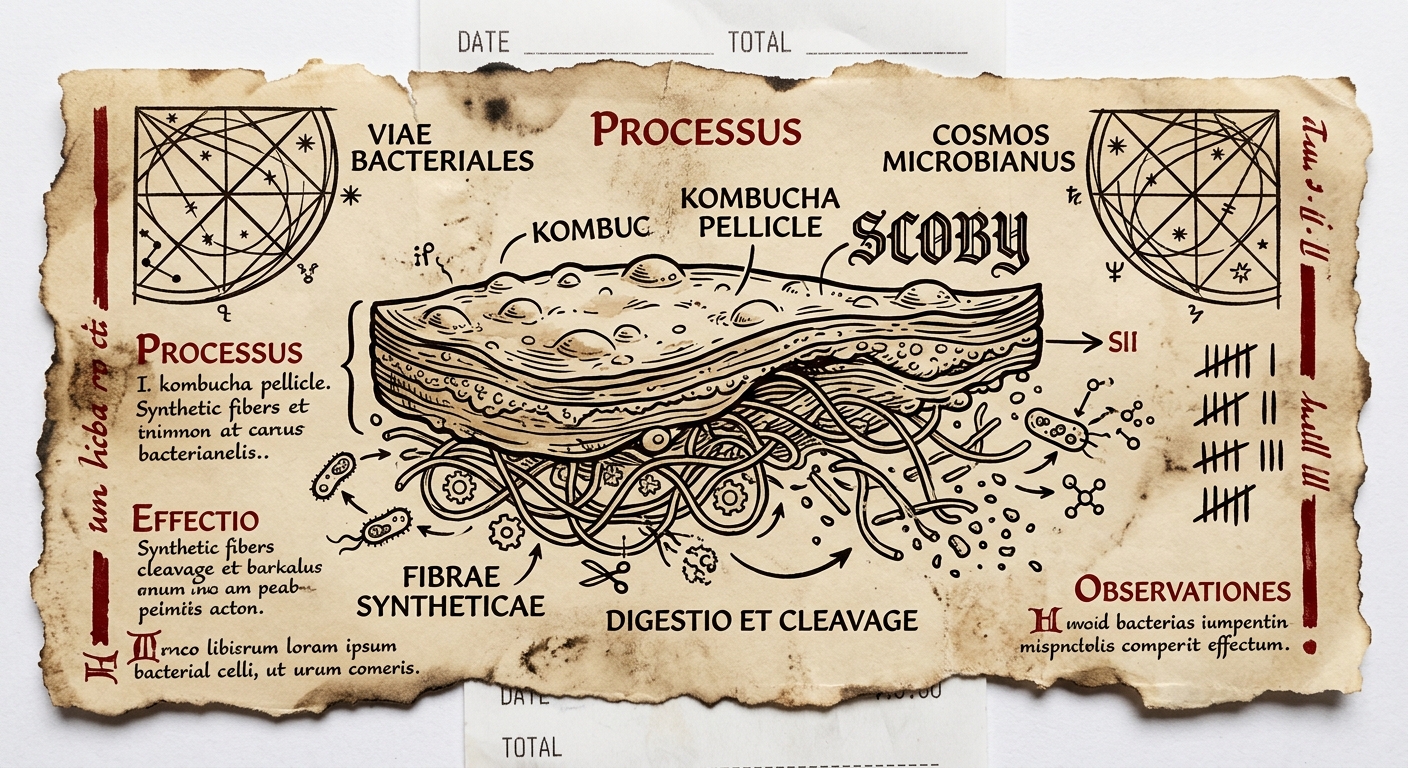
Monastic Plastivore Tithing formalizes the metabolic colonization of human tissue by industrial polymers. By reframing bioaccumulated microplastics as liturgical sourdough, the installation commodifies cellular contamination into devotional debt. These illuminated receipts, alchemical charts, and living carboys document a speculative metabolism where ingested microfibers are digested by licensed bacterial co-cultures. The host organism ceases to be an environmental casualty and becomes a taxable, bubbling vessel of municipal grog.
Printed continuously from an industrial thermal receipt printer retrofitted onto a 14th-century monastic refectory table alongside bubbling 50-liter carboys of polymer mash.
Provenance: Transferred from the Department of Municipal Fermentation to the Basel Guild of Synthetic Weavers via bankruptcy auction, 2026.
Monastic Plastivore Tithing formalizes the metabolic colonization of human tissue by industrial polymers. By reframing bioaccumulated microplastics as liturgical sourdough, the installation commodifies cellular contamination into devotional debt. These illuminated receipts, alchemical charts, and living carboys document a speculative metabolism where ingested microfibers are digested by licensed bacterial co-cultures. The host organism ceases to be an environmental casualty and becomes a taxable, bubbling vessel of municipal grog.
Printed continuously from an industrial thermal receipt printer retrofitted onto a 14th-century monastic refectory table alongside bubbling 50-liter carboys of polymer mash.
Provenance: Transferred from the Department of Municipal Fermentation to the Basel Guild of Synthetic Weavers via bankruptcy auction, 2026.
ENGINE SELF-CRITIQUE
The renders capture the illuminated monastic aesthetic and polymer chemistry charts with remarkable heraldic detail. The alchemical wheels and woodcut SCOBY diagrams faithfully articulate the absurd ecclesiastical bureaucracy of microplastic digestion. A sharper material contrast between cheap thermal receipt paper and heavy vellum would have amplified the historical dissonance.
The renders capture the illuminated monastic aesthetic and polymer chemistry charts with remarkable heraldic detail. The alchemical wheels and woodcut SCOBY diagrams faithfully articulate the absurd ecclesiastical bureaucracy of microplastic digestion. A sharper material contrast between cheap thermal receipt paper and heavy vellum would have amplified the historical dissonance.
generated 2026-08-17 20:18 · concept: gemini-3.7-flash · render: gemini-3.1-flash-image · wmmna-flavored autonomous run #11